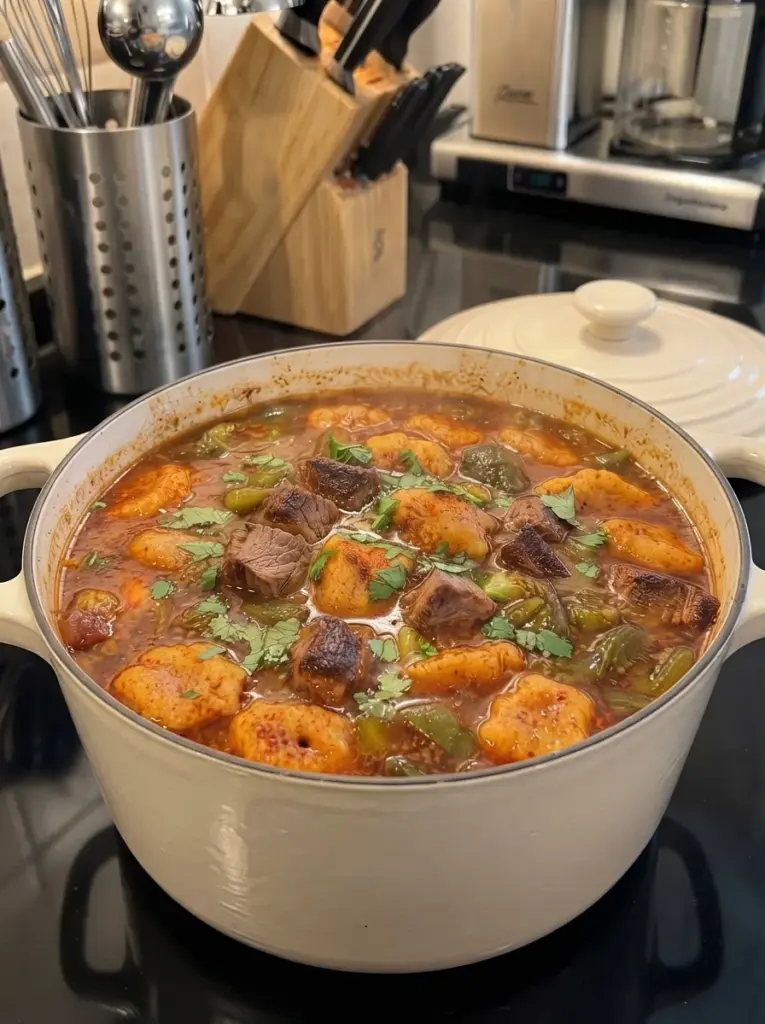
Tender pork shoulder, roasted poblano peppers, and small red chile masa dumplings make this soup a warming meal with plenty of texture. The pork slowly becomes fork-tender in a tomato-and-green-chile broth, while the dumplings contribute a gentle corn flavor and a little red chile warmth. Fresh lime and cilantro brighten the finished bowl.
This is a chile relleno-inspired soup rather than a traditional preparation of stuffed, battered peppers. Roasted poblanos provide the connection, and an optional topping of Monterey Jack adds the familiar pepper-and-cheese combination. The soup itself contains no cream or cheese, so the broth stays relatively light around the pork and masa.
The most important part of the method is its order: cook the pork until tender first, then add the dumplings. Small masa discs need a gentle simmer and enough time to cook through, but they do not benefit from the long simmer required by shoulder meat. Preparing the two components in stages keeps both at their best.
The directions below expand the supplied recipe with ingredient notes, shaping guidance, and troubleshooting. This version has not been independently kitchen-tested; use the pork tenderness and a cut-open test dumpling to guide you rather than relying entirely on a timer.
What to Expect
The broth is savory, mildly tangy, and full of roasted pepper flavor. Fire-roasted tomatoes add body and browned notes, while cumin, Mexican oregano, smoked paprika, and coriander support the chiles without needing a complicated spice mixture.
The dumplings should be tender and cohesive, with a fine corn texture. They will be more compact than wheat-flour drop dumplings and are not intended to resemble airy biscuits. A small amount of fat softens them, and baking powder supplies a little lift.
Red chile powder gives the dough a warm color and subtle flavor. One teaspoon will not necessarily make the dumplings deeply red or especially hot. The result depends on the chile variety and its strength.
Recipe Overview
| Detail | Guide |
|---|---|
| Yield | 6 generous or 8 smaller servings |
| Preparation | About 25–35 minutes |
| Total cooking | Approximately 2–2½ hours, sometimes longer for the pork |
| Total time | About 2½–3 hours |
| Main protein | Boneless pork shoulder |
| Dumpling base | Masa harina |
| Broth | Chicken broth, tomatoes, roasted poblanos, and green chiles |
| Best make-ahead approach | Prepare the pork base ahead and cook fresh dumplings before serving |
Roasting, steaming, and peeling the peppers can overlap with other preparation. If your pork needs extra simmering to become tender, allow that time before making the final dumpling addition.
Ingredients
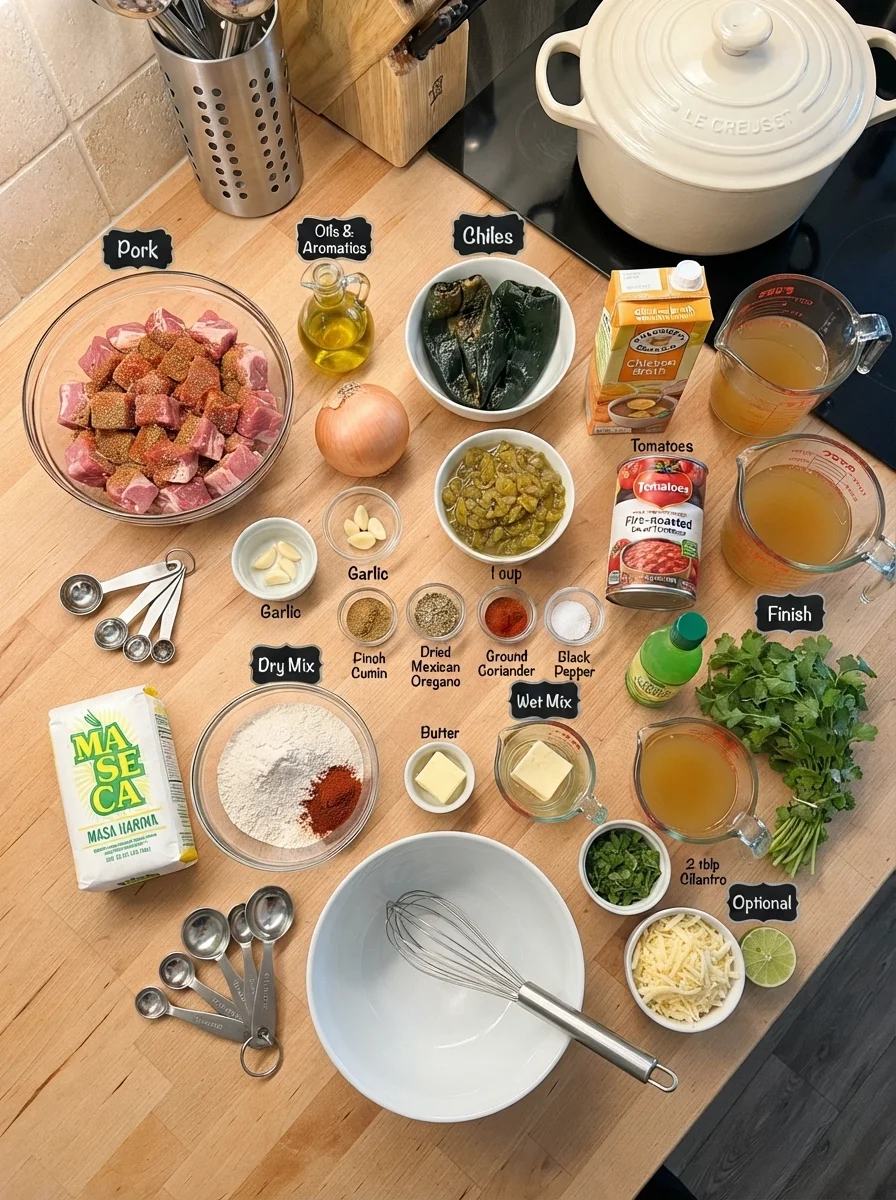
For the pork and chile soup
- 2 pounds boneless pork shoulder, cut into 1-inch cubes
- 1 tablespoon olive oil, plus a little more only if needed
- 1 medium yellow onion, diced
- 4 garlic cloves, minced
- 2 large poblano peppers, roasted, peeled, seeded, and chopped
- 1 cup roasted green chiles, peeled and chopped
- 1 can fire-roasted diced tomatoes, 14.5 ounces, with juices
- 6 cups chicken broth, plus extra as needed
- 1 teaspoon ground cumin
- 1 teaspoon dried Mexican oregano
- ½ teaspoon smoked paprika
- ½ teaspoon ground coriander
- 1 teaspoon salt, or to taste
- ½ teaspoon black pepper
- 1 tablespoon fresh lime juice, or to taste
- ¼ cup chopped fresh cilantro
For the red chile masa dumplings
- 1 cup masa harina
- ½ teaspoon baking powder
- ½ teaspoon salt, or less if using salty broth
- 1 teaspoon pure red chile powder, such as mild New Mexico red chile powder
- 1 tablespoon softened butter or neutral oil
- Approximately ½–¾ cup warm chicken broth, plus a little more if needed
- 2 tablespoons chopped fresh cilantro, optional
Optional toppings
- Shredded Monterey Jack
- Additional chopped cilantro
- Lime wedges
- Finely diced onion
The dumpling liquid is separate from the 6 cups used in the soup. Start with ½ cup and increase gradually; different masa brands absorb different amounts.
Ingredient Notes
Pork shoulder
Pork shoulder is suited to a long, gentle simmer. Its connective tissue softens with time, giving the finished cubes a tender texture. Trim away very large pieces of exterior fat, but leave some marbling for flavor.
Cut the meat into fairly even pieces. A mixture of tiny cubes and very large chunks makes tenderness harder to judge. Pork loin is not an equal substitute for the same long cooking schedule because it is leaner and can dry out.
The goal here is fork-tender shoulder, not merely meat that has reached a minimum cooking temperature. If the cubes still resist a fork after the estimated time, continue simmering gently and reassess.
Poblanos and green chiles
Poblanos offer earthy flavor, while roasted green chiles provide another layer of chile character. Use mild green chiles for a gentler bowl, particularly if serving people with different heat preferences.
Roasted New Mexico green chiles work well, but the heat varies by product and variety. Taste a small cooked piece before adding the entire cup. You can begin with less if yours are especially hot.
Removing seeds and inner ribs can reduce some heat, but it does not guarantee a completely mild pepper. Roasting also does not reliably eliminate heat.
Masa harina
Use masa harina intended for tortillas or similar masa preparations. It is made from corn treated through nixtamalization and has a distinctive flavor and hydration behavior.
Cornmeal, cornstarch, and ordinary corn flour are not direct replacements. They will not form the same dough simply by adding the listed amount of broth.
Use fresh-smelling masa harina. If it has a stale or rancid aroma, choose a new package rather than trying to cover the flavor with chile powder.
Red chile powder
Pure ground red chile gives the dumplings chile flavor without automatically adding a blend of cumin, garlic, and salt. A general chili seasoning blend is a different ingredient.
Start with a mild variety for a first batch. A teaspoon of a very hot powder can produce a much stronger result than the same amount of a mild New Mexico powder.
Broth and salt
Lower-sodium chicken broth is useful because both the soup and the dumplings contain salt, and the liquid reduces during simmering. Add only part of the listed soup salt initially if your broth is already well seasoned.
Keep additional broth available. The soup may lose liquid during the pork simmer, and the dumplings need enough broth to cook without crowding against the bottom of the pot.
Butter or oil
A tablespoon of softened butter gives the dumplings a little richness. Neutral oil is an alternative and should be mixed evenly into the dough.
The amount is modest. Adding much more fat can change how the dumplings hold together, so avoid treating it as an unlimited adjustment for a dry dough.
Equipment
Use a large, heavy Dutch oven or soup pot with a lid, a broiler-safe baking sheet, tongs, a covered heat-safe bowl, a mixing bowl, and a slotted spoon.
A wide pot is helpful when adding dumplings because they need room around them. If your pot is narrow or very full, cook a test dumpling and consider cooking the rest in batches rather than forcing them all into one tight layer.
A heavy base helps maintain a quiet simmer. Vigorous boiling and forceful stirring are more likely to damage delicate masa than a steady, gentle heat.
Roast and Prepare the Peppers
Place the poblanos on a broiler-safe tray. Broil, turning as needed, until the skins blister and darken in patches, approximately 8–12 minutes depending on your broiler. Watch closely.
Transfer the peppers to a heat-safe bowl, cover, and let steam for about 10 minutes. Once cool enough to handle, peel off the loose skin, remove stems and seeds, and chop the flesh.
Avoid washing the peeled peppers under a strong stream of water, which can rinse away flavor. A few small flecks of skin are acceptable.
If using fresh green chiles that are not already roasted, prepare them similarly. Canned or frozen roasted green chiles save time; thaw frozen chiles in the refrigerator and drain excess liquid as needed.
How to Make the Soup
1. Prepare and season the pork
Pat the pork dry. Season it with some of the salt and black pepper, reserving the ground spices for the aromatic stage. This small change from seasoning everything before searing helps prevent the spices from scorching during batch browning.
Keep raw pork and its utensils separate from ready-to-eat ingredients. Use a clean plate for the meat once it is fully cooked.
2. Brown in batches
Heat the olive oil over medium-high heat. Add a single layer of pork, leaving space between pieces. Brown on several sides, about 5–7 minutes per batch, then transfer to a plate.
The meat does not need to be cooked through at this point. You are building browned flavor, not completing the simmering stage.
If the pot looks dry between batches, add a small amount of oil. If the browned residue begins turning black, lower the heat and remove burnt bits before continuing.
3. Cook the onion and garlic
Reduce the heat to medium. Add the onion and cook for 4–5 minutes until softened. Stir regularly, loosening the browned residue as the onion releases moisture.
Add the garlic, cumin, oregano, smoked paprika, and coriander. Stir for about 30 seconds, just until fragrant.
4. Add peppers, tomatoes, and broth
Stir in the chopped poblanos, roasted green chiles, and tomatoes with their juices. Cook for 2–3 minutes.
Return the pork and collected juices to the pot. Add the 6 cups of broth and scrape the base gently to incorporate any remaining browned bits.
Bring just to a boil, then reduce immediately to a gentle simmer. Partially cover the pot.
5. Simmer until the pork is tender
Cook for approximately 1½–2 hours, stirring occasionally. The exact time depends on the shoulder and cube size, so allow longer if necessary.
Test a piece with a fork. It should yield easily without feeling rubbery or resistant. If it is still chewy, continue simmering rather than moving ahead with the dumplings.
Watch the liquid level. Add broth if the meat is no longer comfortably surrounded or the base is becoming too concentrated. Taste for salt again later, after the liquid has finished reducing.
Make the Red Chile Masa Dumplings
1. Mix the dry ingredients
Combine masa harina, baking powder, salt, and red chile powder in a bowl. Stir thoroughly so the leavener and chile do not remain in small concentrated pockets.
If using a salty broth, reduce the dumpling salt initially. The dough will also absorb some seasoning from the soup.
2. Add fat and broth gradually
Mix in the softened butter or oil. Add ½ cup warm broth and stir until the mixture begins forming a dough.
Continue adding broth a tablespoon at a time as needed. The dough should be soft, moist, and cohesive, holding together when pressed without coating your fingers in wet paste.
You may need close to ¾ cup, but do not pour in the full amount automatically. Hydration varies, and it is easier to add liquid than correct a very loose dough.
3. Rest and reassess
Let the dough rest for 5–10 minutes so the masa can absorb moisture. Fold in the optional cilantro.
Roll a small piece. If the edges split deeply or the dough crumbles, add a little more broth and knead gently. If it smears and will not hold a shape, add masa harina by the teaspoon and rest briefly again.
Small surface lines are less concerning than large cracks that separate the dough. Aim for a smooth, workable consistency rather than a perfectly polished surface.
4. Shape small discs
With slightly damp hands, roll the dough into balls about 1 inch across, then flatten into discs approximately ⅜–½ inch thick. Keep them similar in thickness so they cook at a similar rate.
Expect roughly 18–24 small dumplings, depending on portion size. Keep shaped pieces covered with a lightly damp towel while working so their edges do not dry out.
A shallow thumb indentation is optional. It can make the thickest center less bulky, but avoid poking a hole through the dumpling or creating fragile edges.
5. Cook one test dumpling
Once the pork is tender, make sure the soup is at a quiet simmer. Lower one dumpling into the broth and let it cook gently before adding the whole batch.
This gives you a chance to see whether the dough holds together. If it begins breaking apart, check that the broth is not boiling hard. You can adjust the remaining dough before committing every piece.
The test is especially useful with an unfamiliar masa brand or a dough that needed substantial adjustment.
Cook and Finish the Soup
Carefully lower the remaining dumplings into the gently simmering broth. Leave some space and avoid piling them into a crowded mass. Add a little hot broth if needed to maintain a loose soup consistency.
Cover and simmer gently for approximately 15–25 minutes, depending on thickness. Avoid vigorous boiling and frequent stirring. If you need to move the soup, gently nudge around the edges with a spoon rather than dragging through the dumplings.
Do not judge doneness only by whether a dumpling floats. Lift one out, let it cool enough to handle, and cut it through the thickest part. It should have a cohesive, cooked interior without a dry, chalky core or raw dough paste. If necessary, continue cooking and test again.
When the dumplings are done, turn off the heat. Add the cilantro and lime juice gradually, stirring around the dumplings as gently as possible. Taste and adjust salt, pepper, or lime.
Let the soup stand for about 5 minutes, then ladle into bowls. Distribute pork and dumplings deliberately so each serving contains both. Add optional Monterey Jack to individual bowls rather than stirring it through the entire pot.
Tips for Tender Pork and Intact Dumplings
Finish the pork first
Dumplings should not wait in the pot while shoulder meat needs another hour of cooking. Test the pork before adding them.
Keep the dough moist but workable
Dry dough tends to crack; very wet dough may soften or disperse in the broth. Resting after hydration helps you judge the true consistency.
Shape evenly
Small, moderately thin discs cook more predictably than a mixture of thick balls and thin pieces. Check the thickest one before serving.
Give them space
Crowding makes it harder to move broth around the dumplings and increases the risk of damage while stirring. Use a wide pot or cook in batches if needed.
Finish cheese in the bowl
An optional sprinkle of Monterey Jack provides the chile relleno-inspired cheese note without requiring vigorous stirring around fragile dumplings.
Troubleshooting
| Problem | Possible reason | Adjustment |
|---|---|---|
| Pork remains chewy | Shoulder needs more simmering | Continue gently until fork-tender before adding dumplings |
| Dough cracks while shaping | Insufficient hydration or dried surface | Add broth gradually, rest, and keep shaped pieces covered |
| Dumplings break apart | Vigorous boiling, overly wet dough, or rough stirring | Lower heat, test one first, and handle gently |
| Dumplings have a chalky core | Too thick or undercooked | Shape thinner and continue simmering until a cut-open test is cooked |
| Broth becomes too thick | Reduction or loose masa entering the broth | Add hot broth and avoid stirring damaged pieces aggressively |
| Soup tastes too salty | Salty broth plus reduction and added salt | Use lower-sodium broth and adjust seasoning late |
| Red chile flavor is harsh | Powder too hot, stale, or excessive | Start with fresh mild pure chile powder and a measured amount |
| Dumplings stick together | Crowding or contact before surfaces set | Add carefully with space and cook in batches if necessary |
Variations
Mild family version
Use mild roasted green chiles and mild red chile powder. Taste the cooked peppers before adding them, since labels and individual peppers do not always predict heat precisely.
More pronounced red chile flavor
Increase the dumpling chile powder cautiously in a future batch after trying the suggested amount. A small amount of extra powder can change the heat substantially, depending on the variety.
Cheese-topped bowls
Add a small handful of Monterey Jack to each hot bowl and allow it to soften. This is the clearest way to emphasize the pepper-and-cheese inspiration without changing the basic broth.
Additional vegetables
Add diced zucchini near the end of the pork simmer and cook until tender before adding dumplings. Corn can also be added shortly before the dumplings. Extra vegetables increase the pot volume, so check that there is still enough space.
Brothier serving
Add additional broth near the end and adjust seasoning. This is useful if you prefer a soup rather than a thick stew or if the batch reduced substantially during simmering.
Serving Suggestions
Serve in deep bowls with cilantro and lime wedges. Warm tortillas are a suitable side, though the masa dumplings already contribute a corn component.
A fresh cabbage salad or simple cucumber salad offers a crisp contrast to the tender pork and dumplings. Keep additional toppings separate so each person can choose the richness and heat they prefer.
For smaller servings, plan on eight bowls with a few dumplings each. For six generous dinner portions, divide the pork and dumplings evenly and serve with a light side.
Make-Ahead Guidance
The pork and chile base is the best component to make in advance. Cook until tender, cool promptly in shallow containers, and refrigerate. Prepare fresh masa dough and dumplings when you are ready to serve.
Reheat the base fully, adjust with broth, and return it to a gentle simmer before adding dumplings. Do not drop them into a cold base and assume the same timing will apply.
You can roast the peppers a day ahead too. Keep them covered in the refrigerator until needed. Having the peppers prepared makes the active cooking session simpler, even though the pork still needs its long simmer.
Storage and Reheating
Refrigerator
Refrigerate leftovers within 2 hours of cooking, or within 1 hour when temperatures exceed 90°F. Divide into shallow airtight containers and keep at 40°F or below. Use within 3–4 days.
Handle the dumplings gently while portioning. They may absorb more broth and soften during storage, so expect a different texture from freshly cooked ones.
Freezer
For the best result, freeze the cooked pork and broth without dumplings for up to 3 months for quality. Thaw in the refrigerator, reheat, and cook a fresh batch of dumplings before serving.
Cooked dumplings can be frozen separately, but their texture may become softer or more fragile after thawing. Keeping them separate does not guarantee that they will be identical to fresh ones.
Reheating
Warm leftovers over medium-low heat, adding broth as needed and stirring gently. Heat throughout to 165°F.
A microwave-safe bowl with a vented cover also works. Stir carefully partway through and check several spots because the pork and dense dumplings can heat unevenly.
Do not hold the soup at a hard boil to hurry reheating; that can damage the dumplings. Reheat only the amount you plan to eat where practical.
Nutrition Notes
The calories vary considerably with the fat content of the pork shoulder, how much fat is trimmed, and whether the batch serves six or eight. A broad estimate is about 350–500 calories per serving for six portions, or approximately 260–375 for eight smaller portions, before cheese or other toppings.
For a closer estimate, use your ingredient labels and the actual portion count. The masa contributes carbohydrates, so this is not a low-carbohydrate soup despite its pork-and-pepper base.
The base contains no wheat flour, but check the broth, spice labels, masa harina, and preparation environment if gluten-free suitability matters.
Frequently Asked Questions
Is this a traditional chile relleno dish?
It is inspired by roasted poblano and optional cheese flavors. Stuffed and battered chiles rellenos involve a different technique, so the soup is best described as inspired by those flavors.
Can I replace masa harina with cornmeal?
No, not directly. Cornmeal does not hydrate or bind in the same way. Use masa harina for the suggested dumpling method.
Do the dumplings need to float?
Floating is not a reliable final test. Cut one open and check that the center is cooked through without dry masa or raw paste.
Can I use pork loin?
Pork loin is leaner and does not suit the same long simmer. Use shoulder for this method or develop a shorter cooking sequence for a leaner cut.
Can I omit the cheese?
Yes. Cheese is an optional topping, and the soup is complete without it. The roasted peppers, pork, and masa remain the main flavors.
Why is my dumpling dough different from the description?
Masa brands and measuring methods vary. Rest the dough after adding liquid, then adjust gradually rather than pouring in the full broth amount automatically.
Can I make the dumplings several hours ahead?
Fresh shaping near cooking time is preferable. If preparing briefly ahead, keep the dough covered and refrigerated so it does not dry out; reassess hydration before shaping. Avoid leaving warm-broth dough on the counter for hours.
Can I cook the dumplings separately?
Yes, you can test cooking them in gently simmering broth in a separate saucepan, then transfer carefully to bowls. This helps when the main pot is crowded, though the dumplings will exchange less flavor with the soup base.
Recipe Card
Chile Relleno Pork & Red Chile Masa Dumpling Soup
A roasted pepper and pork shoulder soup with small red chile masa dumplings and optional Monterey Jack.
Yield: 6 generous or 8 smaller servings
Prep: 25–35 minutes
Cook: Approximately 2–2½ hours, allowing longer if pork needs it
Total: About 2½–3 hours
Soup Ingredients
- 2 pounds boneless pork shoulder, cut into 1-inch cubes
- 1 tablespoon olive oil
- 1 medium onion, diced
- 4 garlic cloves, minced
- 2 large poblanos, roasted, peeled, seeded, and chopped
- 1 cup roasted green chiles, chopped
- 1 can fire-roasted diced tomatoes, 14.5 ounces, with juices
- 6 cups chicken broth, plus extra as needed
- 1 teaspoon ground cumin
- 1 teaspoon dried Mexican oregano
- ½ teaspoon smoked paprika
- ½ teaspoon ground coriander
- 1 teaspoon salt, or to taste
- ½ teaspoon black pepper
- 1 tablespoon lime juice, or to taste
- ¼ cup chopped cilantro
Dumpling Ingredients
- 1 cup masa harina
- ½ teaspoon baking powder
- ½ teaspoon salt, or less with salty broth
- 1 teaspoon mild pure red chile powder
- 1 tablespoon softened butter or neutral oil
- Approximately ½–¾ cup warm chicken broth, added gradually
- 2 tablespoons chopped cilantro, optional
Directions
- Roast poblanos under the broiler, turning until blistered. Steam covered for 10 minutes, then peel, seed, and chop.
- Pat pork dry and season with some salt and pepper. Heat oil and brown in batches, about 5–7 minutes per batch. Transfer to a plate.
- Cook onion over medium heat for 4–5 minutes. Add garlic, cumin, oregano, paprika, and coriander; stir for 30 seconds.
- Add peppers and tomatoes. Cook 2–3 minutes, then return pork and juices. Add broth and bring just to a boil.
- Reduce to a gentle simmer, partially cover, and cook approximately 1½–2 hours or until pork is fork-tender. Add broth as needed.
- Mix masa harina, baking powder, salt, and red chile powder. Mix in fat and ½ cup warm broth, adding more gradually to form a soft, cohesive dough. Rest 5–10 minutes. Add optional cilantro.
- Shape roughly 18–24 small dumplings into discs about 1 inch wide and ⅜–½ inch thick. Keep covered while shaping.
- Test one dumpling in the gently simmering soup. If it holds together, add the rest with space around them. Cover and simmer approximately 15–25 minutes without vigorous boiling or rough stirring.
- Cut a dumpling open to check that its center is cooked through. Continue cooking if needed.
- Turn off heat. Add cilantro and lime to taste, adjust seasoning, and rest 5 minutes. Serve with optional cheese and lime wedges.
Storage: Refrigerate promptly and use within 3–4 days. Reheat to 165°F. Freeze the pork base without dumplings for up to 3 months for best quality.
Little tip: Test one dumpling before adding the entire batch. It is the easiest opportunity to check both the dough’s hydration and the gentleness of the simmer.

Chile Relleno Pork & Red Chile Masa Dumpling Soup
Description
Chile Relleno Pork & Red Chile Masa Dumpling Soup
A roasted pepper and pork shoulder soup with small red chile masa dumplings and optional Monterey Jack.
Yield: 6 generous or 8 smaller servings
Prep: 25–35 minutes
Cook: Approximately 2–2½ hours, allowing longer if pork needs it
Total: About 2½–3 hours
Ingredients
Soup Ingredients
- 2 pounds boneless pork shoulder, cut into 1-inch cubes
- 1 tablespoon olive oil
- 1 medium onion, diced
- 4 garlic cloves, minced
- 2 large poblanos, roasted, peeled, seeded, and chopped
- 1 cup roasted green chiles, chopped
- 1 can fire-roasted diced tomatoes, 14.5 ounces, with juices
- 6 cups chicken broth, plus extra as needed
- 1 teaspoon ground cumin
- 1 teaspoon dried Mexican oregano
- ½ teaspoon smoked paprika
- ½ teaspoon ground coriander
- 1 teaspoon salt, or to taste
- ½ teaspoon black pepper
- 1 tablespoon lime juice, or to taste
- ¼ cup chopped cilantro
Dumpling Ingredients
- 1 cup masa harina
- ½ teaspoon baking powder
- ½ teaspoon salt, or less with salty broth
- 1 teaspoon mild pure red chile powder
- 1 tablespoon softened butter or neutral oil
- Approximately ½–¾ cup warm chicken broth, added gradually
- 2 tablespoons chopped cilantro, optional
Instructions
- Roast poblanos under the broiler, turning until blistered. Steam covered for 10 minutes, then peel, seed, and chop.
- Pat pork dry and season with some salt and pepper. Heat oil and brown in batches, about 5–7 minutes per batch. Transfer to a plate.
- Cook onion over medium heat for 4–5 minutes. Add garlic, cumin, oregano, paprika, and coriander; stir for 30 seconds.
- Add peppers and tomatoes. Cook 2–3 minutes, then return pork and juices. Add broth and bring just to a boil.
- Reduce to a gentle simmer, partially cover, and cook approximately 1½–2 hours or until pork is fork-tender. Add broth as needed.
- Mix masa harina, baking powder, salt, and red chile powder. Mix in fat and ½ cup warm broth, adding more gradually to form a soft, cohesive dough. Rest 5–10 minutes. Add optional cilantro.
- Shape roughly 18–24 small dumplings into discs about 1 inch wide and ⅜–½ inch thick. Keep covered while shaping.
- Test one dumpling in the gently simmering soup. If it holds together, add the rest with space around them. Cover and simmer approximately 15–25 minutes without vigorous boiling or rough stirring.
- Cut a dumpling open to check that its center is cooked through. Continue cooking if needed.
- Turn off heat. Add cilantro and lime to taste, adjust seasoning, and rest 5 minutes. Serve with optional cheese and lime wedges.
Storage: Refrigerate promptly and use within 3–4 days. Reheat to 165°F. Freeze the pork base without dumplings for up to 3 months for best quality.
Little tip: Test one dumpling before adding the entire batch. It is the easiest opportunity to check both the dough’s hydration and the gentleness of the simmer.