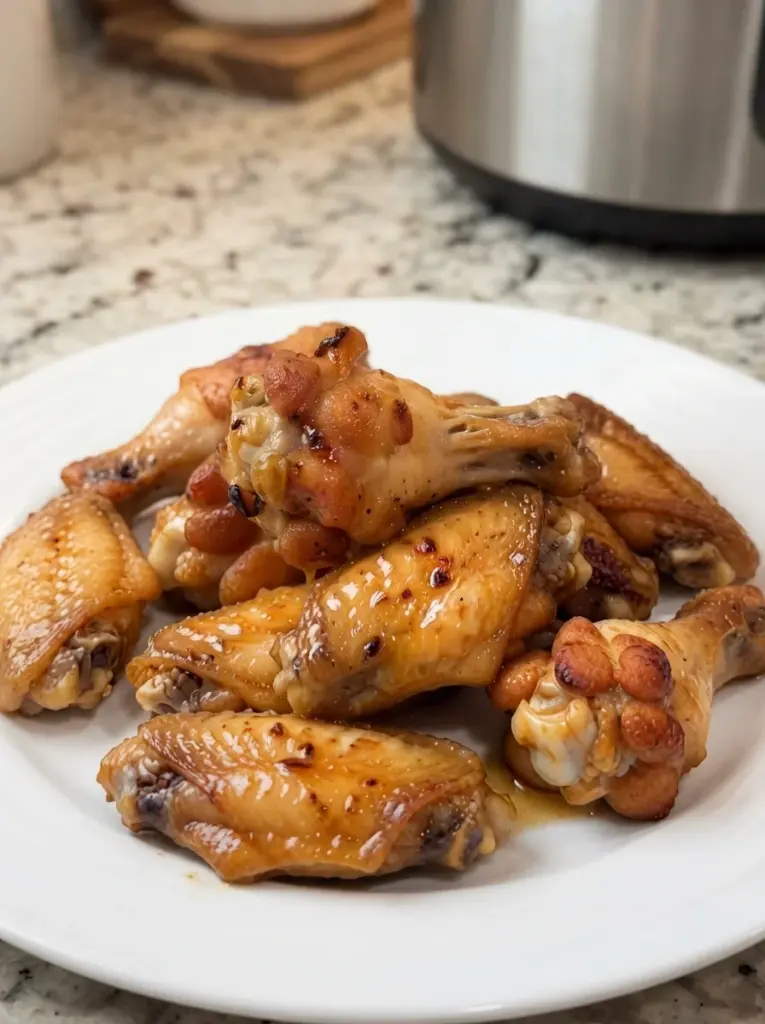
These Slow Cooker Hot Honey Lemon Pepper Wings combine tender chicken with a sweet, spicy, buttery sauce and a bright lemon finish. The slow cooker handles the main cooking, then a brief trip under the broiler gives the wings sticky, lightly caramelized edges.
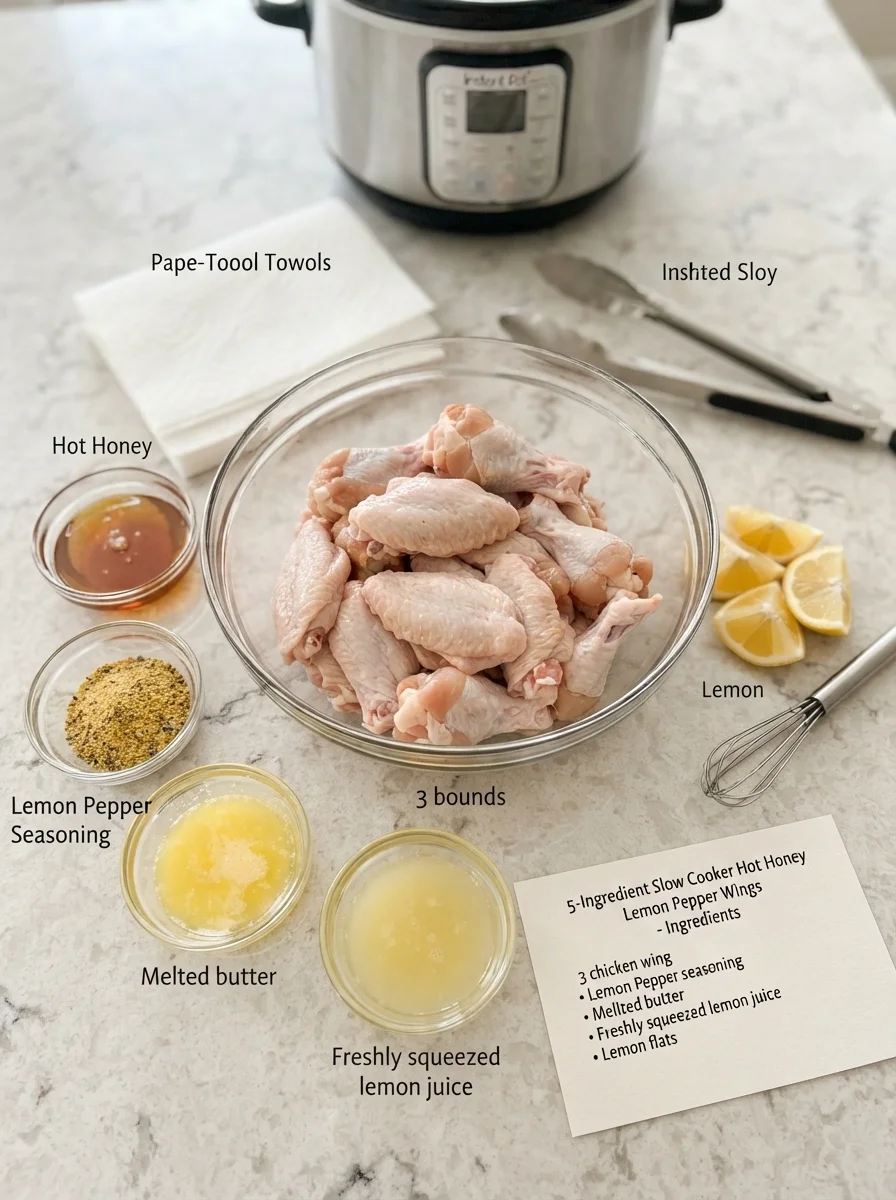
The ingredient list is short: chicken wings, hot honey, lemon pepper seasoning, butter, and lemon juice. The flavor depends on the hot honey and seasoning you choose, so the recipe includes ways to manage sweetness, heat, and salt without complicating the method.
The result is tender, glazed wings rather than dry, shatteringly crisp fried wings. Slow cooking keeps the skin moist; broiling browns exposed areas and sets the sauce, but it does not reproduce deep-fried texture. Serve them immediately after finishing for the best contrast between sticky edges and juicy meat.
They work well for game day, an informal gathering, or dinner with vegetables and a side of your choice. Have napkins ready and keep any optional dips separate so the lemon and pepper flavor remains noticeable.
Recipe Overview
- Chicken: 3 pounds split wings, fully thawed
- Yield: Often about 24–30 flats and drumettes, depending on size
- Servings: 6 appetizer portions or 4 larger portions
- Prep: About 10 minutes
- Slow cooking: Approximately 3–4 hours on LOW or 2–3 hours on HIGH, guided by temperature
- Sauce reduction and finishing: About 15–25 minutes
- Total on LOW: About 3 hours 25 minutes to 4 hours 35 minutes
The supplied recipe has been expanded with temperature checks and sauce-handling details. It has not been independently kitchen-tested for this article. Slow cookers, wing sizes, seasoning blends, and the amount of liquid released all affect timing and consistency.
Why This Method Works
The covered slow cooker gently cooks the wings in their sauce and released juices. Butter adds richness, lemon juice brings acidity, and hot honey provides sweetness and pepper heat.
Because little moisture escapes under the lid, the cooking liquid is usually too thin to function as a finished glaze. Reducing it in a saucepan gives you control over thickness and lets you remove some rendered chicken fat first.
The broiler is the final flavor and appearance step. A thin layer of glaze can brown quickly, so short intervals and close attention work better than committing to a long, uninterrupted broil.
Ingredients
- 3 pounds chicken wings, split into flats and drumettes, thawed
- ½ cup hot honey
- Up to 2 tablespoons lemon pepper seasoning, adjusted for the product’s salt content
- 3 tablespoons unsalted butter, melted and cooled slightly
- 2 tablespoons fresh lemon juice
For a salty lemon pepper blend, begin with about 1 tablespoon rather than the full 2 tablespoons. For a salt-free blend, the recipe may need additional salt to taste, which would be an optional sixth ingredient. You can also choose a moderately salted blend to keep the basic ingredient list at five.
Optional lemon wedges, celery, dips, and lemon zest are serving additions and are not included in the five-ingredient count or basic nutrition estimate.
Ingredient Notes
Chicken Wings
Use flats and drumettes rather than whole wings with tips attached. If buying whole wings, separate them at the joints and reserve the tips for another use, such as stock. Three pounds should refer to the pieces you plan to cook and serve.
Thaw completely before putting chicken in a slow cooker. Thaw in the refrigerator; do not leave chicken on the counter. Keep it refrigerated until you are ready to load the cooker and start cooking.
Pat dry with paper towels, but do not rinse raw chicken. Drying reduces surface water; it does not make the slow-cooked skin crisp by itself.
Hot Honey
Hot honey brands range from gently warm to noticeably spicy. Choose one you enjoy before committing the full batch. The sweetness remains prominent even when the product has substantial heat.
Ordinary honey would remove the intended spicy element. Adding a separate hot sauce or pepper creates a different ingredient list and can change the liquid balance, so treat that as a variation rather than an identical substitution.
Lemon Pepper Seasoning
This is the most variable ingredient. Some blends begin with salt, while others are largely pepper, lemon flavoring, and herbs. Two tablespoons of a heavily salted blend can overwhelm the sauce, especially once it reduces.
Read the label and use less initially when salt is prominent. You can add more seasoning to the safely cooked sauce later, but you cannot easily remove it after reduction.
Butter
Unsalted butter gives you more control because the seasoning may already contain plenty of salt. Melt it gently and combine while just warm. It does not need to be browned.
If the sauce looks oily after slow cooking, some of that fat comes from the chicken as well as the butter. Skimming helps the glaze cling instead of sliding off the wings.
Lemon Juice
Fresh juice provides a clear citrus note. Measure the amount rather than relying on the size of one lemon, since yields vary.
More juice is not always better: it can make the sauce too sharp and add liquid that must be reduced. Offer lemon wedges separately if people want a brighter finish.
Equipment
Use a 5- to 6-quart slow cooker appropriate for the batch and follow its manufacturer’s filling guidance. The wings can overlap, but do not pack the cooker beyond its recommended capacity.
You will also need tongs, an instant-read thermometer, a saucepan, a spoon for skimming, a pastry brush, and a broiler-safe rimmed metal baking sheet. Foil can simplify cleanup if permitted by your equipment instructions.
Do not use parchment beneath the broiler or put a slow-cooker insert under the broiler unless its manufacturer specifically approves that use. A separate metal sheet is the straightforward finishing surface.
How to Make the Wings
1. Prepare the Chicken and Work Area
Keep the thawed wings refrigerated until preparation. Pat dry and check for any remaining tips or loose bone fragments from joint separation.
Wash hands, utensils, and surfaces after raw chicken contact. Have a clean plate and clean serving utensils ready for the cooked wings.
2. Mix the Sauce
Whisk hot honey, lemon pepper seasoning, melted butter, and lemon juice in a bowl. Begin with less seasoning if the blend is salt-heavy.
You may taste the sauce at this stage before it touches chicken, using a clean spoon. Once it has contacted raw chicken, it must be cooked before tasting or serving.
The sauce may separate a little because butter and lemon juice do not form a permanently stable mixture. Whisk again immediately before pouring.
3. Load and Start the Slow Cooker
Place wings in the cooker, pour over the sauce, and turn gently to coat. Cover and begin cooking immediately; do not use a delayed start with raw chicken.
Keep the lid closed during cooking as much as possible. Repeated lifting releases heat and makes the stated timing less useful.
4. Cook Until Safe and Tender
Cook on LOW for approximately 3–4 hours or HIGH for about 2–3 hours. Begin checking near the earlier end if your appliance runs hot or the wings are small.
Check several of the larger pieces with a thermometer in the thickest meat, away from bone. All checked pieces must reach at least 165°F before you remove the batch for finishing. Do not rely on color, loose joints, or clear-looking juices alone.
The meat should be tender but still attached firmly enough to lift with tongs. Extended cooking can make wings fall apart during transfer, so stop once they are safely cooked and at the texture you want.
If they have not reached temperature at the expected time, keep cooking with the lid on and check again. The time range does not override the thermometer.
5. Transfer to a Baking Sheet
Use tongs to lift the cooked wings onto the metal sheet. Let excess liquid drip back into the cooker and arrange the wings in a single layer with a little space between pieces.
Handle gently near the bones rather than squeezing the softened meat. Use two sheets if necessary instead of stacking the wings.
6. Safely Boil and Reduce the Cooking Liquid
Carefully transfer the cooking liquid to a saucepan. Skim off excess surface fat with a spoon. You do not need to remove every trace, but a large oil layer prevents a cohesive glaze.
Bring the liquid to a full boil while stirring before using it as a serving sauce. Then reduce the heat to a controlled simmer and continue cooking until it lightly coats a spoon, often about 8–15 minutes or longer depending on how much liquid the wings released.
Use a saucepan with enough space to prevent bubbling over. Stir from the bottom and watch more closely as it thickens. Do not reduce until nearly dry or cook it to a candy stage.
Taste only after it has boiled safely. If it is already salty, avoid reducing it aggressively just to make it thicker; use a lighter coating instead. A very salty blend cannot be corrected simply by adding more pepper.
7. Brush and Broil in Short Intervals
Preheat the broiler and position the rack according to the oven’s instructions. A moderate distance from the element helps you control browning better than placing the honey-coated wings immediately beneath it.
Brush a thin layer of reduced sauce over the wings. Broil for about 1–3 minutes, checking very frequently, until the exposed surfaces begin to brown. Turn carefully, brush lightly again, and broil the second side for another short interval as needed.
Broilers vary widely. The original longer time may work with a distant or weaker element, but honey can burn quickly under strong heat. Use color and close observation rather than insisting on a fixed number of minutes.
Keep the oven door in the position recommended by its manufacturer. Never leave the broiler unattended.
8. Finish and Serve
Transfer the wings to a clean serving platter. Add a little more safely boiled glaze if desired, or serve it separately.
For the best browned texture, brush rather than heavily tossing the whole batch in sauce. Tossing gives a saucier result but softens the finished edges.
Serve immediately. Add optional lemon wedges or dips at the table rather than soaking the tray in extra liquid.
What Kind of Crispness Can You Expect?
Slow cooking softens skin in a moist environment. Broiling can brown it and create caramelized spots, but it does not remove all the moisture throughout the skin.
The appealing result is sticky, tender wings with browned edges. If your priority is uniformly crisp skin, an oven-roasted or air-fried recipe designed around dry heat is a better method, rather than extending the broil until the honey burns.
Keep expectations aligned with the technique and avoid describing these as identical to deep-fried restaurant wings.
Tips for a Better Glaze
Use only the measured lemon juice at the start. Extra liquid increases reduction time and can make the finished sauce sharper.
Skim rendered fat before reducing. Butter and chicken fat can separate from the watery cooking liquid, and boiling alone will not necessarily turn all that fat into a smooth glaze.
Stop while the sauce is spoonable. It thickens a little as it cools and becomes tackier on the hot wings. An over-reduced sauce can turn sticky in an unpleasant, candy-like way.
Brush thinly before broiling. A thick pool of honey sauce on the baking sheet can blacken before the wing surface browns.
Reserve a clean brush for any final serving glaze if the first brush or utensil touched raw chicken earlier. Keep raw preparation tools separate from cooked-food serving tools.
Troubleshooting
| Problem | Likely reason | Adjustment |
|---|---|---|
| Wings fall apart | They cooked beyond the desired tenderness | Check earlier next time and transfer gently. |
| Chicken is not at 165°F | Appliance or piece size needs more time | Continue slow cooking and check multiple pieces. |
| Sauce is thin | Chicken released moisture under the lid | Boil safely, then reduce separately on the stove. |
| Sauce looks oily | Rendered fat remains | Skim before reduction and brush lightly. |
| Glaze is too salty | Salt-heavy seasoning concentrated during reduction | Use less seasoning initially and avoid excessive reduction. |
| Honey blackens quickly | Broiler heat is too intense or glaze is too thick | Move farther from the element and use shorter intervals. |
| Skin is soft | Slow cooking creates moist skin | Expect browned edges, not fried crispness. |
| Wings lose their finish | Heavy tossing or long covered holding | Serve promptly with extra glaze separately. |
Variations
Milder Heat
Choose a milder hot honey. Replacing part of it with regular honey is another option, but introduces an additional ingredient and changes the five-ingredient formula.
Brighter Lemon Finish
Add a little lemon zest at serving as an optional extra. It adds aroma without the same amount of liquid as more juice. Use only the colored zest and avoid the bitter white pith.
Extra Heat
Offer additional hot honey on the side or choose a hotter product from the start. Adding pepper flakes is another variation, but it is not required in the base ingredient list.
Less Salt
Use a lower-sodium lemon pepper blend and adjust the initial amount. Avoid choosing a very salty seasoning and assuming unsalted butter will fully offset it.
Oven Finish Without a Broiler
If you cannot use a broiler, finish the cooked, lightly glazed wings in a hot oven around 425°F until the coating sets and the edges color, checking from about 5 minutes. It may take longer than broiling, and the result may be less browned. Watch the honey carefully and avoid overcooking the meat.
Serving Ideas
Offer celery sticks, a crisp salad, or a tangy slaw to balance the sweet glaze. Ranch or blue cheese dressing is optional and adds ingredients and calories beyond the base recipe.
For dinner, serve a larger portion with potato wedges, rice, or roasted vegetables. For an appetizer spread, divide the wings into smaller portions alongside other dishes.
Count the actual wing pieces before planning portions. Three pounds can produce different counts depending on size. At six servings, a batch of 24–30 pieces gives about 4–5 per person. At four servings, it gives about 6–8 each.
Make-Ahead Guidance
You can mix the sauce a day ahead and refrigerate it separately. The butter may firm up; warm gently and whisk before using. Keep raw wings refrigerated separately until cooking.
For the best texture, cook and finish the wings close to serving. If making the full batch ahead, refrigerate cooked wings and safely boiled sauce promptly in separate shallow containers.
Reheat the wings in the oven to 165°F before applying a brief final glaze-and-brown step. Do not assume a couple of minutes under the broiler will heat refrigerated meat thoroughly.
Keep cold leftovers out of a slow cooker when reheating. Reheat on the stove, in the oven, or in the microwave first, then use suitable hot-holding equipment if needed.
Storage and Reheating
Refrigerate leftovers within 2 hours, or within 1 hour when temperatures exceed 90°F. Keep at 40°F or below and use within 3–4 days.
To reheat, arrange in an oven-safe dish or sheet at 350°F. Heat until the thickest parts reach 165°F, beginning to check around 15 minutes and allowing longer as needed. Cover loosely if the glaze darkens before the meat warms through.
A small amount of sauce can keep the surface moist, but a large coating can burn. Add more heated sauce after reheating if needed.
Freeze cooked wings and sauce in suitable airtight containers for up to 2 months for best quality. Thaw in the refrigerator before reheating. The skin will be softer after storage than immediately after the original broil.
For a gathering, hold already-hot wings at 140°F or above if using suitable equipment. Covered hot holding softens the browned finish, so small freshly finished batches give a better eating texture.
Nutrition Notes
A broad estimate is approximately 380–500 calories per serving at six servings, depending on the edible portion of the wings, rendered fat discarded, and glaze consumed. At four larger servings, the calorie amount is higher, roughly one and a half times the six-serving figure.
These are illustrative planning estimates, not a calculated nutrition label. Bone-in weight is not the same as edible meat weight, and sauce left in the pan changes what is actually consumed.
The honey contributes substantial sugar, so this recipe is not presented as low-carb or sugar-free. Butter adds dairy. Check seasoning and hot honey labels for specific dietary requirements.
Frequently Asked Questions
Can I put frozen wings in the slow cooker?
Use fully thawed wings for this method. Thaw safely in the refrigerator and keep them cold until cooking begins.
Do I need to add broth or water?
Not in the stated formula. The sauce and chicken release liquid during covered cooking. Follow your appliance’s minimum-liquid instructions; if it requires a different method, do not override the manufacturer to preserve the ingredient count.
Does HIGH always take two hours?
No. Two hours is an approximate starting check, not a guarantee. Use the thermometer and allow longer as needed.
Can I skip boiling the sauce?
The cooking liquid has contacted raw chicken. Bring it to a full boil before using it as a finishing or serving sauce, then reduce gently for texture.
Can I skip the broiler?
Yes, but the wings will be softer and less browned. A hot oven finish is an option, with careful monitoring of the honey.
Why did my sauce burn?
Honey and concentrated sugar brown quickly. Excessive reduction, a thick coating, or placing the tray too close to a strong broiler can all contribute. Use thin layers and short intervals.
Can I double the recipe?
Only within the cooker’s recommended capacity. Use a larger suitable cooker or two cookers rather than overpacking one. Timing and sauce reduction will change, and each batch needs its own temperature checks.
Recipe Card
5-Ingredient Slow Cooker Hot Honey Lemon Pepper Wings
Tender wings with a sweet-spicy lemon butter glaze and a short broiler finish.
Chicken: 3 pounds split wings
Servings: 6 appetizer or 4 larger portions
Prep: 10 minutes
Slow cook: About 3–4 hours LOW or 2–3 hours HIGH
Finish: About 15–25 minutes
Ingredients
- 3 pounds chicken flats and drumettes, fully thawed
- ½ cup hot honey
- Up to 2 tablespoons lemon pepper seasoning; start with about 1 tablespoon if salt-heavy
- 3 tablespoons unsalted butter, melted
- 2 tablespoons fresh lemon juice
Instructions
- Pat thawed wings dry without rinsing. Place in an appropriately sized slow cooker.
- Whisk hot honey, seasoning, melted butter, and lemon juice. Pour over chicken and turn to coat. Cover and begin cooking immediately.
- Cook LOW about 3–4 hours or HIGH about 2–3 hours, checking several large pieces for at least 165°F away from bone. Stop when safe and tender but still intact.
- Transfer wings to a broiler-safe rimmed metal sheet in one layer. Drain excess liquid from the wings.
- Transfer cooking liquid to a saucepan and skim excess fat. Bring to a full boil, then simmer while stirring until lightly thickened, often 8–15 minutes or longer. Do not scorch or reduce to a candy coating.
- Brush wings lightly with glaze. Broil in short intervals, about 1–3 minutes per side as a starting guide, watching continuously and adjusting distance for your oven.
- Serve promptly with a little more safely boiled glaze if desired. Brushing preserves browned edges better than a heavy final toss.
Storage: Refrigerate promptly for 3–4 days. Reheat leftovers to 165°F before any brief browning finish. Freeze up to 2 months for best quality.
Estimated nutrition: Roughly 380–500 calories per serving at six servings; wing size, edible yield, and sauce portions vary.
Texture note: Expect tender, sticky wings with caramelized spots rather than uniformly crisp fried skin.
Print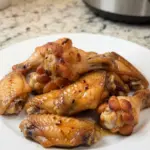
5-Ingredient Slow Cooker Hot Honey Lemon Pepper Wings
Description
Tender wings with a sweet-spicy lemon butter glaze and a short broiler finish.
Chicken: 3 pounds split wings
Servings: 6 appetizer or 4 larger portions
Prep: 10 minutes
Slow cook: About 3–4 hours LOW or 2–3 hours HIGH
Finish: About 15–25 minutes
Ingredients
- 3 pounds chicken flats and drumettes, fully thawed
- ½ cup hot honey
- Up to 2 tablespoons lemon pepper seasoning; start with about 1 tablespoon if salt-heavy
- 3 tablespoons unsalted butter, melted
- 2 tablespoons fresh lemon juice
Instructions
- Pat thawed wings dry without rinsing. Place in an appropriately sized slow cooker.
- Whisk hot honey, seasoning, melted butter, and lemon juice. Pour over chicken and turn to coat. Cover and begin cooking immediately.
- Cook LOW about 3–4 hours or HIGH about 2–3 hours, checking several large pieces for at least 165°F away from bone. Stop when safe and tender but still intact.
- Transfer wings to a broiler-safe rimmed metal sheet in one layer. Drain excess liquid from the wings.
- Transfer cooking liquid to a saucepan and skim excess fat. Bring to a full boil, then simmer while stirring until lightly thickened, often 8–15 minutes or longer. Do not scorch or reduce to a candy coating.
- Brush wings lightly with glaze. Broil in short intervals, about 1–3 minutes per side as a starting guide, watching continuously and adjusting distance for your oven.
- Serve promptly with a little more safely boiled glaze if desired. Brushing preserves browned edges better than a heavy final toss.
Storage: Refrigerate promptly for 3–4 days. Reheat leftovers to 165°F before any brief browning finish. Freeze up to 2 months for best quality.
Estimated nutrition: Roughly 380–500 calories per serving at six servings; wing size, edible yield, and sauce portions vary.
Texture note: Expect tender, sticky wings with caramelized spots rather than uniformly crisp fried skin.