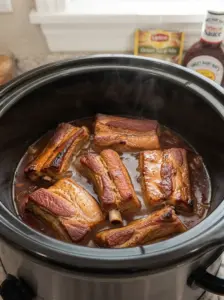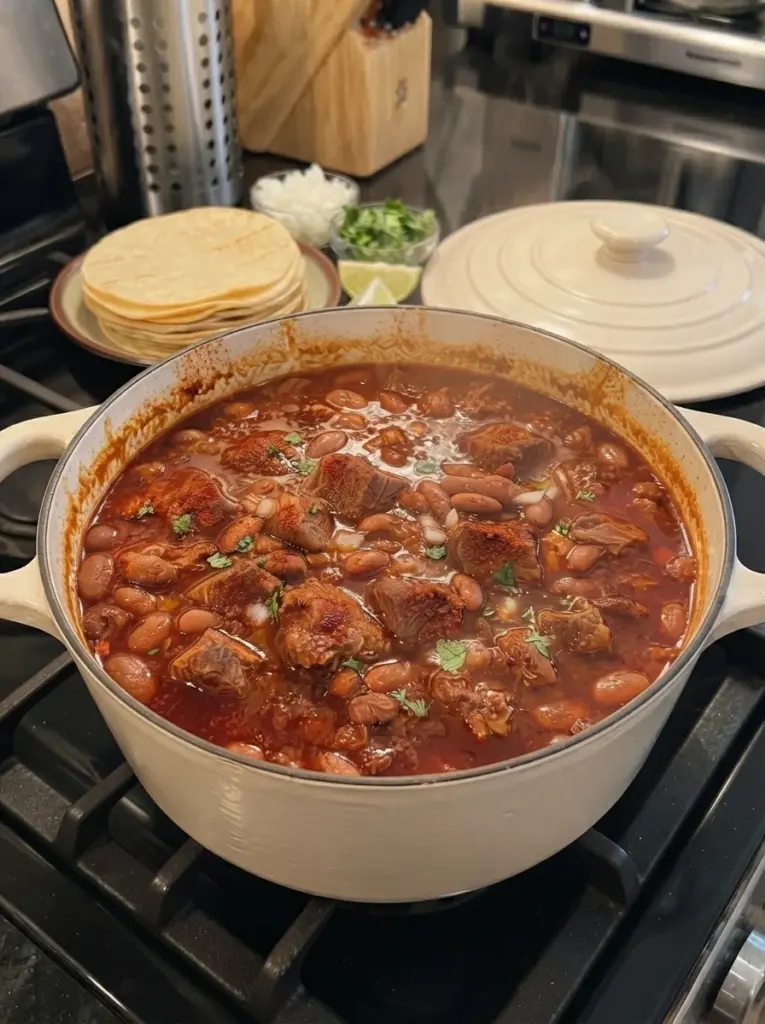
If you love rich, slow-simmered pork, tender pinto beans, and the deep, earthy flavor of New Mexico red chile, this New Mexico Red Chile Pork & Pinto Bean Stew is a recipe you’ll want to make again and again. It’s a hearty, comforting dish filled with fork-tender pork shoulder, creamy pinto beans, aromatic garlic, warm spices, and a beautifully seasoned red chile broth.
The secret to this flavorful stew is the combination of pure New Mexico red chile powder and slowly simmered pork shoulder. As the pork cooks, it becomes tender and releases savory juices into the broth, while the red chile creates a deep reddish color and a distinctive earthy flavor.
Pinto beans add a creamy texture and make the stew even more satisfying. Onion, garlic, cumin, Mexican oregano, and smoked paprika build layers of flavor, while a splash of apple cider vinegar or fresh lime juice brightens the finished dish.
Unlike quick soups that come together in minutes, this stew benefits from gentle simmering. The longer cooking time allows the pork shoulder to become tender and the red chile broth to develop its characteristic richness.
This recipe is inspired by the bold flavors of New Mexican red chile cooking, with the addition of pinto beans for a hearty, family-style meal. It isn’t intended to represent one single traditional preparation, but it celebrates ingredients that are central to New Mexico’s distinctive cuisine.
Serve it with warm flour tortillas, homemade cornbread, Mexican rice, or a simple side of chopped onion and fresh cilantro.
Whether you’re planning a cozy family dinner, preparing meals for the week, or looking for a flavorful pork stew for a chilly evening, this New Mexico Red Chile Pork & Pinto Bean Stew delivers satisfying Southwestern comfort in every bowl.
Why You’ll Love This New Mexico Red Chile Pork & Pinto Bean Stew
Rich New Mexico red chile flavor. Pure ground New Mexico red chile provides the earthy, slightly sweet, and gently spicy flavor that makes this stew special.
Tender, slow-simmered pork. Pork shoulder becomes juicy and fork-tender as it cooks in the seasoned broth.
Creamy pinto beans. Pinto beans absorb the chile flavor and add a satisfying, hearty texture.
Deep, savory broth. Browning the pork and sautéing the aromatics creates layers of flavor.
Easy one-pot cooking. Everything comes together in a Dutch oven or heavy-bottomed pot.
Perfect for family dinners. The recipe makes approximately six to eight servings.
Great for meal preparation. The stew reheats beautifully, and its flavor often becomes even more developed the following day.
Freezer-friendly. Individual portions can be frozen for convenient future meals.
Customizable heat level. Adjust the amount and variety of red chile powder to suit your preference.
Delicious with tortillas or cornbread. The rich red chile broth is perfect for dipping warm bread.
What Is New Mexico Red Chile Pork & Pinto Bean Stew?
New Mexico Red Chile Pork & Pinto Bean Stew is a hearty, chile-based pork stew made with chunks of pork shoulder, pinto beans, chicken broth, aromatics, and ground New Mexico red chile.
The defining ingredient is New Mexico red chile powder.
Unlike generic chili seasoning blends, which often contain a mixture of cumin, garlic powder, salt, and other seasonings, pure New Mexico red chile powder is made from dried red chile peppers.
These chiles develop a distinctive earthy, slightly sweet flavor that can range from mild to hot depending on the variety.
The pork is browned first to develop a savory crust, then simmered in a red chile broth until tender.
Pinto beans contribute a creamy texture and help make the stew substantial enough to serve as a complete meal.
A small amount of flour helps thicken the broth, creating a consistency that’s richer than a typical soup but still spoonable.
Optional diced tomatoes add acidity and additional body, although they can be omitted for a more chile-forward flavor.
The stew is finished with apple cider vinegar or lime juice, which balances the richness of the pork and brightens the red chile.
The finished dish should have tender pieces of pork, soft pinto beans, and a flavorful reddish-brown broth.
Ingredients for New Mexico Red Chile Pork & Pinto Bean Stew
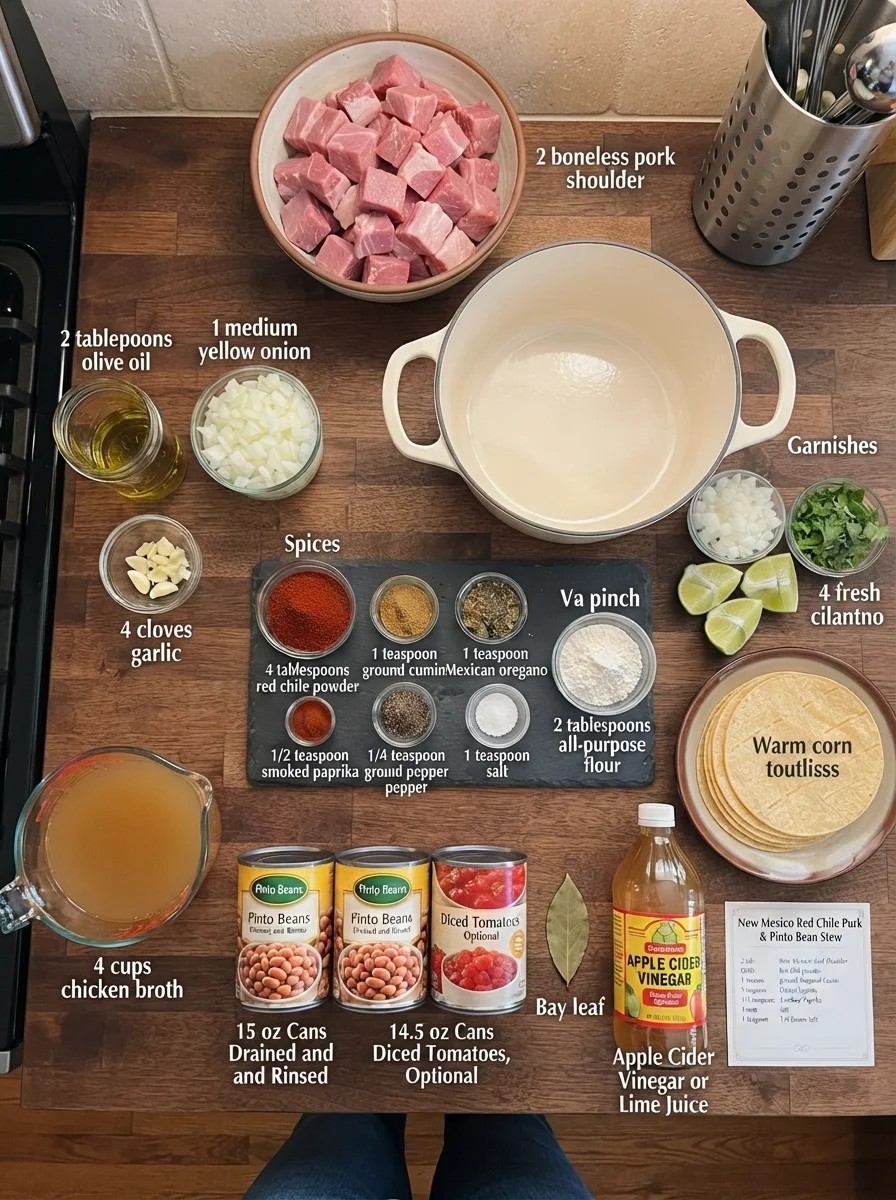
This recipe makes approximately six to eight servings.
For the Pork and Red Chile Stew
-
2 lb boneless pork shoulder, cut into 1-inch cubes
-
2 tablespoons olive oil or vegetable oil
-
1 medium yellow onion, diced
-
4 cloves garlic, minced
-
4 tablespoons pure New Mexico red chile powder
-
1 teaspoon ground cumin
-
1 teaspoon dried Mexican oregano
-
1/2 teaspoon smoked paprika
-
1/4 teaspoon ground black pepper
-
1 teaspoon salt, plus more to taste
-
2 tablespoons all-purpose flour
-
4 cups chicken broth
-
2 cans (15 oz each) pinto beans, drained and rinsed
-
1 can (14.5 oz) diced tomatoes, optional
-
1 bay leaf
-
1 tablespoon apple cider vinegar or fresh lime juice
-
2 tablespoons chopped fresh cilantro, for serving
Optional Toppings
-
Finely diced white onion
-
Extra fresh cilantro
-
Thinly sliced jalapeños
-
Fresh lime wedges
-
Warm flour or corn tortillas
-
Cornbread
-
Mexican rice
Ingredient Notes
Pork shoulder: Pork shoulder is an excellent cut for slow-simmered stews because it contains connective tissue and fat that soften during cooking. Cut it into approximately 1-inch cubes for even cooking.
Olive oil or vegetable oil: Oil helps brown the pork and sauté the aromatics. Either option works well.
Yellow onion: Onion creates a savory foundation and develops a mild sweetness as it cooks.
Fresh garlic: Garlic contributes bold flavor that complements the red chile and pork.
New Mexico red chile powder: This is the most important seasoning in the recipe. Choose pure ground New Mexico red chile rather than a generic chili seasoning blend. Heat levels vary, so select mild, medium, or hot chile powder according to your preference.
Ground cumin: Cumin adds a warm, earthy flavor that complements the chile.
Mexican oregano: Mexican oregano has a distinctive herbal flavor that works especially well in chile-based dishes. If unavailable, regular dried oregano can be used, although the flavor will differ.
Smoked paprika: Smoked paprika adds subtle smokiness and deepens the flavor of the broth.
Black pepper: Black pepper adds gentle warmth and balances the other seasonings.
Salt: Salt enhances the pork, beans, and chile. Adjust according to the sodium content of your chicken broth.
All-purpose flour: Flour helps thicken the broth and gives the stew a richer consistency.
Chicken broth: Chicken broth provides the liquid base. Choose a flavorful broth, preferably low-sodium for easier seasoning control.
Pinto beans: Pinto beans add creaminess and make the stew more filling. Canned beans are convenient because they’re already cooked.
Diced tomatoes: Tomatoes are optional. They contribute acidity, texture, and additional liquid. Omit them if you prefer the red chile flavor to dominate.
Bay leaf: A bay leaf adds subtle herbal depth during simmering.
Apple cider vinegar or lime juice: A small amount of acidity at the end brightens the rich pork and chile flavors.
Fresh cilantro: Cilantro adds freshness and color just before serving.
How to Make New Mexico Red Chile Pork & Pinto Bean Stew
This recipe uses a simple browning-and-simmering method to develop a deeply flavorful stew.
Step 1: Prepare the Pork
Place the boneless pork shoulder on a cutting board.
Trim away any large, excessive pieces of surface fat, leaving some marbling for flavor.
Cut the pork into approximately 1-inch cubes.
Pat the pieces dry with paper towels.
Drying the pork helps it develop a better crust during browning.
Season with some of the measured salt and black pepper.
Step 2: Heat the Oil
Place a large Dutch oven or heavy-bottomed pot over medium-high heat.
Add 2 tablespoons of olive oil or vegetable oil.
Allow the oil to heat until shimmering.
The pot should be hot enough to brown the pork without causing the oil to smoke heavily.
Step 3: Brown the Pork in Batches
Add a portion of the pork cubes to the hot pot.
Arrange them in a single layer, leaving a little space between the pieces.
Avoid overcrowding because too much pork at once can cause steaming instead of browning.
Cook for approximately 5–7 minutes per batch, turning occasionally, until several sides develop a golden-brown crust.
The pork does not need to be fully cooked at this stage.
Transfer the browned pieces to a plate.
Repeat with the remaining pork.
Step 4: Sauté the Onion
Reduce the heat to medium.
Add the diced yellow onion to the same pot.
Cook for approximately 4–5 minutes, stirring occasionally.
The onion should soften and become slightly translucent.
As it cooks, use a wooden spoon to loosen some of the browned bits from the bottom of the pot.
These browned bits contribute valuable savory flavor.
Step 5: Add the Garlic
Add the minced garlic.
Stir continuously for approximately 30 seconds.
The garlic should become fragrant without turning dark brown.
Avoid burning it because burnt garlic can make the stew bitter.
Step 6: Add the New Mexico Red Chile Powder
Sprinkle the New Mexico red chile powder into the pot.
Add the ground cumin, Mexican oregano, and smoked paprika.
Stir to coat the onion and garlic with the seasonings.
Cook briefly, approximately 30 seconds, to release their aromas.
Red chile powder can burn quickly, so keep the heat moderate and stir constantly.
If the mixture looks dry, add a small splash of chicken broth.
Step 7: Stir in the Flour
Sprinkle the all-purpose flour over the seasoned onion mixture.
Stir continuously until the flour is evenly incorporated.
Cook briefly to remove the raw flour taste.
The mixture may become thick and paste-like.
This is normal.
The flour will help thicken the broth as the stew simmers.
Step 8: Gradually Add the Chicken Broth
Slowly pour in the chicken broth while stirring.
Begin with a small amount and whisk or stir until the chile mixture becomes smooth.
Gradually add the remaining broth.
This helps prevent flour lumps from forming.
Scrape the bottom of the pot to release the browned pork bits.
The broth should develop a rich red color as the chile powder disperses.
Step 9: Return the Pork to the Pot
Add the browned pork cubes and any accumulated juices back into the pot.
Stir gently to coat the meat with the red chile broth.
The pork will continue cooking during the simmering stage.
Step 10: Add the Pinto Beans
Drain and rinse the canned pinto beans.
Add them to the pot.
Stir gently to distribute them among the pork pieces.
Because the beans are already cooked, they will soften further as the stew simmers. If you prefer firmer beans, reserve them and add them during the final 20–30 minutes instead.
Step 11: Add Optional Tomatoes and Bay Leaf
If using diced tomatoes, pour the can into the pot, including the juices.
Add the bay leaf.
Stir gently.
The tomatoes add a slightly tangy flavor, while the bay leaf contributes subtle herbal notes.
Step 12: Bring to a Gentle Boil
Increase the heat slightly until the stew begins to bubble.
Once it reaches a gentle boil, reduce the heat to low.
The stew should maintain a slow, steady simmer rather than a vigorous boil.
Step 13: Simmer Until the Pork Is Tender
Partially cover the pot with a lid.
Simmer for approximately 1 1/2–2 hours.
Stir occasionally to prevent the flour-thickened broth from sticking to the bottom.
As the pork cooks, the connective tissue gradually softens.
The stew will become richer, and the pork should become tender enough to break apart easily with a fork.
The exact cooking time depends on the size of the pork pieces and the cut.
If the stew becomes too thick, add a little additional chicken broth or water.
Step 14: Check the Pork
After approximately 90 minutes, test a piece of pork with a fork.
It should be tender and easy to pull apart.
If it still feels tough, continue simmering and check again after 15–20 minutes.
Pork shoulder often needs additional time to reach its best texture.
Step 15: Adjust the Thickness
If you prefer a thicker stew, use the back of a spoon to mash a small portion of the pinto beans against the side of the pot.
Stir the mashed beans into the broth.
This naturally thickens the stew without requiring additional flour.
If the stew is too thick, add more broth.
Step 16: Finish With Vinegar or Lime Juice
Once the pork is tender, remove the bay leaf.
Stir in 1 tablespoon of apple cider vinegar or fresh lime juice.
The acidity balances the rich pork and earthy chile flavor.
Taste the stew.
Adjust the salt, pepper, and chile seasoning as needed.
If adding more chile powder at this stage, first mix it with a little hot broth and allow it to simmer briefly so the flavor integrates.
Step 17: Garnish and Serve
Ladle the hot stew into serving bowls.
Top with chopped fresh cilantro and finely diced white onion.
Add sliced jalapeños if you enjoy extra heat.
Serve with fresh lime wedges.
Warm flour tortillas, corn tortillas, Mexican rice, or cornbread make excellent accompaniments.
Time and Yield
-
Prep Time: 20 minutes
-
Cooking Time: Approximately 1 hour 45 minutes to 2 hours, potentially longer depending on pork tenderness
-
Total Time: Approximately 2 hours 5 minutes to 2 hours 20 minutes
-
Servings: 6–8
-
Yield: One large pot of stew
Estimated Nutrition Per Serving
| Nutrient | Approximate amount |
|---|---|
| Calories | 390–470 |
| Protein | Depends on pork and portion size |
| Carbohydrates | Primarily from pinto beans and optional tomatoes |
| Fat | Depends on pork shoulder and added oil |
| Fiber | Supplied mainly by pinto beans |
| Sodium | Depends on broth, canned beans, and seasoning |
These are estimates rather than verified nutritional calculations. Actual values depend on the pork’s fat content, serving size, optional tomatoes, and accompanying foods.
Tips for the Best New Mexico Red Chile Pork & Pinto Bean Stew
Use pure New Mexico red chile powder. This ingredient provides the stew’s characteristic flavor. Generic chili seasoning blends contain additional spices and may produce a different result.
Choose pork shoulder. Pork shoulder becomes tender during slow simmering and provides more flavor than very lean pork cuts.
Brown the pork in batches. Proper browning develops a savory crust and enhances the broth.
Don’t rush the simmer. Gentle cooking allows the pork’s connective tissue to soften.
Avoid burning the chile powder. Stir constantly when adding the chile and spices, and add broth quickly if the mixture becomes too dry.
Use Mexican oregano when available. Its distinctive flavor complements red chile beautifully.
Adjust the heat gradually. Start with 3 tablespoons of red chile powder if you’re unsure about the spice level.
Drain and rinse canned beans. This removes excess canning liquid and allows you to control the broth’s flavor.
Stir occasionally. The flour-thickened broth can stick to the bottom of the pot if left unattended.
Mash some beans for a thicker stew. This creates a heartier consistency without additional flour.
Finish with acidity. Apple cider vinegar or lime juice balances the richness and brightens the chile flavor.
Let the stew rest before serving. A brief resting period allows the broth to settle and the flavors to come together.
Variations and Customizations
Traditional-Style Red Chile Pork Stew Without Beans
Omit the pinto beans for a more pork-focused red chile stew.
You may also omit the tomatoes to emphasize the pure red chile flavor.
Adjust the broth quantity as needed.
New Mexico Red Chile Pork and Hominy Stew
Replace the pinto beans with 2 cans of drained and rinsed hominy.
Hominy adds a chewy texture and mild corn flavor.
This creates a posole-inspired variation, though it isn’t a traditional posole recipe.
Spicy Red Chile Pork Stew
Use hot New Mexico red chile powder.
Add a small pinch of cayenne pepper or crushed red pepper flakes.
Serve with sliced jalapeños.
Red Chile Pork and Potato Stew
Add 2 medium potatoes, peeled and diced, during the final 25–35 minutes of simmering.
The potatoes absorb the chile broth and make the stew more substantial.
Red Chile Pork and Black Bean Stew
Replace the pinto beans with canned black beans.
Black beans have a slightly firmer texture and earthy flavor.
Red Chile Pork and White Bean Stew
Use cannellini beans or Great Northern beans instead of pinto beans.
The white beans create a creamier texture and milder flavor.
Smoky Chipotle Red Chile Pork Stew
Add a small amount of minced chipotle pepper in adobo sauce.
Chipotle contributes a deeper smoky flavor and additional heat.
Start with a small amount because it can overpower the New Mexico red chile.
Red Chile Pork and Green Chile Stew
Add a small can of diced roasted green chiles.
The green chiles provide a different layer of pepper flavor.
Slow Cooker Red Chile Pork and Pinto Bean Stew
Brown the pork and sauté the aromatics on the stovetop.
Prepare the red chile base with the flour and broth.
Transfer everything to a slow cooker.
Cook on LOW for approximately 7–9 hours or HIGH for approximately 4–6 hours, until the pork is fork-tender.
For firmer canned beans, add them during the final hour.
Finish with vinegar or lime juice before serving.
Red Chile Pork Stew With Extra Vegetables
Add diced carrots, bell peppers, or potatoes.
Adjust the cooking time according to the vegetables.
This creates a heartier family-style stew.
What to Serve With New Mexico Red Chile Pork & Pinto Bean Stew
This stew is satisfying on its own, but it pairs beautifully with several classic Southwestern-inspired sides.
Warm Flour Tortillas
Soft flour tortillas are perfect for scooping up tender pork and soaking up the red chile broth.
Corn Tortillas
Warm corn tortillas add a mild corn flavor that complements the chile.
Homemade Cornbread
Cornbread provides a slightly sweet contrast to the savory, earthy stew.
Mexican Rice
Serve the stew over or alongside seasoned rice for a more substantial meal.
White Rice
Plain white rice absorbs the flavorful broth without competing with the red chile.
Fresh Lime Wedges
A squeeze of fresh lime brightens the rich stew.
Diced White Onion
Finely diced white onion adds freshness and crunch.
Fresh Cilantro
Cilantro provides a clean herbal finish.
Sliced Jalapeños
Fresh jalapeños add extra heat and texture.
Simple Cabbage Slaw
A light cabbage slaw with lime juice adds crunch and acidity that balances the stew.
Troubleshooting Common Problems
My Pork Is Still Tough
Pork shoulder often needs more time to become tender.
Continue simmering gently until the meat can be easily pulled apart with a fork.
Avoid increasing the heat too much because a vigorous boil can make the meat tighten and the broth reduce too quickly.
My Stew Is Too Thin
Simmer uncovered for a few minutes to reduce the broth.
You can also mash some of the pinto beans against the side of the pot.
Stir the mashed beans back into the stew.
My Stew Is Too Thick
Add chicken broth or water in small amounts.
Stir until the desired consistency is reached.
My Stew Is Too Spicy
The heat level of New Mexico red chile powder varies.
If the stew is too spicy, add more broth and pinto beans to dilute the heat.
Serve with rice, tortillas, or a mild topping.
My Stew Isn’t Spicy Enough
Add a small amount of additional red chile powder or cayenne pepper.
Mix the seasoning with a little hot broth before adding it.
Allow it to simmer briefly.
My Red Chile Tastes Bitter
Red chile powder can become bitter if burned during cooking.
Keep the heat moderate when blooming the spices.
Add broth quickly if the mixture becomes too dry.
For future batches, avoid cooking the chile powder over high heat.
My Stew Tastes Bland
Check the salt level.
Add a little more cumin, Mexican oregano, or red chile powder if needed.
A splash of lime juice or apple cider vinegar can also brighten the flavor.
My Pinto Beans Are Too Soft
Canned pinto beans are already cooked and may become very soft during a long simmer.
For firmer beans, add them during the final 20–30 minutes instead of at the beginning.
My Stew Is Too Salty
Add unsalted broth or water.
You can also add more unsalted pinto beans.
Avoid adding additional salt until the stew has finished simmering and reducing.
My Flour Formed Lumps
Flour can form lumps if the broth is added too quickly.
Add the broth gradually while stirring.
For future batches, whisk the flour thoroughly into the aromatics and spices before adding the liquid.
Storage and Reheating
New Mexico Red Chile Pork & Pinto Bean Stew is excellent for leftovers because the flavor often becomes more developed after refrigeration.
Refrigerator Storage
Allow the stew to cool briefly.
Transfer it into shallow, airtight containers and refrigerate within 2 hours.
Store at 40°F or below for up to 4 days.
Reheating on the Stovetop
Transfer the desired amount to a saucepan.
Heat over medium-low heat, stirring occasionally.
Add a splash of chicken broth or water if the stew has thickened.
Continue heating until the center reaches 165°F.
Reheating in the Microwave
Place a portion in a microwave-safe bowl.
Cover loosely.
Heat in intervals, stirring between each interval.
Continue until thoroughly heated to 165°F.
Freezer Storage
Allow the stew to cool before freezing.
Divide into freezer-safe containers or bags.
Leave a little room for expansion.
Freeze for up to 3 months for best quality.
Thawing Frozen Stew
Thaw overnight in the refrigerator.
Reheat gently on the stovetop, adding broth if needed.
Make-Ahead Instructions
Prepare the stew one day before serving.
Refrigerate in an airtight container.
Reheat gently before serving.
Add fresh cilantro, diced onion, and lime just before serving.
Frequently Asked Questions
What Is New Mexico Red Chile Pork & Pinto Bean Stew?
It’s a hearty stew made with pork shoulder, pinto beans, New Mexico red chile powder, broth, garlic, onion, and seasonings.
The pork simmers until tender in a rich red chile broth.
What Makes New Mexico Red Chile Different?
New Mexico red chile has a distinctive earthy, slightly sweet flavor.
Its heat level varies depending on the pepper variety.
Pure New Mexico red chile powder is different from generic chili seasoning blends.
Can I Use Regular Chili Powder?
You can, but the flavor will be different.
Many commercial chili powders contain cumin, garlic powder, oregano, and other seasonings.
Pure New Mexico red chile powder is recommended for the intended flavor.
Can I Use Dried Whole Red Chiles?
Yes.
Dried New Mexico red chiles can be stemmed, seeded, softened in hot water, and blended into a sauce.
The sauce can replace the ground chile powder, but the broth quantity may need adjustment.
Is This Stew Very Spicy?
The heat level depends on the chile powder.
Mild New Mexico red chile creates a gently spicy stew, while hot varieties produce more heat.
Can I Reduce the Amount of Red Chile?
Yes.
Start with 3 tablespoons instead of 4.
Taste and adjust after the stew has simmered.
What Is the Best Cut of Pork?
Boneless pork shoulder is ideal.
It becomes tender during long simmering and contributes rich flavor.
Can I Use Pork Loin?
Yes, but pork loin is much leaner than pork shoulder.
It may become dry during prolonged simmering.
Pork shoulder is recommended for the best texture.
Can I Use Bone-In Pork Shoulder?
Yes.
Remove the bone after cooking and shred or cut the tender meat.
Adjust the amount of pork to account for the bone.
Can I Use Leftover Cooked Pork?
Yes.
Add cooked pork to the prepared red chile broth and simmer until heated through and tender.
The cooking time will depend on the texture of the leftover pork.
Can I Make This Stew Without Beans?
Absolutely.
Omit the pinto beans for a more traditional-style red chile pork stew.
Can I Use Dried Pinto Beans?
Yes, but dried beans require additional preparation and cooking time.
Cook the beans until tender before adding them to the stew, particularly because the acidic chile and optional tomatoes can slow bean softening.
Can I Use Black Beans?
Yes.
Black beans create a slightly different texture and flavor but work well.
Can I Add Hominy?
Yes.
Hominy is an excellent addition to red chile pork stew.
It adds a pleasant chewy texture and mild corn flavor.
Are Tomatoes Necessary?
No.
The diced tomatoes are optional.
Omitting them creates a more chile-forward broth.
Can I Make This in a Slow Cooker?
Yes.
Brown the pork and prepare the red chile base on the stovetop first.
Transfer to a slow cooker and cook until the pork is fork-tender.
Can I Make This in an Instant Pot?
Yes.
Brown the pork using the sauté function.
Prepare the chile base, then add the broth and pork.
Pressure cook on HIGH for approximately 35–40 minutes, followed by a natural pressure release of at least 15 minutes.
Check that the pork is tender before serving. Add the canned beans after pressure cooking if you want them to retain their shape.
Follow your appliance’s minimum-liquid and pressure-release instructions.
Can I Make This Stew Ahead of Time?
Yes.
It’s an excellent make-ahead recipe.
The flavor often improves after resting overnight in the refrigerator.
Can I Freeze This Stew?
Yes.
Freeze in airtight containers for up to 3 months for best quality.
How Long Does It Last in the Refrigerator?
Store in an airtight container for up to 4 days at 40°F or below.
How Do I Make the Stew Thicker?
Mash a portion of the pinto beans or simmer uncovered to reduce the broth.
How Do I Make the Stew Thinner?
Add more chicken broth or water.
Can I Add Potatoes?
Yes.
Add diced potatoes during the final 25–35 minutes of simmering.
Can I Add Green Chiles?
Yes.
Roasted green chiles add another layer of pepper flavor.
Can I Serve This Over Rice?
Absolutely.
Rice absorbs the red chile broth and makes the meal more substantial.
What Tortillas Go Best With Red Chile Pork Stew?
Both flour and corn tortillas work well.
Choose whichever you prefer.
Is This Stew Gluten-Free?
The recipe contains all-purpose flour, so it isn’t gluten-free as written.
For a gluten-free version, use a suitable gluten-free thickener and verify that the broth, chile powder, and other packaged ingredients are gluten-free.
Can I Double the Recipe?
Yes.
Double all the ingredients and use a sufficiently large Dutch oven or stockpot.
The simmering time may remain similar once the stew reaches temperature, but allow additional time for browning the larger quantity of pork.
Why Add Vinegar or Lime Juice at the End?
The acidity brightens the stew and balances the richness of the pork.
Adding it at the end preserves its fresh flavor.
What Should the Finished Stew Look Like?
The finished stew should have a rich reddish-brown broth, tender pork pieces, and soft pinto beans.
The consistency should be thick enough to feel hearty but loose enough to spoon easily.
Final Thoughts
New Mexico Red Chile Pork & Pinto Bean Stew is a rich, hearty, and comforting dish that brings together tender pork shoulder, creamy pinto beans, and the unmistakable flavor of New Mexico red chile.
The pork is browned to develop savory flavor, then slowly simmered in a deeply seasoned red chile broth until fork-tender. Garlic, onion, cumin, Mexican oregano, and smoked paprika add warmth and complexity, while a final splash of vinegar or lime juice balances the richness.
This stew is perfect for family dinners, weekend cooking, meal preparation, and chilly evenings when you want something warm and satisfying.
For the best results, use pure New Mexico red chile powder, brown the pork in batches, and allow the stew to simmer gently until the meat is tender.
Serve it hot with warm tortillas, fresh cilantro, diced white onion, and lime wedges.
Whether you enjoy it as a hearty bowl of stew or spoon it over rice, this New Mexico Red Chile Pork & Pinto Bean Stew is a flavorful, satisfying recipe that celebrates the bold, earthy character of red chile cooking.

New Mexico Red Chile Pork & Pinto Bean Stew
- Total Time: Approximately 2 hours 5 minutes to 2 hours 20 minutes
- Yield: One large pot of stew
Ingredients
This recipe makes approximately six to eight servings.
For the Pork and Red Chile Stew
2 lb boneless pork shoulder, cut into 1-inch cubes
2 tablespoons olive oil or vegetable oil
1 medium yellow onion, diced
4 cloves garlic, minced
4 tablespoons pure New Mexico red chile powder
1 teaspoon ground cumin
1 teaspoon dried Mexican oregano
1/2 teaspoon smoked paprika
1/4 teaspoon ground black pepper
1 teaspoon salt, plus more to taste
2 tablespoons all-purpose flour
4 cups chicken broth
2 cans (15 oz each) pinto beans, drained and rinsed
1 can (14.5 oz) diced tomatoes, optional
1 bay leaf
1 tablespoon apple cider vinegar or fresh lime juice
2 tablespoons chopped fresh cilantro, for serving
Optional Toppings
Finely diced white onion
Extra fresh cilantro
Thinly sliced jalapeños
Fresh lime wedges
Warm flour or corn tortillas
Cornbread
Mexican rice
Instructions
This recipe uses a simple browning-and-simmering method to develop a deeply flavorful stew.
Step 1: Prepare the Pork
Place the boneless pork shoulder on a cutting board.
Trim away any large, excessive pieces of surface fat, leaving some marbling for flavor.
Cut the pork into approximately 1-inch cubes.
Pat the pieces dry with paper towels.
Drying the pork helps it develop a better crust during browning.
Season with some of the measured salt and black pepper.
Step 2: Heat the Oil
Place a large Dutch oven or heavy-bottomed pot over medium-high heat.
Add 2 tablespoons of olive oil or vegetable oil.
Allow the oil to heat until shimmering.
The pot should be hot enough to brown the pork without causing the oil to smoke heavily.
Step 3: Brown the Pork in Batches
Add a portion of the pork cubes to the hot pot.
Arrange them in a single layer, leaving a little space between the pieces.
Avoid overcrowding because too much pork at once can cause steaming instead of browning.
Cook for approximately 5–7 minutes per batch, turning occasionally, until several sides develop a golden-brown crust.
The pork does not need to be fully cooked at this stage.
Transfer the browned pieces to a plate.
Repeat with the remaining pork.
Step 4: Sauté the Onion
Reduce the heat to medium.
Add the diced yellow onion to the same pot.
Cook for approximately 4–5 minutes, stirring occasionally.
The onion should soften and become slightly translucent.
As it cooks, use a wooden spoon to loosen some of the browned bits from the bottom of the pot.
These browned bits contribute valuable savory flavor.
Step 5: Add the Garlic
Add the minced garlic.
Stir continuously for approximately 30 seconds.
The garlic should become fragrant without turning dark brown.
Avoid burning it because burnt garlic can make the stew bitter.
Step 6: Add the New Mexico Red Chile Powder
Sprinkle the New Mexico red chile powder into the pot.
Add the ground cumin, Mexican oregano, and smoked paprika.
Stir to coat the onion and garlic with the seasonings.
Cook briefly, approximately 30 seconds, to release their aromas.
Red chile powder can burn quickly, so keep the heat moderate and stir constantly.
If the mixture looks dry, add a small splash of chicken broth.
Step 7: Stir in the Flour
Sprinkle the all-purpose flour over the seasoned onion mixture.
Stir continuously until the flour is evenly incorporated.
Cook briefly to remove the raw flour taste.
The mixture may become thick and paste-like.
This is normal.
The flour will help thicken the broth as the stew simmers.
Step 8: Gradually Add the Chicken Broth
Slowly pour in the chicken broth while stirring.
Begin with a small amount and whisk or stir until the chile mixture becomes smooth.
Gradually add the remaining broth.
This helps prevent flour lumps from forming.
Scrape the bottom of the pot to release the browned pork bits.
The broth should develop a rich red color as the chile powder disperses.
Step 9: Return the Pork to the Pot
Add the browned pork cubes and any accumulated juices back into the pot.
Stir gently to coat the meat with the red chile broth.
The pork will continue cooking during the simmering stage.
Step 10: Add the Pinto Beans
Drain and rinse the canned pinto beans.
Add them to the pot.
Stir gently to distribute them among the pork pieces.
Because the beans are already cooked, they will soften further as the stew simmers. If you prefer firmer beans, reserve them and add them during the final 20–30 minutes instead.
Step 11: Add Optional Tomatoes and Bay Leaf
If using diced tomatoes, pour the can into the pot, including the juices.
Add the bay leaf.
Stir gently.
The tomatoes add a slightly tangy flavor, while the bay leaf contributes subtle herbal notes.
Step 12: Bring to a Gentle Boil
Increase the heat slightly until the stew begins to bubble.
Once it reaches a gentle boil, reduce the heat to low.
The stew should maintain a slow, steady simmer rather than a vigorous boil.
Step 13: Simmer Until the Pork Is Tender
Partially cover the pot with a lid.
Simmer for approximately 1 1/2–2 hours.
Stir occasionally to prevent the flour-thickened broth from sticking to the bottom.
As the pork cooks, the connective tissue gradually softens.
The stew will become richer, and the pork should become tender enough to break apart easily with a fork.
The exact cooking time depends on the size of the pork pieces and the cut.
If the stew becomes too thick, add a little additional chicken broth or water.
Step 14: Check the Pork
After approximately 90 minutes, test a piece of pork with a fork.
It should be tender and easy to pull apart.
If it still feels tough, continue simmering and check again after 15–20 minutes.
Pork shoulder often needs additional time to reach its best texture.
Step 15: Adjust the Thickness
If you prefer a thicker stew, use the back of a spoon to mash a small portion of the pinto beans against the side of the pot.
Stir the mashed beans into the broth.
This naturally thickens the stew without requiring additional flour.
If the stew is too thick, add more broth.
Step 16: Finish With Vinegar or Lime Juice
Once the pork is tender, remove the bay leaf.
Stir in 1 tablespoon of apple cider vinegar or fresh lime juice.
The acidity balances the rich pork and earthy chile flavor.
Taste the stew.
Adjust the salt, pepper, and chile seasoning as needed.
If adding more chile powder at this stage, first mix it with a little hot broth and allow it to simmer briefly so the flavor integrates.
Step 17: Garnish and Serve
Ladle the hot stew into serving bowls.
Top with chopped fresh cilantro and finely diced white onion.
Add sliced jalapeños if you enjoy extra heat.
Serve with fresh lime wedges.
Warm flour tortillas, corn tortillas, Mexican rice, or cornbread make excellent accompaniments
- Prep Time: 20 minutes
- Cook Time: Approximately 1 hour 45 minutes to 2 hours, potentially longer depending on pork tenderness
Nutrition
- Serving Size: 6-8