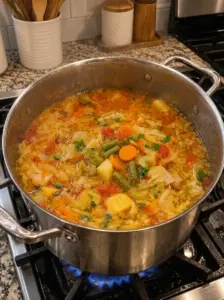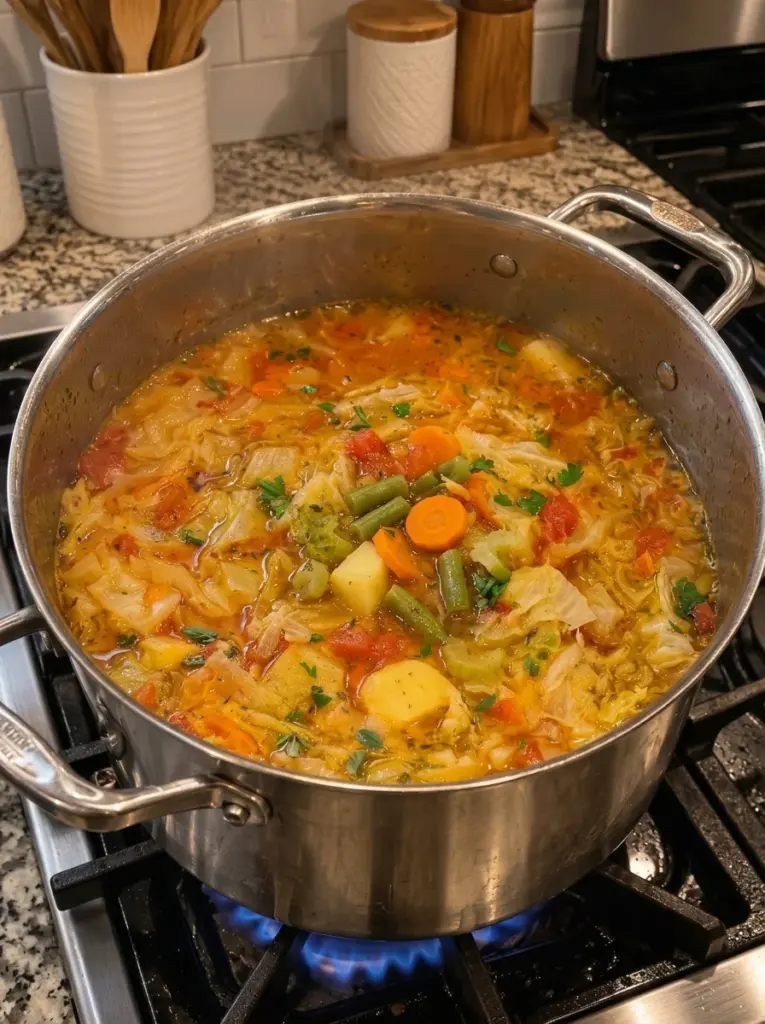
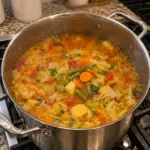
There’s something incredibly comforting about a big pot of homemade vegetable soup simmering on the stove, especially when it’s filled with tender cabbage, colorful vegetables, and a rich, herb-infused broth. This Cabbage Vegetable Soup is one of those simple, satisfying recipes that proves you don’t need complicated ingredients to make a delicious homemade meal.
Made with fresh green cabbage, carrots, celery, potatoes, green beans, tomatoes, and aromatic seasonings, this easy cabbage soup is packed with vegetables and comforting flavor. Every spoonful delivers tender vegetables, a savory tomato-infused broth, and the delicious aroma of garlic, thyme, and Italian herbs.
What makes this recipe especially appealing is its simplicity. You only need one large soup pot, a handful of everyday ingredients, and approximately 45 minutes to prepare a warm, nourishing meal.
The cabbage becomes beautifully tender as it simmers, while the carrots add natural sweetness, the potatoes provide a satisfying texture, and the tomatoes contribute a gentle acidity that balances the broth.
A touch of smoked paprika adds subtle depth, and fresh lemon juice stirred in at the end brightens the entire soup.
This homemade cabbage vegetable soup is naturally vegetarian when prepared with vegetable broth, and it’s easy to make vegan by leaving off optional Parmesan cheese or choosing a plant-based alternative.
It’s also an excellent recipe for meal preparation because the flavors continue to develop as the soup rests in the refrigerator.
Whether you’re looking for an easy weeknight dinner, a cozy lunch, or a delicious way to enjoy more vegetables, this hearty cabbage vegetable soup is a recipe worth keeping.
Why You’ll Love This Cabbage Vegetable Soup
Loaded with fresh vegetables. Cabbage, carrots, celery, potatoes, green beans, and tomatoes create a colorful and satisfying combination.
Simple and budget-friendly. The recipe uses inexpensive vegetables and pantry staples that are easy to find.
Naturally vegetarian. Vegetable broth creates a savory base without requiring meat.
Easy one-pot preparation. Everything cooks in one large pot or Dutch oven, making cleanup simple.
Ready in approximately 45 minutes. This soup is convenient for busy weeknights when you want a homemade meal without spending hours cooking.
Comforting and flavorful. Garlic, thyme, Italian seasoning, and smoked paprika create a delicious herb-infused broth.
Perfect for meal prep. The soup stores well and makes convenient lunches or dinners throughout the week.
Easy to customize. Add cannellini beans, chickpeas, peas, or other vegetables to suit your preferences.
Freezer-friendly. Individual portions can be frozen for convenient future meals.
Tastes even better the next day. The vegetables and seasonings continue to develop flavor as the soup rests.
What Is Cabbage Vegetable Soup?
Cabbage Vegetable Soup is a simple, broth-based soup made by simmering chopped cabbage with a variety of vegetables, herbs, and seasonings.
Unlike creamy soups that rely on milk, cream, or cheese, this recipe uses vegetable broth and tomatoes to create a light but flavorful base.
The cabbage is the main ingredient, providing a tender texture and mild, slightly sweet flavor as it cooks.
Carrots and celery create a classic aromatic foundation, while potatoes add substance and help make the soup more filling.
Green beans contribute additional texture, and diced tomatoes provide a pleasant balance of sweetness and acidity.
The soup is seasoned with garlic, Italian seasoning, thyme, smoked paprika, salt, black pepper, and a bay leaf.
A final splash of lemon juice brings brightness to the broth, while fresh parsley adds a clean herbal finish.
The result is a hearty, vegetable-packed soup that works beautifully as a light main dish or a comforting side.
Ingredients for Cabbage Vegetable Soup
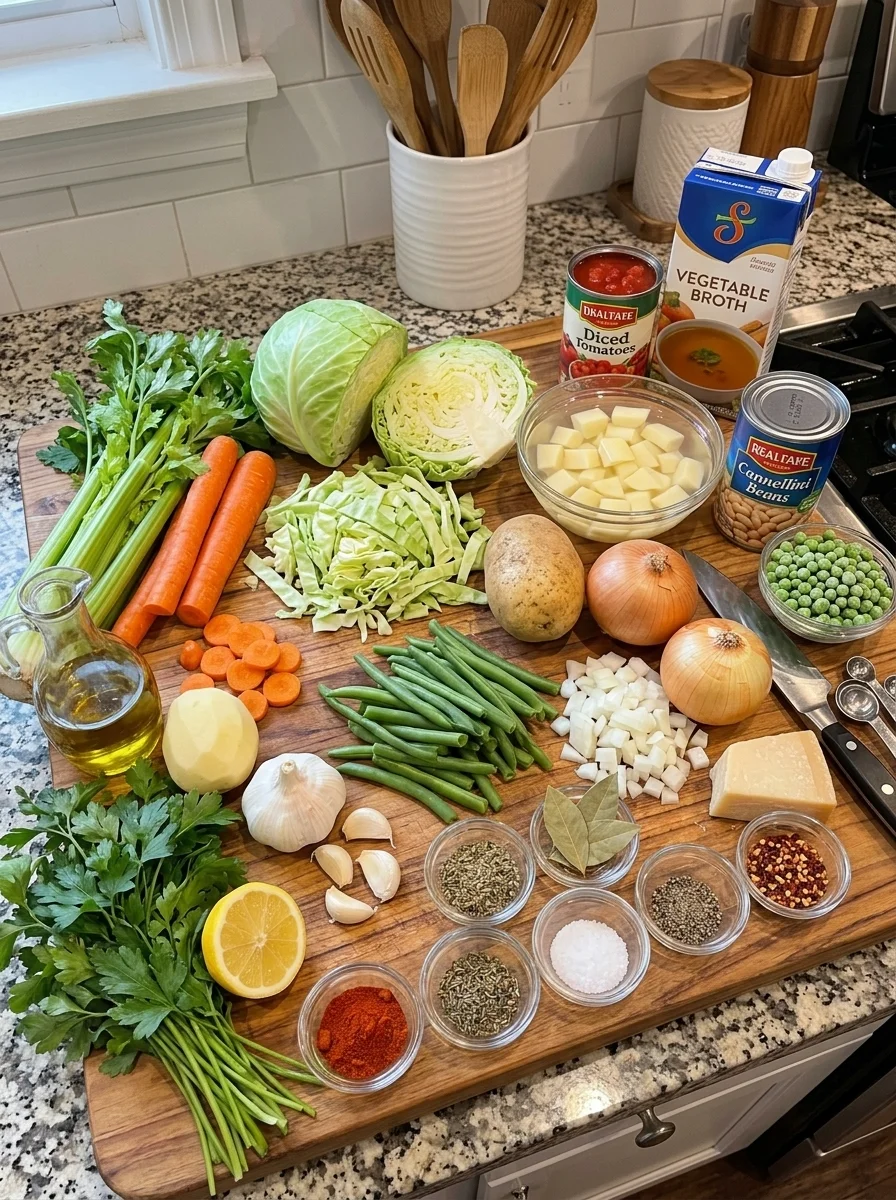
This recipe makes approximately six servings.
For the Soup
-
2 tablespoons olive oil
-
1 medium yellow onion, diced
-
3 carrots, peeled and sliced
-
3 celery stalks, sliced
-
3 cloves garlic, minced
-
1 small head green cabbage, chopped
-
2 medium potatoes, peeled and diced
-
1 cup fresh or frozen green beans, cut into bite-sized pieces
-
1 can (14.5 oz) diced tomatoes, with juices
-
6 cups vegetable broth
-
1 teaspoon dried Italian seasoning
-
1 teaspoon dried thyme
-
1/2 teaspoon smoked paprika
-
1 bay leaf
-
1 teaspoon salt, or to taste
-
1/2 teaspoon freshly ground black pepper
-
1 tablespoon fresh lemon juice
-
2 tablespoons chopped fresh parsley
Optional Additions
-
1 can (15 oz) cannellini beans, drained and rinsed
-
1 cup frozen peas
-
Pinch of crushed red pepper flakes
-
Grated Parmesan cheese, for serving
-
Cooked chickpeas
-
Extra vegetable broth, if needed
Ingredient Notes
Olive oil: Olive oil is used to sauté the vegetables and develop flavor before adding the broth. It helps soften the onion, carrots, and celery while enhancing the soup’s savory base.
Yellow onion: Yellow onion provides a mild sweetness and aromatic depth. As it cooks, it becomes tender and blends into the broth.
Carrots: Carrots add natural sweetness, color, and a pleasant tender texture. Slice them into relatively even pieces so they cook at the same rate.
Celery: Celery contributes a fresh, slightly earthy flavor that complements the carrots and onions.
Fresh garlic: Garlic adds savory depth and enhances the herbal seasonings. Add it after the other aromatics have softened to prevent burning.
Green cabbage: Green cabbage is the star of this soup. It becomes tender and mildly sweet as it simmers. A small head works well, but the exact size can vary. If your cabbage is particularly large, add it gradually and adjust the broth as needed.
Potatoes: Potatoes make the soup heartier and provide a satisfying texture. Yukon Gold potatoes hold their shape well, while russet potatoes become softer and can slightly thicken the broth.
Green beans: Green beans add color and a pleasant bite. Both fresh and frozen green beans work well.
Diced tomatoes: Canned diced tomatoes contribute acidity, color, and savory tomato flavor. Include the juices for additional flavor.
Vegetable broth: Vegetable broth forms the base of the soup. Choose a flavorful broth, preferably low-sodium if you want greater control over the salt level.
Italian seasoning: Italian seasoning typically contains herbs such as oregano, basil, rosemary, and thyme. It gives the soup a familiar, comforting flavor.
Dried thyme: Thyme adds an earthy, slightly floral note that complements cabbage and potatoes.
Smoked paprika: Smoked paprika adds subtle smoky depth without making the soup spicy.
Bay leaf: A bay leaf contributes a gentle herbal aroma during simmering. Remove it before serving.
Salt and black pepper: These seasonings enhance the vegetables and broth. Adjust according to the sodium content of your vegetable broth.
Fresh lemon juice: Lemon juice brightens the finished soup and balances the richness of the olive oil and the natural sweetness of the vegetables.
Fresh parsley: Parsley adds freshness and color just before serving.
Cannellini beans: Optional cannellini beans make the soup more substantial and add plant-based protein and fiber.
Frozen peas: Peas contribute natural sweetness and bright green color. Add them near the end to prevent overcooking.
How to Make Cabbage Vegetable Soup
This easy homemade cabbage soup comes together in one pot. The key is to build flavor with the aromatics before simmering the vegetables in broth.
Step 1: Prepare the Vegetables
Begin by washing and preparing all the vegetables.
Peel and dice the yellow onion.
Peel the carrots and slice them into evenly sized rounds or half-moons.
Slice the celery stalks.
Mince the garlic cloves.
Remove any damaged outer leaves from the cabbage, cut out the tough core, and chop the cabbage into bite-sized pieces.
Peel and dice the potatoes into approximately 1/2-inch pieces.
Trim the green beans and cut them into bite-sized lengths.
Having everything prepared before cooking makes the recipe easier to manage.
Step 2: Heat the Olive Oil
Place a large soup pot or Dutch oven over medium heat.
Add 2 tablespoons of olive oil.
Allow the oil to warm for approximately 30 seconds.
It should become fluid and lightly shimmering but should not smoke.
Step 3: Sauté the Onion, Carrots, and Celery
Add the diced onion, sliced carrots, and celery to the pot.
Stir to coat the vegetables with olive oil.
Cook for approximately 5–6 minutes, stirring occasionally.
The onion should become translucent, while the carrots and celery should begin to soften.
This step creates a flavorful foundation for the soup.
Avoid rushing the process because gently sautéing the vegetables helps develop their natural sweetness.
Step 4: Add the Garlic and Smoked Paprika
Add the minced garlic and smoked paprika.
Stir continuously for approximately 30 seconds.
The garlic should become fragrant, and the paprika should blend with the olive oil.
Be careful not to burn the garlic, as burnt garlic can make the soup taste bitter.
Step 5: Add the Cabbage
Add the chopped green cabbage to the pot.
Stir gently to combine it with the sautéed vegetables.
The cabbage may initially seem bulky, but it will soften and shrink as it cooks.
If your pot is very full, add the cabbage in batches.
Step 6: Add the Potatoes and Green Beans
Add the diced potatoes and cut green beans.
Stir to distribute the vegetables throughout the pot.
The potatoes will add body to the soup, while the green beans provide a slightly firmer texture.
Step 7: Add the Diced Tomatoes
Pour in the canned diced tomatoes, including their juices.
Stir gently.
The tomatoes add color and acidity, helping balance the mild cabbage and potatoes.
Step 8: Pour in the Vegetable Broth
Add 6 cups of vegetable broth.
Stir until the vegetables are evenly distributed.
The broth should mostly cover the vegetables.
If your cabbage is particularly large or you prefer a thinner soup, add a little additional broth or water.
Remember that cabbage releases some moisture as it cooks.
Step 9: Season the Soup
Add the Italian seasoning, dried thyme, bay leaf, salt, and black pepper.
Stir well.
Make sure the bay leaf is submerged in the broth.
The seasonings will infuse the soup as it simmers.
Step 10: Bring to a Gentle Boil
Increase the heat to medium-high.
Bring the soup to a gentle boil.
Once the broth begins bubbling, reduce the heat to low or medium-low.
Avoid a vigorous rolling boil because it can break down the vegetables too quickly.
Step 11: Simmer Until the Vegetables Are Tender
Partially cover the pot with a lid.
Allow the soup to simmer for approximately 25–30 minutes.
Stir occasionally to prevent vegetables from sticking to the bottom.
The cabbage should become tender, and the potatoes should be easily pierced with a fork.
The carrots and green beans should also be cooked through.
If the vegetables need more time, continue simmering for a few additional minutes.
Step 12: Add Optional Cannellini Beans
If using cannellini beans, drain and rinse them thoroughly.
Stir them into the soup during the final 10 minutes of cooking.
Because canned beans are already cooked, they only need enough time to heat through and absorb some of the broth’s flavor.
Step 13: Add Optional Frozen Peas
If using frozen peas, stir them into the soup during the final 3–5 minutes.
Peas cook quickly and can become mushy if simmered too long.
Adding them near the end helps preserve their bright color and tender texture.
Step 14: Remove the Bay Leaf
Once the vegetables are tender, locate and remove the bay leaf.
Discard it before serving.
Step 15: Add Lemon Juice and Parsley
Turn off the heat.
Stir in 1 tablespoon of fresh lemon juice and 2 tablespoons of chopped fresh parsley.
The lemon juice adds brightness, while the parsley provides a fresh herbal finish.
Taste the soup.
Adjust the salt, black pepper, or seasonings as needed.
If the broth tastes too concentrated, add a splash of water or vegetable broth.
Step 16: Serve Warm
Ladle the soup into individual bowls.
Garnish with additional fresh parsley, a pinch of crushed red pepper flakes, or grated Parmesan cheese if desired.
Serve with crusty bread, whole-grain toast, or your favorite crackers.
Enjoy while warm.
Time and Yield
-
Prep Time: 15 minutes
-
Cook Time: Approximately 30–40 minutes, including sautéing
-
Total Time: Approximately 45–55 minutes
-
Yield: Approximately 6 servings
-
Serving Size: About 1 generous bowl
The exact cooking time depends on how finely the vegetables are chopped and how quickly the soup reaches a simmer.
Estimated Nutrition Per Serving
Based on the approximate information supplied with the recipe:
| Nutrient | Estimated amount |
|---|---|
| Calories | Approximately 150–190 |
| Protein | Varies by vegetables and optional beans |
| Carbohydrates | Varies by potatoes, vegetables, and beans |
| Fat | Primarily from olive oil |
| Fiber | Supplied by cabbage and other vegetables |
| Sodium | Depends on the vegetable broth and added salt |
The calorie estimate is approximate and excludes optional beans, Parmesan, and serving accompaniments. Actual nutrition depends on ingredient sizes, broth, and portion sizes.
Tips for the Best Cabbage Vegetable Soup
Use fresh cabbage. Fresh, firm cabbage provides the best texture and flavor.
Cut vegetables evenly. Uniform pieces cook more consistently and make the soup easier to eat.
Don’t skip sautéing the aromatics. Cooking the onion, carrots, and celery in olive oil develops a flavorful base.
Add garlic near the end of sautéing. Garlic cooks quickly and can become bitter if burned.
Use flavorful vegetable broth. The broth is a major component of the soup, so its quality affects the finished flavor.
Avoid overcooking the cabbage. Cabbage should be tender but not completely mushy.
Cut potatoes into small pieces. Smaller pieces cook more quickly and distribute evenly throughout the soup.
Add delicate vegetables later. Peas and other quick-cooking vegetables should be added near the end.
Taste before adding extra salt. Vegetable broth can contain significant sodium.
Don’t skip the lemon juice. A little lemon juice brightens the flavors and balances the savory broth.
Allow the soup to rest. The flavor often becomes more developed after refrigeration.
Adjust the broth to your preference. Add more vegetable broth for a thinner soup or simmer uncovered briefly for a slightly more concentrated consistency.
Variations and Customizations
Cabbage Vegetable Soup is incredibly versatile. You can adjust the vegetables, seasonings, and additions to create different versions.
Cabbage and White Bean Vegetable Soup
Add one can of drained and rinsed cannellini beans.
The beans provide additional fiber and plant-based protein.
This variation makes the soup heartier and more filling.
Cabbage and Chickpea Soup
Replace the optional cannellini beans with cooked chickpeas.
Chickpeas add a firmer texture and mild nutty flavor.
Add them during the final 10 minutes of simmering.
Spicy Cabbage Vegetable Soup
Add 1/4 teaspoon crushed red pepper flakes with the garlic and smoked paprika.
For more heat, include a small amount of cayenne pepper.
Adjust according to your spice preference.
Italian Cabbage Vegetable Soup
Add extra Italian seasoning and a pinch of dried basil.
Stir in cannellini beans for a hearty Italian-inspired variation.
Top with grated Parmesan if desired.
Cabbage and Zucchini Vegetable Soup
Add one diced zucchini during the final 10–15 minutes of cooking.
Zucchini adds a mild flavor and tender texture.
Avoid adding it too early because it cooks faster than potatoes.
Cabbage and Sweet Potato Soup
Replace the regular potatoes with diced sweet potatoes.
Sweet potatoes add a slightly sweeter flavor and a soft texture.
They pair particularly well with smoked paprika.
Cabbage and Mushroom Soup
Add 1 cup of sliced mushrooms when sautéing the onion, carrots, and celery.
Mushrooms provide a deeper savory flavor.
Cabbage and Lentil Vegetable Soup
Add cooked lentils during the final 10 minutes of simmering.
Lentils add protein, fiber, and a satisfying texture.
If using dry lentils, adjust the cooking time and liquid according to the type of lentil.
Cabbage and Rice Soup
Add cooked rice near the end of cooking.
Rice makes the soup more substantial.
Keep in mind that rice absorbs broth during storage, so you may need to add extra liquid when reheating.
Cabbage and Savoy Cabbage Soup
Replace part of the green cabbage with savoy cabbage.
Savoy cabbage has tender leaves and a slightly sweeter flavor.
It creates a delicate texture while maintaining the classic cabbage soup taste.
Low-Carb Cabbage Vegetable Soup
Replace the potatoes with cauliflower florets.
You can also omit the optional beans and peas.
This variation reduces some of the starch while keeping the soup vegetable-focused.
Extra-Hearty Cabbage Vegetable Soup
Add cannellini beans, chickpeas, or cooked lentils.
Increase the vegetable broth slightly if necessary.
This creates a more substantial meal.
What to Serve With Cabbage Vegetable Soup
This vegetable soup is delicious on its own, but it also pairs well with simple breads, salads, and other sides.
Crusty Bread
Warm crusty bread is perfect for dipping into the savory broth.
A rustic loaf or baguette works especially well.
Whole-Grain Toast
Whole-grain toast provides a hearty accompaniment.
Serve it lightly buttered or with a drizzle of olive oil.
Garlic Bread
Garlic bread complements the herbs and tomato flavor in the soup.
It’s a comforting option for family dinners.
Grilled Cheese Sandwich
A grilled cheese sandwich pairs beautifully with the light vegetable broth.
The crispy bread and melted cheese contrast with the tender vegetables.
Simple Green Salad
A fresh green salad with a light vinaigrette adds a refreshing contrast.
Roasted Vegetables
Roasted cauliflower, broccoli, or Brussels sprouts can turn the soup into a more substantial vegetable-focused meal.
Crackers
Serve with whole-grain crackers or simple saltine crackers.
Parmesan Cheese
A small sprinkle of Parmesan adds a salty, savory finish.
Use a vegetarian-friendly hard cheese or plant-based alternative if needed.
Fresh Herbs
Extra parsley, basil, or chives can add brightness just before serving.
Troubleshooting Common Problems
My Cabbage Soup Tastes Bland
Vegetable soups can taste bland if the broth is underseasoned.
Use a flavorful vegetable broth and season gradually.
Add a little extra black pepper, thyme, or Italian seasoning.
A splash of lemon juice at the end can make a noticeable difference.
My Soup Is Too Salty
Vegetable broth and canned tomatoes can contribute sodium.
If the soup is too salty, add a little water or unsalted vegetable broth.
You can also add more vegetables to dilute the seasoning.
My Cabbage Is Too Firm
Cabbage may need more time depending on how thickly it’s chopped.
Continue simmering until tender.
Keep the heat low enough to maintain a gentle simmer.
My Cabbage Is Too Soft
Overcooking can make cabbage mushy.
Check the texture near the end of the recommended cooking time.
For future batches, cut the cabbage into slightly larger pieces or add it a little later.
My Potatoes Are Falling Apart
Some potato varieties soften more quickly than others.
Yukon Gold potatoes generally hold their shape better than russet potatoes.
Avoid stirring too aggressively once the potatoes are tender.
My Soup Is Too Thick
Cabbage and potatoes can absorb or displace much of the broth.
Add additional vegetable broth or water until the soup reaches your preferred consistency.
My Soup Is Too Thin
Simmer uncovered for a few additional minutes to reduce some of the liquid.
You can also mash a small portion of the cooked potatoes against the side of the pot to add body.
My Soup Is Too Acidic
Tomatoes and lemon juice contribute acidity.
If the soup tastes too sharp, add a little more broth or allow it to simmer gently for a few additional minutes.
For future batches, begin with a smaller amount of lemon juice and adjust at the end.
My Soup Has Too Much Liquid After Storage
Vegetables may release additional moisture as they rest.
Stir the soup before reheating.
If necessary, simmer uncovered briefly to concentrate the broth.
My Soup Has Too Little Broth After Storage
Potatoes and other ingredients can absorb liquid during refrigeration.
Add a splash of vegetable broth or water when reheating.
Storage and Reheating
Cabbage Vegetable Soup is an excellent recipe for preparing ahead of time because it stores and reheats well.
Refrigerator Storage
Allow the soup to cool briefly after cooking.
Transfer it into shallow, airtight containers and refrigerate within 2 hours.
Store at 40°F or below for up to 4 days.
The flavors often become more developed after a night in the refrigerator.
Reheating on the Stovetop
Pour the desired amount of soup into a saucepan.
Heat over medium-low heat, stirring occasionally.
Add a splash of vegetable broth or water if the soup has thickened.
Heat until steaming hot throughout. Leftovers should reach 165°F.
Reheating in the Microwave
Transfer the soup to a microwave-safe bowl.
Cover loosely with a microwave-safe lid.
Heat in intervals, stirring between each interval.
Continue until the soup is thoroughly heated to 165°F.
Freezer Storage
Allow the soup to cool before freezing.
Divide it into individual freezer-safe containers or bags.
Leave a little room for expansion.
Freeze for up to 3 months for best quality.
The potatoes may become softer after thawing, but the soup will still be enjoyable.
Thawing Frozen Soup
Thaw overnight in the refrigerator.
Reheat on the stovetop over medium-low heat.
Add a little broth or water if needed.
You can also reheat frozen soup directly in a saucepan over low heat, stirring frequently as it thaws.
Meal Prep Instructions
Prepare a large batch of soup at the beginning of the week.
Divide it into individual containers.
Refrigerate portions you plan to eat within 4 days.
Freeze additional portions for later.
This makes it easy to enjoy a homemade vegetable soup without cooking from scratch every day.
Frequently Asked Questions
Is Cabbage Vegetable Soup Healthy?
This soup contains a variety of vegetables, including cabbage, carrots, celery, potatoes, green beans, and tomatoes.
These ingredients provide fiber and a range of vitamins and minerals.
The overall nutritional profile depends on the broth, portions, and optional additions.
Is Cabbage Vegetable Soup Vegetarian?
Yes.
When made with vegetable broth and without meat-based additions, the soup is vegetarian.
If adding Parmesan, choose a cheese made without animal rennet if you follow a strict vegetarian diet.
Is This Cabbage Soup Vegan?
The base recipe is vegan when made with plant-based vegetable broth.
Avoid traditional dairy Parmesan or use a plant-based alternative.
Can I Use Red Cabbage Instead of Green Cabbage?
Yes.
Red cabbage can be used, but it may change the color of the broth and has a slightly different flavor.
Green cabbage is recommended for the classic appearance.
Can I Use Savoy Cabbage?
Absolutely.
Savoy cabbage has tender leaves and a mild flavor.
It works beautifully in vegetable soup.
Do I Need to Cook the Cabbage Before Adding It?
No.
The cabbage cooks directly in the broth.
It softens as the soup simmers.
Can I Use Frozen Vegetables?
Yes.
Frozen green beans, peas, carrots, and other vegetables can be used.
Adjust the cooking time as needed because frozen vegetables may soften more quickly.
Can I Use Fresh Tomatoes Instead of Canned?
Yes.
Use approximately 1 1/2–2 cups of chopped fresh tomatoes.
The flavor may be slightly lighter depending on the ripeness of the tomatoes.
Can I Make This Soup Without Potatoes?
Yes.
Omit the potatoes or replace them with cauliflower, zucchini, or another vegetable.
The soup will be lighter and less starchy.
Can I Add Beans?
Yes.
Cannellini beans, chickpeas, and other cooked beans are excellent additions.
They make the soup more substantial and provide additional fiber and protein.
Can I Add Lentils?
Yes.
Cooked lentils can be stirred in near the end.
If using dry lentils, you’ll need to adjust the simmering time and broth quantity.
Can I Add Pasta?
Yes.
Small pasta shapes can be added to the soup.
Follow the pasta’s cooking time and add extra broth if necessary.
For meal prep, consider cooking the pasta separately and adding it when serving to prevent it from becoming overly soft.
Can I Add Rice?
Yes.
Cooked rice can be added during the final few minutes.
Rice absorbs liquid, so additional broth may be needed.
Can I Make This Soup Spicy?
Absolutely.
Add crushed red pepper flakes, cayenne pepper, or a little hot sauce.
Start with a small amount and adjust to taste.
Can I Make This Soup in a Slow Cooker?
Yes.
For the best flavor, sauté the onion, carrots, celery, garlic, and smoked paprika first.
Transfer the ingredients to a slow cooker with the remaining vegetables, broth, and seasonings.
Cook on LOW for approximately 5–7 hours or HIGH for approximately 3–4 hours, until the potatoes and cabbage are tender.
Stir in the lemon juice and parsley before serving.
Can I Make This Soup in an Instant Pot?
Yes.
Use the sauté function for the aromatics.
Add the remaining ingredients, except the lemon juice and parsley.
Pressure cook on HIGH for approximately 4–5 minutes, followed by a controlled pressure release according to your appliance’s instructions.
Check the vegetable texture and stir in the lemon juice and parsley before serving.
Can I Freeze Cabbage Vegetable Soup?
Yes.
Freeze in airtight, freezer-safe containers for up to 3 months for best quality.
Potatoes may become slightly softer after thawing.
How Long Does Cabbage Soup Last in the Refrigerator?
Store in an airtight container for up to 4 days at 40°F or below.
Does Cabbage Soup Taste Better the Next Day?
Often, yes.
The herbs, tomatoes, and vegetables continue to develop flavor as the soup rests.
Can I Make This Soup Ahead of Time?
Yes.
Prepare the soup a day in advance and refrigerate.
Reheat gently before serving.
How Do I Make Cabbage Soup More Filling?
Add cannellini beans, chickpeas, lentils, or cooked rice.
You can also serve the soup with whole-grain bread.
Can I Add Chicken?
Yes.
For a nonvegetarian version, add cooked shredded chicken near the end of simmering.
Heat thoroughly before serving.
Can I Use Chicken Broth Instead of Vegetable Broth?
Yes.
Chicken broth works well but makes the soup nonvegetarian.
Can I Use Beef Broth?
Yes.
Beef broth creates a richer, more savory flavor.
However, it changes the soup from a vegetarian recipe to a meat-based version.
Is Cabbage Soup Low-Carb?
The recipe contains potatoes, carrots, and other vegetables that contribute carbohydrates.
For a lower-carbohydrate version, omit the potatoes and replace them with cauliflower.
Is Cabbage Soup Gluten-Free?
The main ingredients are generally naturally gluten-free.
Check the vegetable broth, seasonings, and any optional additions for gluten-containing ingredients if necessary.
Why Add Lemon Juice at the End?
Lemon juice brightens the broth and balances the sweetness of the vegetables.
Adding it near the end helps preserve its fresh flavor.
Can I Double the Recipe?
Yes.
Double all the ingredients and use a sufficiently large stockpot.
You may need to increase the cooking time slightly to bring the larger quantity to a simmer.
What Is the Best Potato for Cabbage Soup?
Yukon Gold potatoes are a good choice because they hold their shape and have a creamy texture.
Russet potatoes also work but may become softer during simmering.
Can I Add More Cabbage?
Yes.
Add additional chopped cabbage if you prefer a more cabbage-forward soup.
Increase the broth if needed to maintain your desired consistency.
Final Thoughts
Cabbage Vegetable Soup is a comforting, flavorful, and versatile recipe that turns simple vegetables into a delicious homemade meal.
Tender green cabbage, sweet carrots, celery, potatoes, green beans, and tomatoes simmer together in a savory broth seasoned with garlic, thyme, Italian herbs, and smoked paprika.
A splash of fresh lemon juice brightens the flavors, while chopped parsley adds freshness and color.
One of the best things about this recipe is how easy it is to adapt. You can add cannellini beans or chickpeas for extra protein and fiber, include more vegetables, adjust the seasonings, or make a spicier version with red pepper flakes.
It’s also an excellent meal-prep recipe because it stores well, reheats easily, and often tastes even better the following day.
For the best results, sauté the aromatics before adding the broth, simmer the vegetables until just tender, and finish with lemon juice and fresh parsley.
Serve the soup warm with crusty bread, whole-grain toast, or a simple salad for a cozy, satisfying meal.
Whether you’re preparing a quick weeknight dinner, planning lunches for the week, or simply looking for a delicious way to enjoy more vegetables, this easy Cabbage Vegetable Soup is a reliable homemade recipe you’ll want to make throughout the year.
Cabbage Vegetable Soup
- Total Time: Approximately 45-55 minutes,
- Yield: Approximately 6 servings 1x
Ingredients
This recipe makes approximately six servings.
For the Soup
2 tablespoons olive oil
1 medium yellow onion, diced
3 carrots, peeled and sliced
3 celery stalks, sliced
3 cloves garlic, minced
1 small head green cabbage, chopped
2 medium potatoes, peeled and diced
1 cup fresh or frozen green beans, cut into bite-sized pieces
1 can (14.5 oz) diced tomatoes, with juices
6 cups vegetable broth
1 teaspoon dried Italian seasoning
1 teaspoon dried thyme
1/2 teaspoon smoked paprika
1 bay leaf
1 teaspoon salt, or to taste
1/2 teaspoon freshly ground black pepper
1 tablespoon fresh lemon juice
2 tablespoons chopped fresh parsley
Optional Additions
1 can (15 oz) cannellini beans, drained and rinsed
1 cup frozen peas
Pinch of crushed red pepper flakes
Grated Parmesan cheese, for serving
Cooked chickpeas
Extra vegetable broth, if needed
Instructions
This easy homemade cabbage soup comes together in one pot. The key is to build flavor with the aromatics before simmering the vegetables in broth.
Step 1: Prepare the Vegetables
Begin by washing and preparing all the vegetables.
Peel and dice the yellow onion.
Peel the carrots and slice them into evenly sized rounds or half-moons.
Slice the celery stalks.
Mince the garlic cloves.
Remove any damaged outer leaves from the cabbage, cut out the tough core, and chop the cabbage into bite-sized pieces.
Peel and dice the potatoes into approximately 1/2-inch pieces.
Trim the green beans and cut them into bite-sized lengths.
Having everything prepared before cooking makes the recipe easier to manage.
Step 2: Heat the Olive Oil
Place a large soup pot or Dutch oven over medium heat.
Add 2 tablespoons of olive oil.
Allow the oil to warm for approximately 30 seconds.
It should become fluid and lightly shimmering but should not smoke.
Step 3: Sauté the Onion, Carrots, and Celery
Add the diced onion, sliced carrots, and celery to the pot.
Stir to coat the vegetables with olive oil.
Cook for approximately 5–6 minutes, stirring occasionally.
The onion should become translucent, while the carrots and celery should begin to soften.
This step creates a flavorful foundation for the soup.
Avoid rushing the process because gently sautéing the vegetables helps develop their natural sweetness.
Step 4: Add the Garlic and Smoked Paprika
Add the minced garlic and smoked paprika.
Stir continuously for approximately 30 seconds.
The garlic should become fragrant, and the paprika should blend with the olive oil.
Be careful not to burn the garlic, as burnt garlic can make the soup taste bitter.
Step 5: Add the Cabbage
Add the chopped green cabbage to the pot.
Stir gently to combine it with the sautéed vegetables.
The cabbage may initially seem bulky, but it will soften and shrink as it cooks.
If your pot is very full, add the cabbage in batches.
Step 6: Add the Potatoes and Green Beans
Add the diced potatoes and cut green beans.
Stir to distribute the vegetables throughout the pot.
The potatoes will add body to the soup, while the green beans provide a slightly firmer texture.
Step 7: Add the Diced Tomatoes
Pour in the canned diced tomatoes, including their juices.
Stir gently.
The tomatoes add color and acidity, helping balance the mild cabbage and potatoes.
Step 8: Pour in the Vegetable Broth
Add 6 cups of vegetable broth.
Stir until the vegetables are evenly distributed.
The broth should mostly cover the vegetables.
If your cabbage is particularly large or you prefer a thinner soup, add a little additional broth or water.
Remember that cabbage releases some moisture as it cooks.
Step 9: Season the Soup
Add the Italian seasoning, dried thyme, bay leaf, salt, and black pepper.
Stir well.
Make sure the bay leaf is submerged in the broth.
The seasonings will infuse the soup as it simmers.
Step 10: Bring to a Gentle Boil
Increase the heat to medium-high.
Bring the soup to a gentle boil.
Once the broth begins bubbling, reduce the heat to low or medium-low.
Avoid a vigorous rolling boil because it can break down the vegetables too quickly.
Step 11: Simmer Until the Vegetables Are Tender
Partially cover the pot with a lid.
Allow the soup to simmer for approximately 25–30 minutes.
Stir occasionally to prevent vegetables from sticking to the bottom.
The cabbage should become tender, and the potatoes should be easily pierced with a fork.
The carrots and green beans should also be cooked through.
If the vegetables need more time, continue simmering for a few additional minutes.
Step 12: Add Optional Cannellini Beans
If using cannellini beans, drain and rinse them thoroughly.
Stir them into the soup during the final 10 minutes of cooking.
Because canned beans are already cooked, they only need enough time to heat through and absorb some of the broth’s flavor.
Step 13: Add Optional Frozen Peas
If using frozen peas, stir them into the soup during the final 3–5 minutes.
Peas cook quickly and can become mushy if simmered too long.
Adding them near the end helps preserve their bright color and tender texture.
Step 14: Remove the Bay Leaf
Once the vegetables are tender, locate and remove the bay leaf.
Discard it before serving.
Step 15: Add Lemon Juice and Parsley
Turn off the heat.
Stir in 1 tablespoon of fresh lemon juice and 2 tablespoons of chopped fresh parsley.
The lemon juice adds brightness, while the parsley provides a fresh herbal finish.
Taste the soup.
Adjust the salt, black pepper, or seasonings as needed.
If the broth tastes too concentrated, add a splash of water or vegetable broth.
Step 16: Serve Warm
Ladle the soup into individual bowls.
Garnish with additional fresh parsley, a pinch of crushed red pepper flakes, or grated Parmesan cheese if desired.
Serve with crusty bread, whole-grain toast, or your favorite crackers.
Enjoy while warm.
- Prep Time: 15 minutes
- Cook Time: Approximately 30–40 minutes, including sautéing