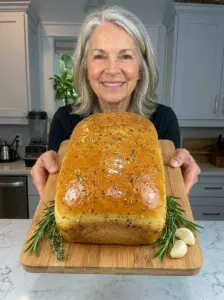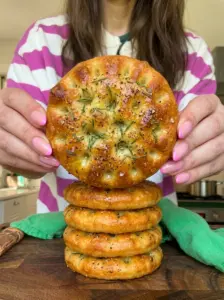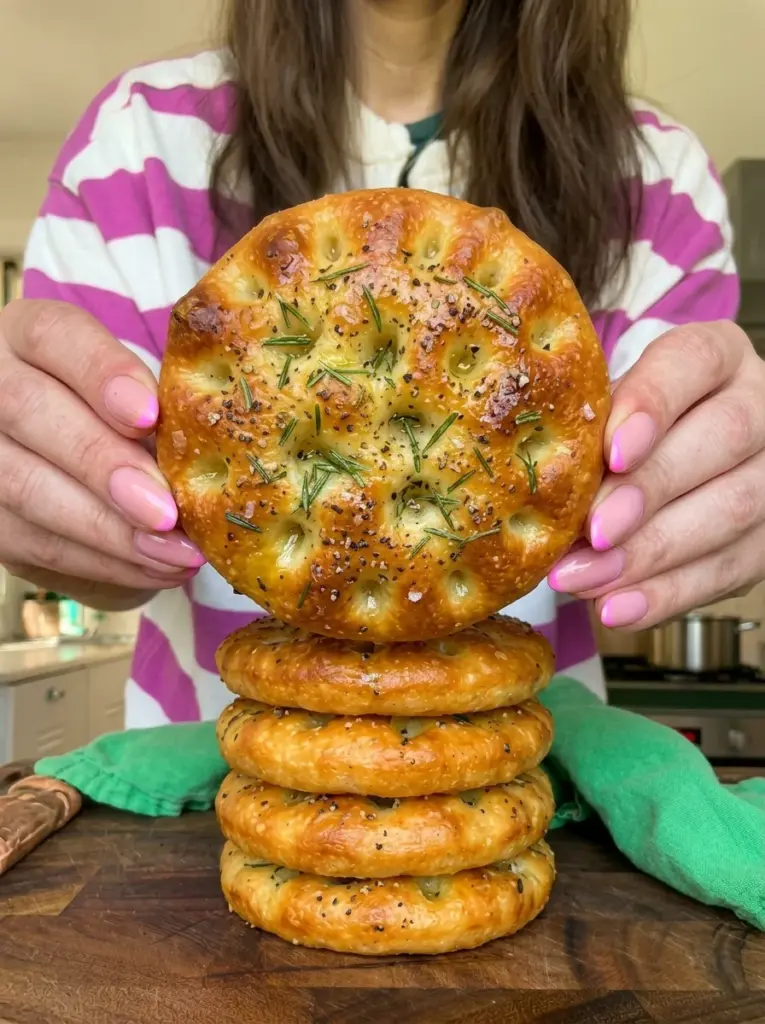
This Mini No-Knead Rosemary Focaccia is soft, airy, golden, and packed with fragrant rosemary flavor. 🌿🍞✨ A generous coating of extra-virgin olive oil gives the focaccia a beautifully crisp exterior while the inside stays fluffy, chewy, and full of airy pockets.
The best part is that there’s absolutely no kneading required. Simply stir the ingredients together until a sticky dough forms, let it rise, transfer it to an olive-oiled pan, and give it a second short rise before baking.
Fresh rosemary, flaky sea salt, black pepper, and plenty of olive oil give this simple homemade bread its classic savory flavor. Deep fingertip dimples across the surface catch little pools of olive oil as the focaccia bakes, creating those irresistible golden edges and flavorful bites.
Because this is a smaller-batch focaccia, it’s perfect when you don’t need a full sheet pan of bread. Serve it warm with olive oil for dipping, alongside soup or pasta, with a fresh salad, or slice it horizontally and turn it into flavorful sandwiches.
Why You’ll Love This Mini No-Knead Rosemary Focaccia
No kneading required. A simple stir-and-rise method does all the work.
Small-batch recipe. An 8-inch pan produces a manageable focaccia that’s perfect for smaller households.
Soft and airy inside. The high-moisture dough creates a fluffy, chewy interior.
Golden and crisp outside. Olive oil helps create beautifully browned edges and a flavorful crust.
Loaded with rosemary flavor. Fresh rosemary gives every bite an aromatic, savory finish.
Simple ingredients. You only need flour, yeast, water, olive oil, and a few pantry seasonings.
Versatile. Serve it as an appetizer, side dish, dipping bread, or sandwich bread.
Freezer-friendly. Leftovers can be frozen for up to two months.
Ingredients You’ll Need
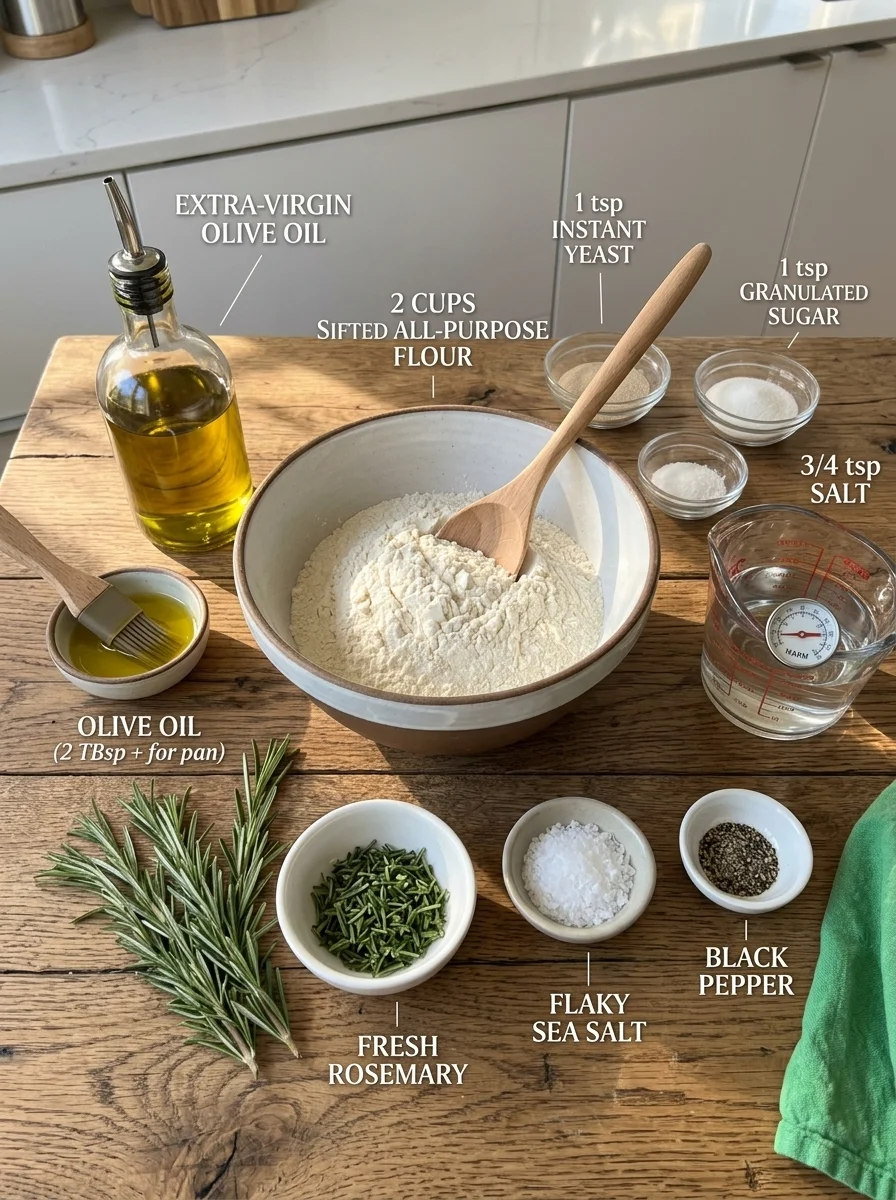
Here’s everything you’ll need to make this easy small-batch focaccia.
- 2 cups all-purpose flour — Provides the structure for the focaccia while allowing the interior to remain soft and chewy.
- 1 tsp instant yeast — Helps the dough rise and creates the airy interior.
- 1 tsp granulated sugar — Adds a touch of sweetness and complements the savory rosemary topping.
- ¾ tsp salt — Seasons the dough from the inside.
- ¾ cup warm water — Hydrates the flour and helps create the soft, sticky dough.
- 2 tbsp extra-virgin olive oil, plus more for the pan — Adds richness and flavor while helping create focaccia’s characteristic golden crust.
- 1 tbsp fresh rosemary, finely chopped — Adds fresh, aromatic herbal flavor.
- ½ tsp flaky sea salt — Gives the surface little bursts of salty flavor and texture.
- ¼ tsp black pepper — Adds subtle peppery warmth.
How to Make Mini No-Knead Rosemary Focaccia
The dough requires two rises, but the hands-on preparation is simple.
Step 1: Combine the Dry Ingredients
In a large mixing bowl, whisk together the all-purpose flour, instant yeast, granulated sugar, and salt.
Mix until the yeast and salt are evenly distributed throughout the flour.
Step 2: Add the Water and Olive Oil
Pour in the warm water and 2 tablespoons extra-virgin olive oil.
Use a wooden spoon to stir everything together.
Continue stirring until no dry flour remains and a sticky, shaggy dough forms.
The dough is supposed to be soft and sticky, so there’s no need to add extra flour just to make it easier to handle.
Step 3: Let the Dough Rise
Cover the mixing bowl tightly with plastic wrap or a clean kitchen towel.
Leave the dough at room temperature for approximately 1½–2 hours.
It’s ready when it has roughly doubled in size and looks noticeably puffy and bubbly.
Step 4: Prepare the Baking Pan
Generously drizzle olive oil into a small 8-inch round or square baking pan.
Make sure the bottom is well coated.
The olive oil helps prevent sticking while creating a flavorful, crisp bottom crust.
Step 5: Transfer the Dough
Transfer the risen dough into the prepared pan.
Lightly coat your fingertips with olive oil to prevent sticking.
Gently stretch and press the dough toward the edges of the pan.
If the dough keeps springing back and doesn’t immediately reach every corner, don’t force it. It will relax as it rests.
Step 6: Let the Dough Rise Again
Cover the pan and let the focaccia rest for another 30–45 minutes.
The dough should become visibly puffy during this second rise.
Meanwhile, preheat your oven to 425°F (220°C).
Step 7: Dimple the Focaccia
Generously drizzle additional olive oil over the surface of the risen dough.
Using lightly oiled fingertips, press deep dimples across the entire surface.
Press firmly enough to create visible pockets without aggressively deflating the dough.
Step 8: Add the Rosemary Topping
Sprinkle the finely chopped fresh rosemary evenly over the focaccia.
Finish with flaky sea salt and black pepper.
The olive oil will help the rosemary and seasonings cling to the surface while baking.
Step 9: Bake Until Golden
Transfer the pan to the preheated oven.
Bake for 20–25 minutes, or until the focaccia is puffed and deeply golden across the surface and around the edges.
Step 10: Finish with Olive Oil
Remove the focaccia from the oven.
While it’s still hot, drizzle a little additional extra-virgin olive oil over the surface.
This adds another layer of flavor and gives the crust a beautiful glossy finish.
Step 11: Cool and Slice
Allow the focaccia to cool for approximately 10 minutes before removing it from the pan and slicing.
Serve while still warm for the best texture.
How to Serve Mini Rosemary Focaccia
This small-batch focaccia can be served in plenty of delicious ways:
- With olive oil for dipping — Serve warm pieces alongside good-quality extra-virgin olive oil.
- With soup — Perfect for dipping into tomato soup, vegetable soup, or other comforting bowls.
- Alongside pasta — Use it in place of traditional garlic bread with your favorite pasta dishes.
- With salads — A warm piece of rosemary focaccia makes a simple salad much more satisfying.
- For sandwiches — Slice pieces horizontally and fill them with your favorite meats, cheeses, or vegetables.
- On an appetizer board — Cut into smaller pieces and serve with cheese, olives, dips, and vegetables.
- Warm from the oven — It’s delicious on its own while the crust is still crisp and the center is soft.
- With savory spreads — Pair it with cream cheese spreads, roasted pepper dips, or other savory appetizers.
Tips for the Best No-Knead Rosemary Focaccia
Don’t add unnecessary flour. Focaccia dough is supposed to be sticky. Adding too much flour can produce a denser bread.
Give the first rise enough time. Look at the dough rather than relying entirely on the clock. It should be doubled, bubbly, and visibly aerated.
Be generous with the olive oil. Olive oil is a defining part of focaccia’s flavor and texture.
Oil your fingertips. This makes handling the sticky dough much easier without introducing additional flour.
Don’t force the dough into the pan. If it resists stretching, allow it to rest and relax before gently stretching it again.
Don’t skip the second rise. Those extra 30–45 minutes help create a puffier, airier focaccia.
Make deep dimples. Press your fingertips firmly into the dough to create the characteristic focaccia surface.
Use fresh rosemary. Freshly chopped rosemary provides plenty of aromatic flavor.
Bake until deeply golden. Good browning gives focaccia much of its flavor and creates crisp edges.
Finish with more olive oil. A small drizzle immediately after baking enhances both flavor and appearance.
Storage Information
Allow the Mini No-Knead Rosemary Focaccia to cool completely before storing.
Place it in an airtight container and keep it at room temperature for up to 2 days.
To refresh the texture, reheat the focaccia in a 350°F (175°C) oven for 5–8 minutes. This helps bring back some of the crispness around the crust and edges.
For longer storage, wrap the cooled focaccia tightly and freeze it for up to 2 months.
Thaw before reheating for the best texture.
Frequently Asked Questions
Do I really not need to knead focaccia dough?
Correct. This recipe uses a simple no-knead method. Stir the ingredients together until no dry flour remains, then let time and yeast do the rest.
Why is my focaccia dough sticky?
A soft, sticky dough is normal for focaccia. Avoid adding excessive flour simply to make the dough easier to handle.
Can I use a round pan?
Yes. An 8-inch round or square baking pan works for this mini focaccia.
Why won’t my dough stretch to the edges of the pan?
The dough may initially resist stretching. Don’t force it. Give it time to relax during the second rise and gently encourage it toward the edges.
Why do I need so much olive oil?
Olive oil contributes flavor, prevents sticking, and helps create focaccia’s characteristic golden, crisp exterior.
Why do you dimple focaccia?
The fingertip dimples create focaccia’s characteristic surface while also forming little pockets where olive oil and seasonings can collect.
Can I use dried rosemary instead of fresh?
This recipe is written specifically for fresh rosemary, which provides a brighter aromatic flavor. If changing the type of rosemary, the quantity may need adjustment because dried herbs are more concentrated.
How do I know when the focaccia is done?
The bread should be puffed and deeply golden across the top and around the edges.
Can I make sandwiches with this focaccia?
Absolutely. Once cooled enough to slice cleanly, cut the focaccia into portions and slice them horizontally for sandwiches.
What’s the best way to reheat leftover focaccia?
Reheat it in a 350°F oven for approximately 5–8 minutes to refresh the crust.
Can I freeze rosemary focaccia?
Yes. Wrap the completely cooled bread tightly and freeze it for up to 2 months.
Recipe Card
Prep Time: 15 minutes
Rise Time: 2 hours 30 minutes
Cook Time: 25 minutes
Total Time: 3 hours 10 minutes
Servings: 6
Calories: ~245 per serving
This Mini No-Knead Rosemary Focaccia delivers everything you want from homemade focaccia—an airy, chewy center, deeply golden edges, fragrant rosemary, flaky sea salt, and plenty of rich olive oil flavor.
With no kneading required and a convenient small-batch size, it’s an easy homemade bread for serving alongside soups, pasta, and salads or simply enjoying warm with olive oil for dipping. And if you have leftovers, slice the focaccia horizontally and turn it into a delicious homemade sandwich.
Print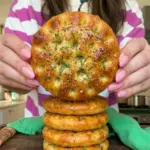
Mini No-Knead Rosemary Focaccia
Ingredients
Here’s everything you’ll need to make this easy small-batch focaccia.
- 2 cups all-purpose flour — Provides the structure for the focaccia while allowing the interior to remain soft and chewy.
- 1 tsp instant yeast — Helps the dough rise and creates the airy interior.
- 1 tsp granulated sugar — Adds a touch of sweetness and complements the savory rosemary topping.
- ¾ tsp salt — Seasons the dough from the inside.
- ¾ cup warm water — Hydrates the flour and helps create the soft, sticky dough.
- 2 tbsp extra-virgin olive oil, plus more for the pan — Adds richness and flavor while helping create focaccia’s characteristic golden crust.
- 1 tbsp fresh rosemary, finely chopped — Adds fresh, aromatic herbal flavor.
- ½ tsp flaky sea salt — Gives the surface little bursts of salty flavor and texture.
- ¼ tsp black pepper — Adds subtle peppery warmth.
Instructions
The dough requires two rises, but the hands-on preparation is simple.
Step 1: Combine the Dry Ingredients
In a large mixing bowl, whisk together the all-purpose flour, instant yeast, granulated sugar, and salt.
Mix until the yeast and salt are evenly distributed throughout the flour.
Step 2: Add the Water and Olive Oil
Pour in the warm water and 2 tablespoons extra-virgin olive oil.
Use a wooden spoon to stir everything together.
Continue stirring until no dry flour remains and a sticky, shaggy dough forms.
The dough is supposed to be soft and sticky, so there’s no need to add extra flour just to make it easier to handle.
Step 3: Let the Dough Rise
Cover the mixing bowl tightly with plastic wrap or a clean kitchen towel.
Leave the dough at room temperature for approximately 1½–2 hours.
It’s ready when it has roughly doubled in size and looks noticeably puffy and bubbly.
Step 4: Prepare the Baking Pan
Generously drizzle olive oil into a small 8-inch round or square baking pan.
Make sure the bottom is well coated.
The olive oil helps prevent sticking while creating a flavorful, crisp bottom crust.
Step 5: Transfer the Dough
Transfer the risen dough into the prepared pan.
Lightly coat your fingertips with olive oil to prevent sticking.
Gently stretch and press the dough toward the edges of the pan.
If the dough keeps springing back and doesn’t immediately reach every corner, don’t force it. It will relax as it rests.
Step 6: Let the Dough Rise Again
Cover the pan and let the focaccia rest for another 30–45 minutes.
The dough should become visibly puffy during this second rise.
Meanwhile, preheat your oven to 425°F (220°C).
Step 7: Dimple the Focaccia
Generously drizzle additional olive oil over the surface of the risen dough.
Using lightly oiled fingertips, press deep dimples across the entire surface.
Press firmly enough to create visible pockets without aggressively deflating the dough.
Step 8: Add the Rosemary Topping
Sprinkle the finely chopped fresh rosemary evenly over the focaccia.
Finish with flaky sea salt and black pepper.
The olive oil will help the rosemary and seasonings cling to the surface while baking.
Step 9: Bake Until Golden
Transfer the pan to the preheated oven.
Bake for 20–25 minutes, or until the focaccia is puffed and deeply golden across the surface and around the edges.
Step 10: Finish with Olive Oil
Remove the focaccia from the oven.
While it’s still hot, drizzle a little additional extra-virgin olive oil over the surface.
This adds another layer of flavor and gives the crust a beautiful glossy finish.
Step 11: Cool and Slice
Allow the focaccia to cool for approximately 10 minutes before removing it from the pan and slicing.
Serve while still warm for the best texture.