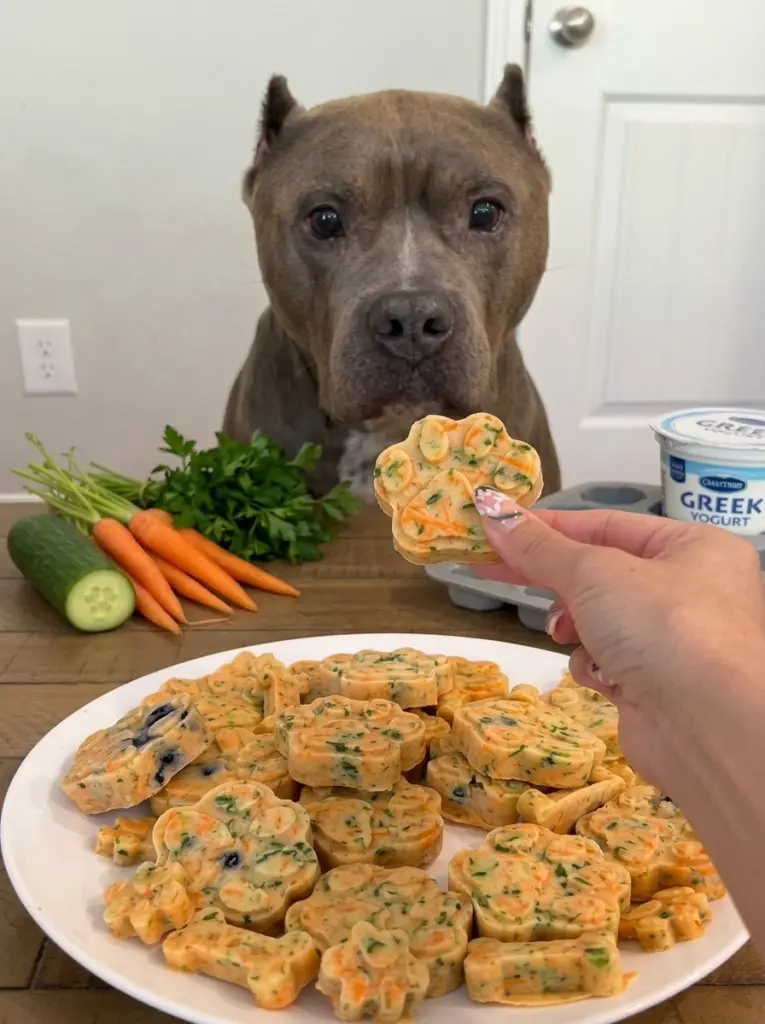
Low-Fat Veggie Dog Treats 🥕🥒🐶💚 (Easy, Light, Low-Calorie Dog Treat Recipe)
Meta Description: These Low-Fat Veggie Dog Treats are light, refreshing, and packed with wholesome vegetables for a low-calorie snack. A simple, healthy homemade treat recipe for weight-conscious pups!
Keywords: low-fat dog treats, low-calorie dog treats, veggie dog treats, healthy dog snacks, homemade dog treats, weight management dog treats, DIY frozen dog treats, diet dog treats
If your dog is watching their waistline, or if you simply want a healthier go-to snack that won’t add excessive calories, these Low-Fat Veggie Dog Treats are exactly what you need. Built around hydrating cucumber, fiber-rich carrots, and non-fat Greek yogurt, this recipe skips the heavier ingredients found in many treat recipes, like peanut butter and full-fat dairy, in favor of a lighter, vegetable-forward approach. The result is a refreshing, satisfying treat that lets your dog enjoy snack time without derailing their calorie goals.
Unlike many store-bought “diet” treats, which can rely on artificial ingredients to keep calories low, this homemade recipe achieves a lighter profile using real, whole vegetables and non-fat yogurt. It’s an especially great option for dogs who are overweight, less active, or on a veterinarian-recommended weight management plan, though of course any treat should always be given in moderation and factored into your dog’s overall daily calorie intake.
In this article, we’ll cover the complete recipe, explain the benefits of each ingredient, walk through step-by-step directions, share important tips for weight-conscious treat-giving, and answer common questions about low-calorie dog treats.
Why Low-Fat, Low-Calorie Treats Matter for Dogs
Treats are often an overlooked source of extra calories in a dog’s diet. Here’s why a lighter treat option like this one can make a meaningful difference:
- Treats add up quickly. Even small treats given multiple times a day can contribute significantly to a dog’s overall calorie intake.
- Weight management is important for long-term health. Maintaining a healthy weight can support a dog’s mobility, energy levels, and overall wellness.
- Vegetables offer volume without excess calories. Ingredients like cucumber and carrots provide a satisfying bite and pleasant crunch without adding significant calories.
- A lighter treat doesn’t mean a boring one. This recipe proves that a low-calorie treat can still be flavorful, refreshing, and genuinely enjoyable for your dog.
Why This Recipe Works So Well for Weight-Conscious Dogs
Every ingredient in this recipe was chosen specifically to keep the calorie count low while still delivering great flavor and nutrition. Let’s take a closer look.
Cucumber: Hydrating and Nearly Calorie-Free
Peeled, chopped cucumber forms a light, refreshing base for this recipe. Its very high water content and minimal calorie contribution make it an ideal ingredient for a low-fat treat, while still providing a satisfying, hydrating bite.
Carrots: Crunchy, Fiber-Rich, and Naturally Low-Calorie
Finely grated carrots add a pleasant crunch and texture to this recipe, along with fiber and beta-carotene. Carrots are naturally low in calories, making them a popular choice for dogs on a calorie-conscious diet.
Non-Fat Greek Yogurt: A Lighter Protein Source
Using non-fat plain Greek yogurt, rather than a full-fat version, helps keep this recipe’s calorie count lower while still providing protein, calcium, and probiotics that can support a healthy gut microbiome. As always, choose a plain, unsweetened variety, since flavored yogurts often contain added sugar or artificial sweeteners that aren’t safe for dogs.
Pumpkin Purée: Digestive Support Without Excess Calories
Plain, 100% pure pumpkin purée adds fiber and moisture to the mixture while supporting healthy digestion, all without contributing significant calories. Be sure to use pure pumpkin purée, not pumpkin pie filling, which contains added sugar and spices that aren’t appropriate for dogs.
Fresh Parsley: Flavor Without the Calories
Fresh parsley adds a subtle herbal flavor to this recipe without contributing meaningful calories, while also offering a potential breath-freshening bonus.
Ingredients You’ll Need
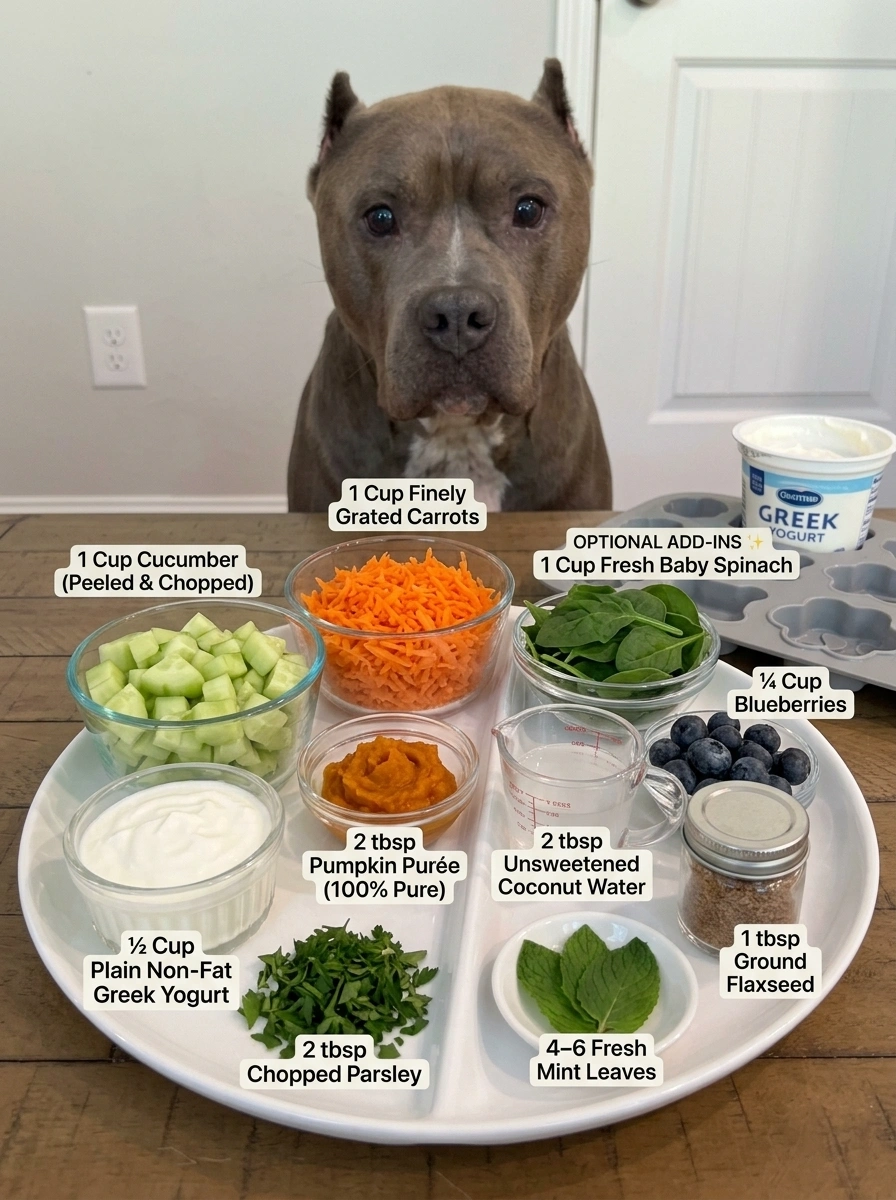
Base Ingredients
- 1 cup cucumber, peeled and chopped – Adds hydration and volume with minimal calories.
- 1 cup finely grated carrots – Adds crunch, fiber, and beta-carotene without excess calories.
- ½ cup plain non-fat unsweetened Greek yogurt – Adds protein and probiotics with a lighter calorie profile than full-fat yogurt.
- 2 tbsp pumpkin purée (100% pure pumpkin) – Supports digestion and adds fiber and moisture.
- 2 tbsp fresh parsley, chopped – Adds flavor and potential breath-freshening benefits.
Optional Add-Ins
Customize your low-fat veggie treats with any of these dog-safe extras:
- 1 cup fresh baby spinach – Adds vitamins and minerals with minimal added calories.
- ¼ cup blueberries – Adds antioxidants and a touch of natural sweetness.
- 2 tbsp unsweetened coconut water – Adds hydration and natural electrolytes.
- 1 tbsp ground flaxseed – A source of omega-3 fatty acids that may support skin and coat health.
- 4–6 fresh mint leaves – Adds a refreshing flavor and potential breath-freshening benefit. Use in moderation.
Step-by-Step Directions
This light, refreshing recipe comes together with just a few minutes of hands-on prep time.
Step 1: Wash Your Produce
Wash the cucumber, carrots, and parsley thoroughly.
Step 2: Prepare the Vegetables
Peel and chop the cucumber, then finely grate the carrots.
Step 3: Blend the Base Ingredients
Add the cucumber, non-fat Greek yogurt, pumpkin purée, and parsley to a blender or food processor.
Step 4: Blend Until Smooth
Blend the mixture until smooth, then stir in the grated carrots by hand to add a little texture to the finished treat.
Step 5: Stir in Optional Add-Ins
If you’re using any optional add-ins, such as spinach, blueberries, coconut water, flaxseed, or mint, gently mix them into the mixture until evenly distributed.
Step 6: Fill Your Molds
Spoon the mixture into silicone paw-print molds, bone-shaped molds, or a standard ice cube tray, depending on what you have on hand and the treat size you’d like.
Step 7: Remove Air Bubbles
Tap the filled molds gently on the counter a few times to release any trapped air bubbles, resulting in a smoother, more solid finished treat.
Step 8: Freeze Until Firm
Place the molds in the freezer and freeze for 4–6 hours, or until the treats are completely firm all the way through.
Step 9: Pop and Store
Once frozen, pop the treats out of their molds and transfer them to an airtight, freezer-safe container to maintain freshness and prevent freezer burn.
Step 10: Serve as a Light, Refreshing Reward
Serve one or two frozen treats as a light, refreshing reward, any time your pup deserves a healthy snack without the extra calories.
Tips for Managing Your Dog’s Weight with Treats
Beyond the recipe itself, how you approach treats overall can make a big difference for a dog on a weight management plan:
- Factor all treats into your dog’s daily calorie budget. Even low-calorie treats should be accounted for as part of your dog’s overall daily intake.
- Use smaller portions for frequent rewards. Breaking treats into smaller pieces can help stretch a single treat further during training or multiple reward opportunities throughout the day.
- Choose vegetable-forward treats regularly. Treats like these, built around low-calorie vegetables, are a smart go-to option for dogs who need or benefit from a lighter diet.
- Work with your veterinarian on an overall weight management plan. If your dog needs to lose weight, a veterinarian can help you determine appropriate daily calorie targets for both meals and treats.
- Balance treats with adequate exercise. Pairing a healthy treat routine with regular physical activity supports overall weight management more effectively than diet changes alone.
Safety Tips for Homemade Veggie Treats
Homemade treats are a wonderful way to support your dog’s health, but a few important safety guidelines should always be kept in mind.
- Choose plain, unsweetened non-fat Greek yogurt. Flavored or sweetened yogurts may contain added sugars or artificial sweeteners that aren’t safe for dogs.
- Use 100% pure pumpkin purée, not pumpkin pie filling. Pie filling contains added sugar and spices that aren’t appropriate for dogs.
- Peel the cucumber before use. This creates a smoother texture and can be easier on digestion.
- Use only plain, fresh parsley. Avoid any parsley that has been seasoned or combined with other ingredients.
- If using mint, use only a small amount of fresh, culinary mint. Avoid non-culinary varieties like pennyroyal, and never use mint essential oils or concentrated extracts.
- Introduce new ingredients gradually. If your dog hasn’t had cucumber, carrots, or spinach before, offer a small amount first to check for tolerance.
- Always supervise your dog while enjoying frozen treats. This helps reduce the risk of choking, especially for smaller or more enthusiastic eaters.
- Adjust serving sizes based on your dog’s size, age, and dietary needs. When in doubt, or if your dog is on a specific weight management plan, consult your veterinarian for guidance on appropriate treat portions.
Tips for the Best Results
- Peel the cucumber for the smoothest texture. This also helps make the treat easier to digest.
- Grate the carrots finely. Finely grated carrots blend more evenly into the mixture and are easier for dogs to chew and digest than large chunks.
- Choose fun molds for extra appeal. Paw-print or bone-shaped silicone molds make popping the treats out easy and add a playful touch.
- Don’t skip tapping out air bubbles. This small step makes a noticeable difference in the texture of the finished treat.
- Double the batch. Since these treats keep well in the freezer for up to 2 months, it’s worth making extra to always have a light, healthy snack on hand.
- Label and date your storage container. This helps you keep track of freshness, especially if you’re rotating through multiple treat recipes.
Fun Variations to Try
Once you’ve mastered the base recipe, try these tasty twists:
- Spinach Veggie Treats – Add fresh baby spinach for extra vitamins and minerals without significant added calories.
- Blueberry Veggie Treats – Stir in blueberries for a touch of natural sweetness and added antioxidants.
- Extra Hydrating Veggie Treats – Add unsweetened coconut water for an additional hydration boost, especially useful in warm weather.
- Omega Boost Veggie Treats – Mix in ground flaxseed for a coat-supporting dose of omega-3 fatty acids.
- Minty Veggie Treats – Add a few fresh mint leaves for a refreshing flavor twist and potential breath-freshening bonus.
Storage Instructions
Freezer Storage
Once frozen and popped out of their molds, transfer the treats to an airtight, freezer-safe container or resealable freezer bag. Stored properly, they’ll keep well in the freezer for up to 2 months.
Serving From Frozen
These treats are meant to be enjoyed straight from the freezer for a refreshing, cooling effect. There’s no need to thaw them before serving — just pop one out and let your pup enjoy.
Recipe Facts
- Prep Time: 10 minutes
- Freeze Time: 4–6 hours
- Total Time: Approximately 4 hours 10 minutes to 6 hours 10 minutes
- Servings: Varies based on mold size (typically 8–12 small treats)
Frequently Asked Questions
Are low-calorie treats important for dogs? Yes, treats can add up quickly and contribute meaningfully to a dog’s overall calorie intake. Choosing lower-calorie options, especially for dogs who are overweight or less active, can support healthier weight management when factored into an overall balanced diet.
Can I use full-fat Greek yogurt instead of non-fat? Yes, though using full-fat yogurt will increase the calorie content of the finished treats. Non-fat yogurt is recommended specifically to help keep this recipe as light as possible.
Are cucumbers and carrots good low-calorie options for dogs? Yes, both cucumber and carrots are naturally low in calories while still providing hydration, fiber, and, in the case of carrots, beta-carotene, making them popular choices for lighter dog treats.
How many of these treats can I give my dog in a day? This depends on your dog’s size, calorie needs, and overall diet. Even low-calorie treats should be factored into your dog’s daily intake. When in doubt, consult your veterinarian, especially if your dog is on a specific weight management plan.
How long do these treats last in the freezer? When stored in an airtight, freezer-safe container, these treats will keep well in the freezer for up to 2 months.
Can I make these without a blender? While a blender or food processor produces the smoothest results, you can finely chop the cucumber and parsley by hand and stir in the remaining ingredients, along with the grated carrots, for a slightly chunkier version.
Are these treats suitable for dogs on a veterinarian-recommended diet? This recipe is designed to be lighter than many treat recipes, but if your dog is on a specific veterinarian-recommended diet or weight management plan, it’s best to check with your veterinarian before introducing any new treat, including this one.
Are these treats suitable for puppies? The ingredients in this recipe are generally gentle and dog-friendly, but it’s always best to check with your veterinarian before introducing new treats to a puppy’s diet, since puppies often have different calorie and nutrient needs than adult dogs.
Final Thoughts
These Low-Fat Veggie Dog Treats are a simple, satisfying way to give your dog a healthy snack without the extra calories that come with many traditional treat recipes. With a base of hydrating cucumber, crunchy carrots, and light non-fat Greek yogurt, plus a variety of optional add-ins to make the recipe your own, these treats come together quickly and freeze well for up to two months. Whether your dog is on a weight management journey or you simply want a lighter go-to snack, this recipe proves that healthy and delicious can absolutely go hand in hand.
As always, check with your veterinarian if your dog has any specific dietary needs, weight management goals, or health conditions before introducing new treats, and be sure to supervise your dog while they enjoy their snack. Here’s to happy, healthy pups at their ideal weight!
Print
Low-Fat Veggie Dog Treats
Ingredients
Base Ingredients
- 1 cup cucumber, peeled and chopped – Adds hydration and volume with minimal calories.
- 1 cup finely grated carrots – Adds crunch, fiber, and beta-carotene without excess calories.
- ½ cup plain non-fat unsweetened Greek yogurt – Adds protein and probiotics with a lighter calorie profile than full-fat yogurt.
- 2 tbsp pumpkin purée (100% pure pumpkin) – Supports digestion and adds fiber and moisture.
- 2 tbsp fresh parsley, chopped – Adds flavor and potential breath-freshening benefits.
Optional Add-Ins
Customize your low-fat veggie treats with any of these dog-safe extras:
- 1 cup fresh baby spinach – Adds vitamins and minerals with minimal added calories.
- ¼ cup blueberries – Adds antioxidants and a touch of natural sweetness.
- 2 tbsp unsweetened coconut water – Adds hydration and natural electrolytes.
- 1 tbsp ground flaxseed – A source of omega-3 fatty acids that may support skin and coat health.
- 4–6 fresh mint leaves – Adds a refreshing flavor and potential breath-freshening benefit. Use in moderation.
Instructions
This light, refreshing recipe comes together with just a few minutes of hands-on prep time.
Wash the cucumber, carrots, and parsley thoroughly.
Peel and chop the cucumber, then finely grate the carrots.
Add the cucumber, non-fat Greek yogurt, pumpkin purée, and parsley to a blender or food processor.
Blend the mixture until smooth, then stir in the grated carrots by hand to add a little texture to the finished treat.
If you’re using any optional add-ins, such as spinach, blueberries, coconut water, flaxseed, or mint, gently mix them into the mixture until evenly distributed.
Spoon the mixture into silicone paw-print molds, bone-shaped molds, or a standard ice cube tray, depending on what you have on hand and the treat size you’d like.
Tap the filled molds gently on the counter a few times to release any trapped air bubbles, resulting in a smoother, more solid finished treat.
Place the molds in the freezer and freeze for 4–6 hours, or until the treats are completely firm all the way through.
Once frozen, pop the treats out of their molds and transfer them to an airtight, freezer-safe container to maintain freshness and prevent freezer burn.
Serve one or two frozen treats as a light, refreshing reward, any time your pup deserves a healthy snack without the extra calories.