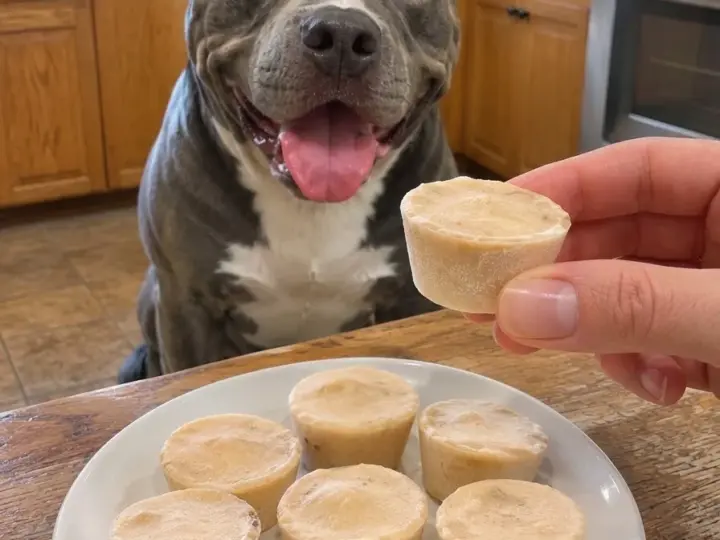
These Homemade Pup Cups are creamy, cool, and made with just three simple ingredients: ripe banana, plain Greek yogurt, and peanut butter. Blended smooth and frozen in small silicone cups, they make a refreshing treat for warm days and special rewards, with no added sugar and nothing artificial.
Below you’ll find the full recipe, along with notes on choosing a safe peanut butter, introducing yogurt, portioning, and storage.
A quick but important note before you start: these are occasional treats, not meals. Keep all treats within roughly 10% of your dog’s daily calories. Some dogs can’t tolerate lactose, so introduce yogurt slowly and watch for digestive upset. Check with your veterinarian first if your dog has allergies, pancreatitis, diabetes, or any other health condition.
Why Your Dog Will Love This Recipe
- Creamy and cool. A smooth frozen texture is a welcome treat on a warm day.
- Just three ingredients. Banana, yogurt, and peanut butter, with an optional splash of water.
- No added sugar. The banana provides natural sweetness.
- No baking. Blend, pour, and freeze.
- Easy portions. Small silicone cups make treat-sized servings.
Ingredients for Homemade Pup Cups
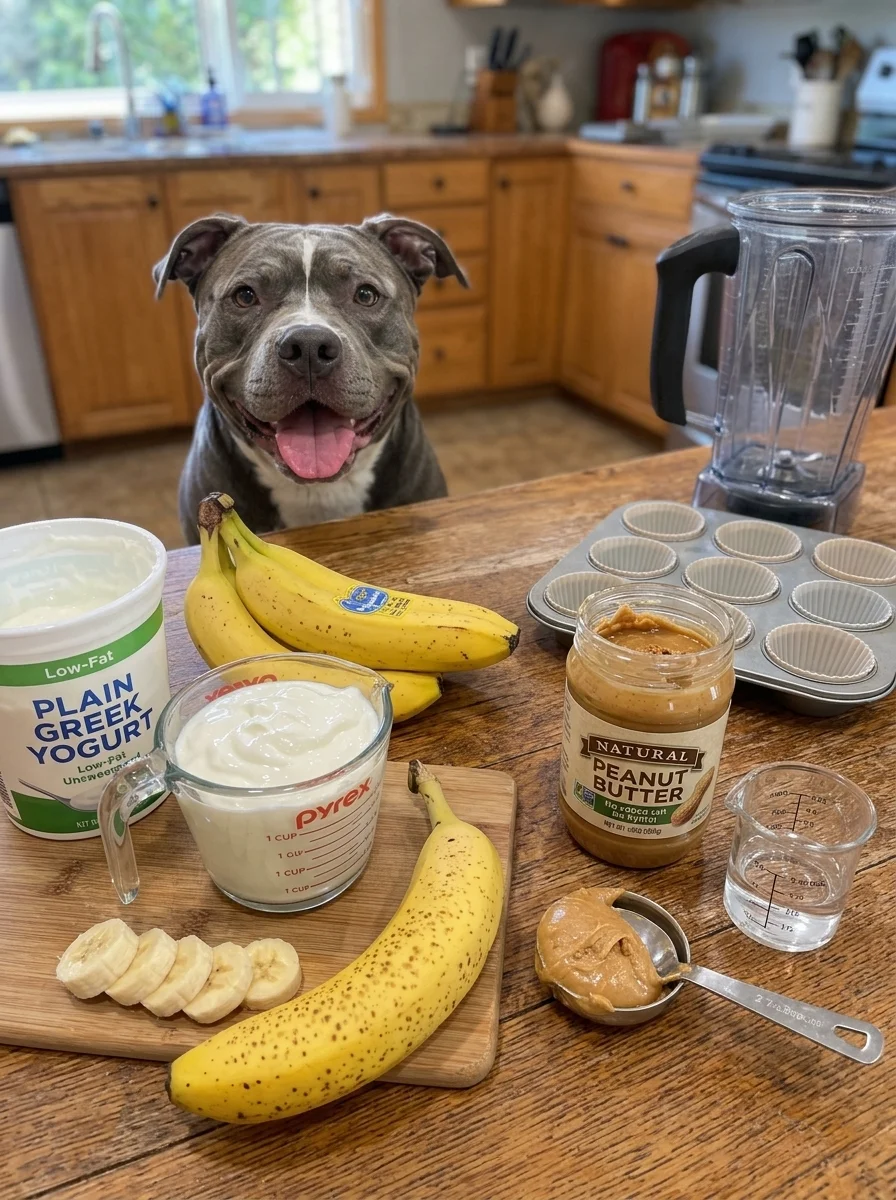
- 1 cup (245 g) plain, unsweetened Greek yogurt, preferably low-fat
- 1 medium ripe banana (about 120 g peeled)
- 2 tablespoons (32 g) natural, unsalted peanut butter, without xylitol
- 1 to 2 tablespoons (15–30 ml) water, optional, for easier blending
Yield: 8 mini cups
Equipment: Blender or food processor, eight small freezer-safe silicone cups (about 2 oz / 60 ml each), and a small tray
Ingredient Notes
Plain Greek yogurt. Choose plain, unsweetened yogurt, preferably low-fat, with no added sugar, flavors, or artificial sweeteners. Check the label, since some sweeteners are unsafe for dogs. Some dogs don’t tolerate lactose well, so if your dog hasn’t had yogurt before, offer a very small amount first.
Ripe banana. A ripe banana adds natural sweetness and a smooth texture. Bananas are generally considered a dog-safe fruit in moderation.
Peanut butter — xylitol-free is essential. Xylitol, also called birch sugar or wood sugar, is a sugar substitute found in some peanut butters and is highly toxic to dogs, even in small amounts. It can cause a dangerous drop in blood sugar and, in some cases, liver failure. Check the ingredient label every time you buy a jar. Choose a plain, unsalted peanut butter with minimal ingredients.
Substitutions and Variations
- Peanut-free: Replace the peanut butter with 2 tablespoons of 100% pure pumpkin purée, not pie filling. The freezing instructions stay the same.
- Sunflower seed butter: Plain, unsalted sunflower seed butter with no xylitol or added sugar can replace peanut butter.
- Blueberries: Blend in a few fresh blueberries for extra flavor.
- Dairy-free: If your dog doesn’t tolerate lactose, ask your veterinarian before using a dairy-free alternative, and check labels carefully for xylitol and other additives.
Kitchen Equipment
- Blender or food processor
- Eight small freezer-safe silicone cups (about 2 oz / 60 ml each)
- Small tray
- Spatula
- Covered freezer-safe container, for storage
How to Make Homemade Pup Cups
Step 1: Prepare the Banana
Peel the ripe banana, break it into small chunks, and place them in a blender.
Step 2: Add the Yogurt
Spoon in the plain Greek yogurt. Make sure it contains no added sugars, flavors, or artificial sweeteners.
Step 3: Add the Peanut Butter
Measure 2 tablespoons of dog-safe peanut butter. Check the ingredients carefully for xylitol.
Step 4: Blend Until Creamy
Blend for about 30 to 45 seconds, stopping to scrape the sides if needed. Add a little water if the mixture is too thick.
Step 5: Fill the Cups
Arrange eight small silicone cups on a tray. Divide the creamy mixture evenly, filling each about three-quarters full to leave room for expansion.
Step 6: Freeze Until Firm
Place the tray in the freezer for 4 to 6 hours, or until the centers are completely frozen.
Step 7: Serve Safely
Remove a frozen pup cup from its silicone mold and offer an appropriately sized portion in a dog-safe bowl. Let it soften slightly if it is very hard.
Expert Tips for the Best Results
- Check the peanut butter label every time. Ingredients can change between brands and batches.
- Use a very ripe banana. It blends smoothly and adds the most natural sweetness.
- Scrape the sides. This keeps the mixture evenly smooth.
- Leave room in the cups. The mixture expands slightly as it freezes.
- Use silicone cups. They make it much easier to pop the treats out.
- Let them soften briefly. A fully frozen cup can be hard on sensitive teeth.
Common Mistakes to Avoid
Using peanut butter with xylitol. This is the most important mistake to avoid.
Using flavored or sweetened yogurt. Added sugar and artificial sweeteners aren’t appropriate for dogs.
Serving too much. Even a small frozen treat adds calories, so stay within your dog’s treat allowance.
Introducing yogurt too quickly. Start small and watch for stomach upset.
Serving rock-hard cups to small or senior dogs. Let them soften slightly first.
How to Serve
Offer a portion in a dog-safe bowl. Smaller dogs can enjoy a teaspoon or two at a time, and larger dogs may have more, depending on their overall treat allowance. Always supervise your dog while they eat a frozen treat.
Make-Ahead Instructions
These need several hours to freeze, so make a batch ahead and keep a stash in the freezer.
Storage Instructions
Freezing
Once frozen, store the cups in a covered freezer-safe container for up to 1 to 2 months for best quality.
Serving
Serve frozen, or let a cup soften slightly first.
Frequently Asked Questions
Can dogs eat yogurt? Many dogs tolerate small amounts of plain, unsweetened yogurt, but some can’t tolerate lactose. Introduce it slowly and watch for digestive upset.
Is peanut butter safe for dogs? Plain peanut butter without xylitol is generally considered safe in small amounts. Always check the label, because xylitol is highly toxic to dogs.
What is xylitol? A sugar substitute, also called birch sugar or wood sugar, that is highly toxic to dogs.
How long do they last in the freezer? Up to 1 to 2 months for best quality.
Can I make them without peanut butter? Yes. Replace it with 2 tablespoons of plain pumpkin purée.
How many can my dog have? It depends on your dog’s size and overall treat allowance. Keep all treats to roughly 10% of daily calories, and ask your veterinarian if you’re unsure.
Why are my cups hard to remove? Let them sit at room temperature for a minute or two, or use flexible silicone molds.
Final Recipe Summary
These Homemade Pup Cups blend ripe banana, plain Greek yogurt, and xylitol-free peanut butter into a creamy frozen treat that’s easy to make and portion. Always check the peanut butter label, introduce yogurt slowly, and keep these as an occasional treat within your dog’s daily treat allowance.
Prep Time: 10 minutes
Freeze Time: 4–6 hours
Yield: 8 mini cups
Homemade Pup Cups (Frosty Paws-Style)
Description
Prep Time: 10 minutes
Freeze Time: 4–6 hours
Yield: 8 mini cups
Ingredients
- 1 cup (245 g) plain, unsweetened Greek yogurt, preferably low-fat
- 1 medium ripe banana (about 120 g peeled)
- 2 tablespoons (32 g) natural, unsalted peanut butter, without xylitol
- 1 to 2 tablespoons (15–30 ml) water, optional, for easier blending
Yield: 8 mini cups
Equipment: Blender or food processor, eight small freezer-safe silicone cups (about 2 oz / 60 ml each), and a small tray
Instructions
Peel the ripe banana, break it into small chunks, and place them in a blender.
Spoon in the plain Greek yogurt. Make sure it contains no added sugars, flavors, or artificial sweeteners.
Measure 2 tablespoons of dog-safe peanut butter. Check the ingredients carefully for xylitol.
Blend for about 30 to 45 seconds, stopping to scrape the sides if needed. Add a little water if the mixture is too thick.
Arrange eight small silicone cups on a tray. Divide the creamy mixture evenly, filling each about three-quarters full to leave room for expansion.
Place the tray in the freezer for 4 to 6 hours, or until the centers are completely frozen.
Remove a frozen pup cup from its silicone mold and offer an appropriately sized portion in a dog-safe bowl. Let it soften slightly if it is very hard.