
There’s something especially comforting about a batch of freshly baked scones coming out of the oven. These Cranberry Orange Scones are buttery, tender, lightly crisp around the edges, and packed with sweet-tart dried cranberries and bright citrus flavor.
Fresh orange zest and juice give the dough a vibrant citrus aroma, while cold butter creates the flaky, tender texture that makes homemade scones so satisfying. Once baked, the scones are finished with a simple orange glaze made from powdered sugar, fresh orange juice, zest, and vanilla.
Serve them slightly warm with coffee or tea for breakfast, brunch, or an afternoon treat. With their golden edges, soft centers, colorful cranberries, and sweet citrus glaze, they’re just as suitable for a holiday brunch as they are for a quiet weekend breakfast.
Why You’ll Love These Cranberry Orange Scones
These homemade scones combine bakery-style texture with a simple preparation.
Buttery and tender. Cold butter creates little pockets throughout the dough, helping produce a soft and flaky center.
Bright orange flavor. Fresh orange zest and juice flavor both the scones and their glaze.
Sweet-tart cranberries. Dried cranberries provide chewy bursts of fruity flavor in every bite.
Lightly crisp outside. Brushing the tops with heavy cream helps them bake into a beautifully golden exterior.
Easy homemade glaze. The orange glaze requires only four ingredients and gives the finished scones extra citrus sweetness.
Perfect with coffee or tea. These scones make a wonderful breakfast, brunch, or afternoon snack.
Freezer-friendly. Unglazed scones can be frozen for up to three months.
What Makes a Good Homemade Scone?
The best scones have a delicate balance between a lightly crisp exterior and a soft, tender interior.
Cold butter is one of the most important ingredients for achieving that texture. Instead of completely blending into the flour, small pieces of cold butter remain throughout the dough. As the scones bake, those pieces melt and contribute to the tender, flaky structure.
Another important factor is handling the dough gently. Overmixing or excessive kneading can make scones tougher rather than soft and tender.
Heavy cream and egg add richness and moisture, while fresh orange zest and juice provide citrus flavor without overwhelming the buttery base.
Finally, the orange glaze provides a sweet finishing layer that emphasizes the citrus flavor already inside the scones.
Ingredients for Cranberry Orange Scones
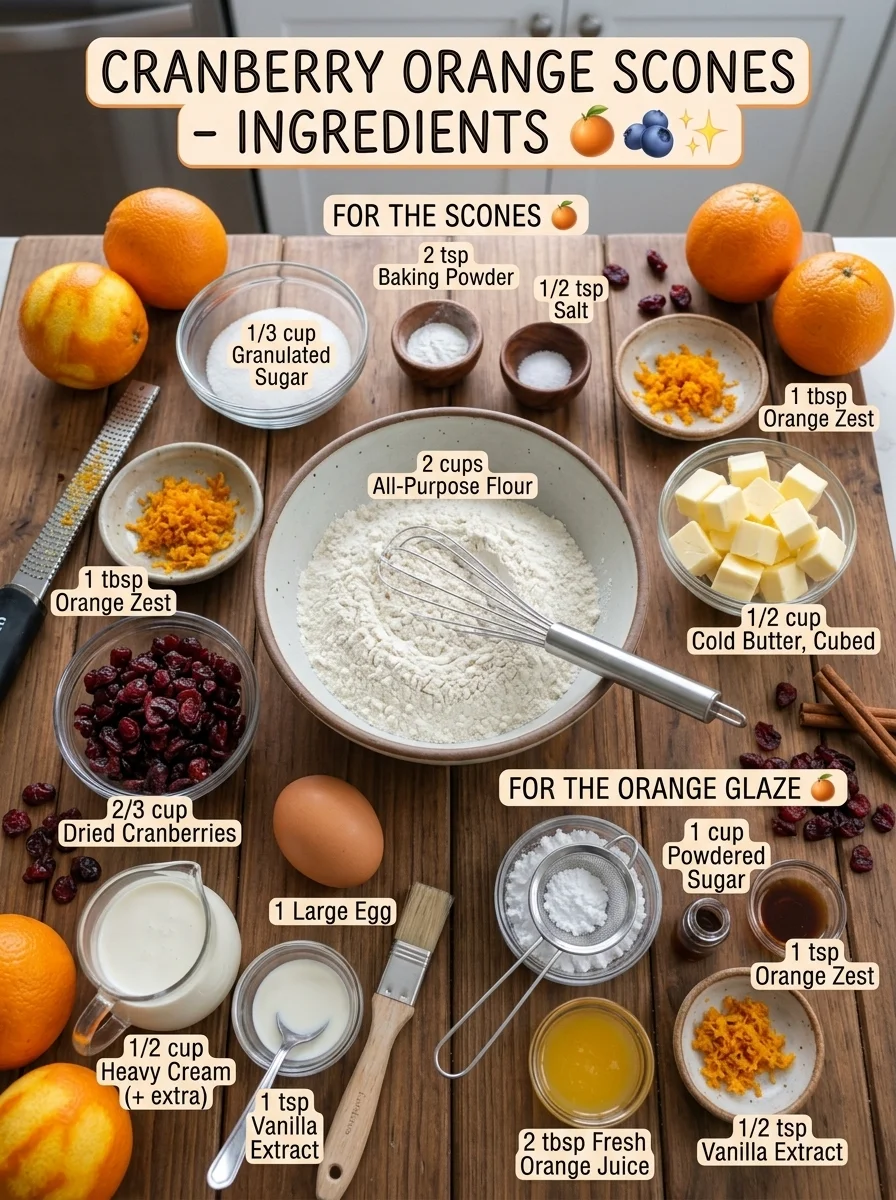
For the Scones
- 2 cups all-purpose flour
- 1/3 cup granulated sugar
- 2 tsp baking powder
- 1/2 tsp salt
- 1 tbsp finely grated orange zest
- 1/2 cup cold unsalted butter, cubed
- 2/3 cup dried cranberries
- 1 large egg
- 1/2 cup heavy cream, plus more for brushing
- 1 tsp vanilla extract
- 1 tbsp fresh orange juice
For the Orange Glaze
- 1 cup powdered sugar
- 2 tbsp fresh orange juice
- 1 tsp finely grated orange zest
- 1/2 tsp vanilla extract
Ingredient Notes
All-purpose flour: Regular all-purpose flour provides enough structure while allowing the scones to remain tender.
Granulated sugar: One-third cup gives the dough gentle sweetness without making the scones overly dessert-like.
Baking powder: This is the primary leavening ingredient and helps the scones rise in the oven.
Salt: A small amount balances the sweetness and enhances the butter and orange flavors.
Orange zest: Zest contains concentrated citrus oils and provides plenty of fresh orange aroma without adding excess liquid.
Cold unsalted butter: Keeping the butter cold is essential. Small butter pieces throughout the dough contribute to the tender, flaky texture.
Dried cranberries: Dried cranberries add chewy texture and a sweet-tart fruitiness that pairs naturally with orange.
Egg: The egg provides structure, richness, and moisture.
Heavy cream: Heavy cream creates a rich, tender dough. A little additional cream brushed over the tops encourages attractive browning.
Vanilla extract: Vanilla rounds out the citrus and buttery flavors in both the scones and glaze.
Fresh orange juice: Orange juice adds fresh citrus flavor to the dough and is also used to create the glaze.
Powdered sugar: Powdered sugar dissolves easily into the orange juice, producing a smooth glaze that can be drizzled over the finished scones.
How to Make Cranberry Orange Scones
Step 1: Prepare the Oven and Baking Sheet
Preheat your oven to 400°F (200°C).
Line a large baking sheet with parchment paper.
Having the oven fully preheated before the scones go in helps them begin rising immediately.
Step 2: Combine the Dry Ingredients
In a large mixing bowl, whisk together the flour, granulated sugar, baking powder, salt, and finely grated orange zest.
Whisk thoroughly so the baking powder, salt, sugar, and zest are evenly distributed throughout the flour.
Step 3: Cut in the Cold Butter
Add the cold cubed unsalted butter to the flour mixture.
Using a pastry cutter or your fingertips, work the butter into the dry ingredients until the mixture resembles coarse crumbs.
Leave a few pea-sized pieces of butter visible.
Avoid working the butter so much that it becomes completely incorporated or begins melting.
Step 4: Add the Cranberries
Stir the dried cranberries into the flour and butter mixture.
Distribute them evenly so every scone gets plenty of cranberry pieces.
Step 5: Mix the Wet Ingredients
In a separate bowl, whisk together the egg, 1/2 cup heavy cream, vanilla extract, and 1 tablespoon fresh orange juice.
Whisk until everything is evenly combined.
Step 6: Make the Dough
Pour the wet ingredients into the dry mixture.
Using a spoon or spatula, gently stir just until a soft dough begins to form.
Do not aggressively mix the dough. A slightly rough-looking dough is preferable to one that has been overworked.
Step 7: Gently Knead
Transfer the dough to a lightly floured work surface.
Gently knead it only 2 to 3 times, just until the loose pieces come together.
Avoid treating scone dough like bread dough. It does not need prolonged kneading.
Step 8: Shape and Cut the Scones
Shape the dough into a round approximately 1 inch thick.
Cut the round into 8 equal wedges.
Carefully transfer the wedges to the parchment-lined baking sheet, leaving some space between each scone.
Step 9: Brush With Cream
Lightly brush the top of each scone with a small amount of heavy cream.
This helps create an attractive golden finish as the scones bake.
Step 10: Bake
Bake at 400°F (200°C) for 16 to 20 minutes.
The scones are ready when the edges are lightly golden and the centers are cooked through.
Avoid overbaking, which can dry out the tender centers.
Step 11: Cool the Scones
Remove the baking sheet from the oven and let the scones cool on it for approximately 10 minutes.
Then carefully transfer them to a wire rack.
Step 12: Make the Orange Glaze
While the scones cool, add the powdered sugar, fresh orange juice, orange zest, and vanilla extract to a small bowl.
Whisk until smooth.
The glaze should be thick enough to cling to the scones while still being fluid enough to drizzle.
Step 13: Glaze and Serve
Drizzle the orange glaze generously over the cooled or slightly warm scones.
Allow it to settle briefly before serving.
Enjoy the scones with coffee, tea, butter, or your favorite breakfast spread.
Time and Yield
Prep time: 15 minutes
Cook time: 18 minutes
Total time: 33 minutes
Servings: 8 scones
Estimated calories: approximately 340 calories per serving
Tips for the Best Cranberry Orange Scones
Keep the butter cold. Cold butter is one of the most important elements for achieving tender, flaky scones.
Don’t completely blend the butter into the flour. Leave some pea-sized pieces throughout the mixture.
Use fresh orange zest. The zest contributes concentrated orange aroma and is an important part of the recipe’s flavor.
Don’t overmix the dough. Stop stirring once the ingredients have formed a soft dough.
Knead only a few times. Two or three gentle kneads should be enough to bring everything together.
Keep the dough fairly thick. A round approximately 1 inch thick produces substantial scones with soft centers.
Watch the final few minutes of baking. Remove the scones once they’re lightly golden rather than waiting for them to become deeply browned.
Let them cool before adding lots of glaze. Glaze placed on very hot scones can melt and run off. Slightly warm or cooled scones hold it better.
Serving Ideas
Cranberry orange scones are versatile enough for everyday breakfasts and special brunches.
With coffee: The sweet citrus glaze and buttery crumb pair beautifully with a hot cup of coffee.
With tea: Serve them as part of an afternoon tea spread.
With butter: Split a warm scone and add a little butter for an extra-rich treat.
For brunch: Arrange the scones on a platter alongside fruit, eggs, yogurt, and other breakfast favorites.
Holiday breakfast: Cranberry and orange flavors make these especially appealing during the fall and winter holiday season.
Afternoon snack: A scone with coffee or tea makes an easy sweet afternoon treat.
Variations and Flavor Ideas
The cranberry-orange combination is delicious as written, but there are several simple ways to change the recipe.
Extra-orange scones: Add a little additional finely grated orange zest for an even stronger citrus aroma.
Extra-cranberry scones: Increase the dried cranberries slightly if you want more fruit in every bite.
Vanilla-orange glaze: Add a touch more vanilla to emphasize the sweet bakery-style flavor of the glaze.
Lightly glazed scones: Use a thin drizzle instead of covering the tops generously if you prefer less sweetness.
Unglazed scones: Skip the glaze entirely for a less-sweet breakfast scone that emphasizes the butter, orange, and cranberry flavors.
Troubleshooting Common Problems
Why are my scones tough?
Overmixing or over-kneading is a common cause.
Stir the dough only until it comes together and knead it just 2 to 3 times.
Why did my scones spread too much?
If the butter becomes very warm before baking, the scones may spread more than intended.
Work efficiently and keep the butter cold while preparing the dough.
Why are my scones dry?
Too much flour, overmixing, or overbaking can all produce dry scones.
Measure carefully, handle the dough gently, and begin checking for doneness around the lower end of the baking range.
Why aren’t my scones flaky?
The butter may have been worked too thoroughly into the flour or allowed to become too warm.
Keeping some visible pieces of cold butter in the dough helps create a more tender texture.
Why is my glaze too thin?
If the glaze flows too easily, it may have too much liquid relative to the powdered sugar.
The glaze should be smooth and drizzleable rather than watery.
Why is my glaze disappearing into the scones?
The scones may still be too hot. Let them cool longer before glazing so more of the glaze stays visible on the surface.
Storage and Reheating
These scones are especially delicious fresh, but leftovers can be stored for later.
Room temperature: Store the scones in an airtight container for up to 2 days.
Refrigerator: Keep them refrigerated in an airtight container for up to 5 days.
Freezer: Unglazed scones can be stored in a freezer-safe container for up to 3 months.
Microwave reheating: Warm an individual scone for approximately 10 to 15 seconds.
Oven reheating: Place the scones in a 300°F oven for a few minutes until warmed through.
For frozen unglazed scones, allow them to thaw and warm them before adding glaze if desired.
Frequently Asked Questions
What do Cranberry Orange Scones taste like?
They’re buttery and lightly sweet with bright orange flavor, chewy sweet-tart cranberries, and a sweet citrus glaze.
Can I use dried cranberries in scones?
Yes. This recipe uses 2/3 cup dried cranberries, which provide concentrated cranberry flavor and chewy texture without adding excess moisture to the dough.
Why does the butter need to be cold?
Cold butter remains in small pieces throughout the dough. During baking, it melts and contributes to the tender, flaky texture of the finished scones.
Can I make Cranberry Orange Scones without the glaze?
Absolutely. The scones already contain orange zest, orange juice, cranberries, sugar, and vanilla, so they’re flavorful even without the glaze.
How thick should I shape the scone dough?
Shape the dough into a round approximately 1 inch thick before cutting it into eight wedges.
How do I know when the scones are done?
Look for lightly golden edges and centers that appear fully baked. They generally need 16 to 20 minutes at 400°F (200°C).
Should I glaze the scones while they’re hot?
It’s better to let them cool somewhat first. You can glaze them while they’re slightly warm, but very hot scones may cause the glaze to melt and run off.
Can Cranberry Orange Scones be frozen?
Yes. For best results, freeze the unglazed scones in a freezer-safe container for up to three months.
What’s the best way to reheat leftover scones?
For a quick option, microwave an individual scone for 10 to 15 seconds. You can also warm them in a 300°F oven for a few minutes.
Final Thoughts
These Cranberry Orange Scones bring together everything that makes a homemade scone so satisfying: a buttery and tender center, lightly golden edges, bursts of sweet-tart cranberry, and plenty of fresh orange flavor.
Cold butter and gentle handling help create the soft texture, while heavy cream adds richness and fresh orange zest perfumes the entire batch. Once baked, the simple orange glaze adds another layer of citrus sweetness and gives the scones a beautiful bakery-style finish.
Serve them slightly warm with coffee or tea, add them to a weekend brunch, or make a batch for a special breakfast. And because the unglazed scones freeze well, you can keep a few on hand whenever you’re craving a buttery cranberry-orange treat.
Print
Cranberry Orange Scones
- Total Time: 33 minutes
Ingredients
For the Scones
- 2 cups all-purpose flour
- 1/3 cup granulated sugar
- 2 tsp baking powder
- 1/2 tsp salt
- 1 tbsp finely grated orange zest
- 1/2 cup cold unsalted butter, cubed
- 2/3 cup dried cranberries
- 1 large egg
- 1/2 cup heavy cream, plus more for brushing
- 1 tsp vanilla extract
- 1 tbsp fresh orange juice
For the Orange Glaze
- 1 cup powdered sugar
- 2 tbsp fresh orange juice
- 1 tsp finely grated orange zest
- 1/2 tsp vanilla extract
Instructions
Preheat your oven to 400°F (200°C).
Line a large baking sheet with parchment paper.
Having the oven fully preheated before the scones go in helps them begin rising immediately.
Step 2: Combine the Dry Ingredients
In a large mixing bowl, whisk together the flour, granulated sugar, baking powder, salt, and finely grated orange zest.
Whisk thoroughly so the baking powder, salt, sugar, and zest are evenly distributed throughout the flour.
Step 3: Cut in the Cold Butter
Add the cold cubed unsalted butter to the flour mixture.
Using a pastry cutter or your fingertips, work the butter into the dry ingredients until the mixture resembles coarse crumbs.
Leave a few pea-sized pieces of butter visible.
Avoid working the butter so much that it becomes completely incorporated or begins melting.
Step 4: Add the Cranberries
Stir the dried cranberries into the flour and butter mixture.
Distribute them evenly so every scone gets plenty of cranberry pieces.
Step 5: Mix the Wet Ingredients
In a separate bowl, whisk together the egg, 1/2 cup heavy cream, vanilla extract, and 1 tablespoon fresh orange juice.
Whisk until everything is evenly combined.
Step 6: Make the Dough
Pour the wet ingredients into the dry mixture.
Using a spoon or spatula, gently stir just until a soft dough begins to form.
Do not aggressively mix the dough. A slightly rough-looking dough is preferable to one that has been overworked.
Step 7: Gently Knead
Transfer the dough to a lightly floured work surface.
Gently knead it only 2 to 3 times, just until the loose pieces come together.
Avoid treating scone dough like bread dough. It does not need prolonged kneading.
Step 8: Shape and Cut the Scones
Shape the dough into a round approximately 1 inch thick.
Cut the round into 8 equal wedges.
Carefully transfer the wedges to the parchment-lined baking sheet, leaving some space between each scone.
Step 9: Brush With Cream
Lightly brush the top of each scone with a small amount of heavy cream.
This helps create an attractive golden finish as the scones bake.
Step 10: Bake
Bake at 400°F (200°C) for 16 to 20 minutes.
The scones are ready when the edges are lightly golden and the centers are cooked through.
Avoid overbaking, which can dry out the tender centers.
Step 11: Cool the Scones
Remove the baking sheet from the oven and let the scones cool on it for approximately 10 minutes.
Then carefully transfer them to a wire rack.
Step 12: Make the Orange Glaze
While the scones cool, add the powdered sugar, fresh orange juice, orange zest, and vanilla extract to a small bowl.
Whisk until smooth.
The glaze should be thick enough to cling to the scones while still being fluid enough to drizzle.
Step 13: Glaze and Serve
Drizzle the orange glaze generously over the cooled or slightly warm scones.
Allow it to settle briefly before serving.
Enjoy the scones with coffee, tea, butter, or your favorite breakfast spread.
- Prep Time: 15 minutes
- Cook Time: 18 minutes
Nutrition
- Serving Size: 8 scones
- Calories: approximately 340 calories per serving