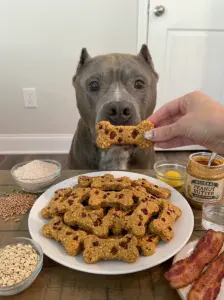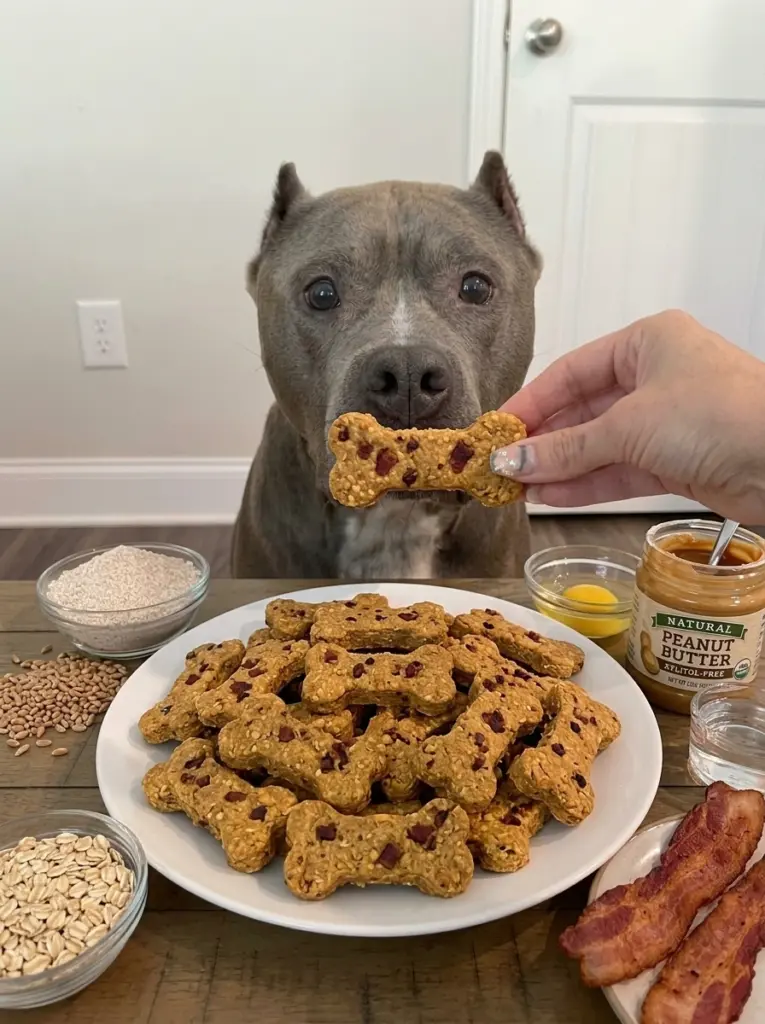
These Peanut Butter Bacon Dog Bones combine two flavors dogs go wild for — creamy peanut butter and savory bacon — into a crunchy, special-occasion homemade treat. The rich peanut butter pairs perfectly with just a small amount of crispy bacon, creating a flavor combination that feels like an extra-special reward rather than an everyday biscuit.
Because these bones include both peanut butter and bacon, there are two important safety details worth understanding thoroughly before you start. The notes below cover both, along with tips for getting the texture right and storing the finished bones properly.
A quick but important note before you start: because bacon is high in fat and sodium, these bones are best treated as an occasional special reward rather than a regular everyday treat. Even with dog-friendly ingredients, homemade treats like these should only make up a small part of your dog’s overall diet. Every dog has different nutritional needs and sensitivities, so if your dog has any known allergies, digestive issues, or health conditions — especially pancreatitis risk or sodium sensitivity — check with your veterinarian before introducing a new treat like this one.
Why Your Dog Will Love This Recipe
- An irresistible flavor combination. Peanut butter and bacon are two of the most enticing flavors for most dogs.
- Satisfying crunch. A thorough bake gives these bones a firm, crunchy texture dogs enjoy chewing.
- Feels extra special. The bacon makes these feel like a bigger treat than an everyday biscuit, which is perfect for celebrations or extra-good behavior.
- Simple to make. Just a handful of ingredients and an easy roll-and-cut method.
- Fun classic shape. Cutting these into bone shapes makes treat time feel a little more special.
Ingredients for Peanut Butter Bacon Dog Bones
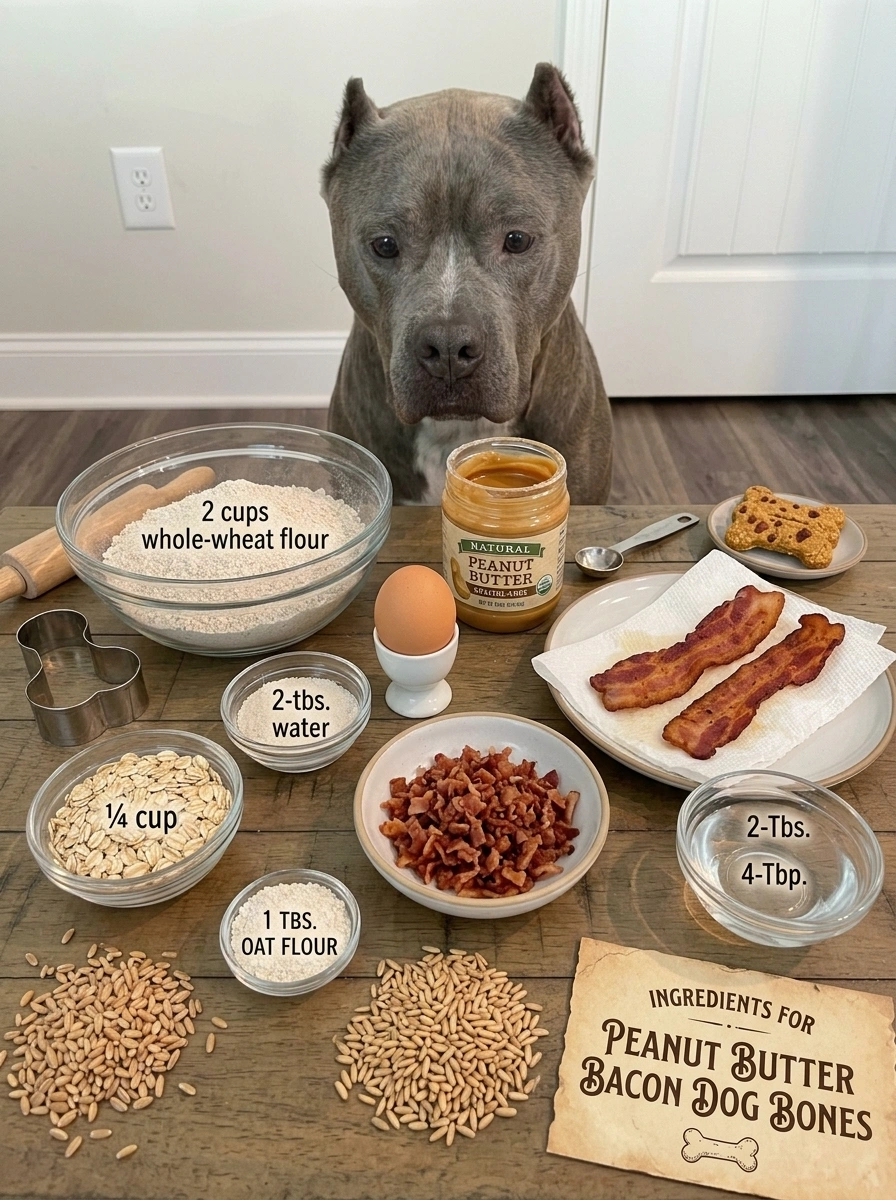
- 1 cup natural peanut butter (xylitol-free)
- 1 large egg
- 2 cups whole-wheat flour
- 2 slices bacon, cooked crisp, well-drained, and finely crumbled
- 2–4 tablespoons water, if needed
Optional Add-Ins
- ¼ cup old-fashioned rolled oats
- 1 tablespoon oat flour, if the dough needs extra firming
Ingredient Notes
Peanut butter — xylitol-free is essential. This is one of the most important ingredient notes in the entire recipe. Xylitol is a sugar substitute found in many “natural” or sugar-free peanut butters, and it is highly toxic to dogs, even in small amounts — it can cause a dangerous, rapid drop in blood sugar and, in some cases, liver failure. Always check the ingredient label carefully and confirm the peanut butter you’re using does not contain xylitol (sometimes listed as “birch sugar”) before using it in any dog treat recipe.
Bacon — a little goes a long way. Bacon is high in fat and sodium, both of which can be hard on a dog’s digestion in large amounts, and excessive fat intake has been associated with an increased risk of pancreatitis in dogs. This recipe intentionally uses only a small amount of bacon spread across a full batch, keeping each individual bone’s bacon content quite modest. Cook the bacon plain, with no added seasoning, glaze, or flavoring, and drain it very thoroughly on paper towels to remove as much excess grease as possible before crumbling it into the dough. Some flavored or seasoned bacon products contain garlic or onion powder, both of which are toxic to dogs, so always check the ingredient label and use plain bacon.
Egg. The egg helps bind the dough together and adds a bit of protein. This recipe is baked long enough to cook the egg thoroughly.
Whole-wheat flour. This gives the dough enough structure to hold its shape when cut into bone shapes and baked.
Substitutions and Variations
- Turkey bacon: Turkey bacon can be used in place of pork bacon, though it’s still important to drain it well and confirm it’s plain, with no added seasoning.
- Sunflower seed butter instead of peanut butter: For dogs with peanut allergies, plain sunflower seed butter can be used in place of peanut butter in an equal amount, as long as it’s also free of xylitol and added sugar.
- Oat flour instead of whole-wheat flour: For dogs with wheat sensitivities, you can replace part of the whole-wheat flour with oat flour, adjusting the liquid slightly as needed.
- Added oats: A small amount of rolled oats can be folded in for extra texture.
- Bacon-free version: If you’d rather skip the bacon altogether for a lower-fat treat, simply omit it — you’ll still have a tasty peanut butter dog bone, just without the smoky flavor.
Kitchen Equipment
- Baking sheet
- Parchment paper
- Skillet, for cooking the bacon
- Paper towels, for draining
- Large mixing bowl
- Rolling pin
- Bone-shaped cookie cutter
- Wire cooling rack
How to Make Peanut Butter Bacon Dog Bones
Step 1: Preheat and Prep
Preheat the oven to 350°F (175°C) and line a baking sheet with parchment paper.
Step 2: Cook and Drain the Bacon
Cook the bacon in a skillet until crisp, using no added oil or seasoning. Transfer it to a plate lined with paper towels and pat it thoroughly to remove as much excess grease as possible. Once cooled, finely crumble the bacon into small pieces.
Step 3: Mix the Wet Ingredients
In a large bowl, combine the peanut butter and egg, stirring until smooth.
Step 4: Add the Dry Ingredients and Bacon
Add the whole-wheat flour and crumbled bacon, mixing until a firm, workable dough forms. If the dough feels too dry or crumbly, add water a tablespoon at a time. If it’s too sticky to roll, work in a little extra flour.
Step 5: Roll and Cut
Roll the dough out on a lightly floured surface to about ¼ inch (6 mm) thick. Cut into bone shapes using a cookie cutter, and arrange the pieces on the prepared baking sheet.
Step 6: Bake
Bake for 22 to 28 minutes, or until the bones are firm and lightly golden around the edges. For extra-crunchy treats, turn off the oven once baking is done and leave the bones inside for another 20 to 30 minutes as the oven cools.
Step 7: Cool Completely
Transfer the bones to a wire rack and let them cool completely before serving.
Expert Tips for the Best Results
- Always double-check your peanut butter label. Confirm it’s free of xylitol every time you buy a new jar, since ingredients can change between brands or even between batches.
- Drain the bacon very thoroughly. Removing as much grease as possible keeps the dough workable and reduces the overall fat content of the finished treats.
- Use plain, unseasoned bacon. Flavored or seasoned varieties may contain garlic, onion, or other additives unsafe for dogs.
- Keep the bacon portion modest. A little bacon flavor goes a long way, and keeping the total amount small across a full batch helps keep each individual treat appropriately low in fat and sodium.
- Save these for special occasions. Given the bacon content, these are best reserved as an occasional reward rather than a daily treat.
Common Mistakes to Avoid
Using peanut butter that contains xylitol. This is one of the most critical mistakes to avoid in this recipe. Xylitol is dangerous for dogs, so always read the label carefully, even on brands marketed as “natural” or “all-natural.”
Using seasoned or flavored bacon. Many bacon products, especially those marketed as “peppered,” “maple,” or “seasoned,” contain added ingredients that may not be safe for dogs, including garlic or onion powder. Stick with plain bacon.
Not draining the bacon thoroughly enough. Leftover grease adds unnecessary fat to the dough and to your dog’s diet. Pat the cooked bacon well with paper towels before adding it.
Treating these as an everyday treat. Because of the bacon’s fat and sodium content, these bones are best kept as an occasional special reward rather than a regular snack.
Rolling the dough unevenly. Inconsistent thickness leads to uneven baking, with some bones turning out too soft and others too hard.
How to Serve Peanut Butter Bacon Dog Bones
Because of their richer ingredients, these bones are best saved for special occasions, extra-good behavior, or as an occasional reward rather than a daily treat. Consider breaking them into smaller pieces to stretch a single bone across multiple reward moments, especially for smaller dogs.
Make-Ahead Instructions
This recipe is easy to make ahead, since the bones store well and hold their crunch for days once fully cooled. Because these are meant to be occasional treats, baking a batch and freezing most of it for later use is a great way to portion out special rewards over time.
Storage Instructions
Room Temperature or Refrigerating
Because these bones are fully baked and low in moisture, they can be stored in an airtight container at room temperature for up to 1 week, or in the refrigerator for slightly longer freshness. Refrigeration is a reasonable choice here given the bacon content.
Freezing
For longer storage, freeze the bones in a freezer-safe container or bag for up to 3 months. Thaw at room temperature before serving.
Reheating
Reheating isn’t necessary for these bones, since they’re meant to be served at room temperature.
Frequently Asked Questions
Can I make this recipe ahead of time? Yes. These bones store well, so you can bake a batch in advance and keep it at room temperature, refrigerated, or frozen until you’re ready to use it.
How long do these dog bones last? Stored in an airtight container at room temperature, they’ll keep for about 1 week, or up to 3 months in the freezer.
Can I freeze homemade dog bones? Yes. Freeze them in a freezer-safe container or bag and thaw at room temperature before serving.
Is xylitol really dangerous for dogs? Yes, and seriously so. Xylitol, a sugar substitute found in some peanut butters and other products, can cause a rapid and dangerous drop in blood sugar in dogs, and in some cases can lead to liver failure. Always check ingredient labels closely and never use a peanut butter unless you’ve confirmed it’s xylitol-free.
Why is bacon only used in a small amount in this recipe? Bacon is high in fat and sodium, which can be hard on a dog’s digestion in larger amounts and has been associated with an increased risk of pancreatitis. Using just a small, well-drained amount spread across a full batch keeps each individual treat’s bacon content modest.
Can I use turkey bacon instead of pork bacon? Yes, as long as it’s plain, with no added seasoning, and well-drained after cooking.
How often can I give my dog these treats? Because of the bacon content, these are best treated as an occasional special reward rather than an everyday snack. If your dog has any history of pancreatitis, sodium sensitivity, or other digestive concerns, check with your veterinarian before offering bacon-containing treats at all.
Why is my dough too crumbly or too sticky? If the dough is dry and crumbly, add water a tablespoon at a time until it holds together. If it’s too sticky to roll, work in a bit more flour.
Final Recipe Summary
These Peanut Butter Bacon Dog Bones combine creamy peanut butter with a small, carefully portioned amount of crispy bacon for a crunchy, extra-special homemade treat. Because bacon is high in fat and sodium, this recipe uses just enough to add flavor while keeping each bone’s bacon content modest, and these are best reserved as an occasional reward rather than an everyday snack. With an easy roll-and-cut method, they’re a fun way to make treat time feel a little more celebratory — just remember to always double-check that your peanut butter is xylitol-free and use only plain, well-drained bacon.
Prep Time: 20–25 minutes Cook Time: 22–28 minutes (plus an optional 20–30 minutes of oven-cooling time for extra crunch) Total Time: Approximately 45 minutes to just over 1 hour Yield: Varies by cutter size; typically 24–30 bones
Print
Peanut Butter Bacon Dog Bones
Ingredients
- 1 cup natural peanut butter (xylitol-free)
- 1 large egg
- 2 cups whole-wheat flour
- 2 slices bacon, cooked crisp, well-drained, and finely crumbled
- 2–4 tablespoons water, if needed
Optional Add-Ins
- ¼ cup old-fashioned rolled oats
- 1 tablespoon oat flour, if the dough needs extra firming
Instructions
Preheat the oven to 350°F (175°C) and line a baking sheet with parchment paper.
Cook the bacon in a skillet until crisp, using no added oil or seasoning. Transfer it to a plate lined with paper towels and pat it thoroughly to remove as much excess grease as possible. Once cooled, finely crumble the bacon into small pieces.
In a large bowl, combine the peanut butter and egg, stirring until smooth.
Add the whole-wheat flour and crumbled bacon, mixing until a firm, workable dough forms. If the dough feels too dry or crumbly, add water a tablespoon at a time. If it’s too sticky to roll, work in a little extra flour.
Roll the dough out on a lightly floured surface to about ¼ inch (6 mm) thick. Cut into bone shapes using a cookie cutter, and arrange the pieces on the prepared baking sheet.
Bake for 22 to 28 minutes, or until the bones are firm and lightly golden around the edges. For extra-crunchy treats, turn off the oven once baking is done and leave the bones inside for another 20 to 30 minutes as the oven cools.
Transfer the bones to a wire rack and let them cool completely before serving.