
Mini Sardine and Egg Bites Dog Treats (Easy Recipe)
1. Introduction: The Homemade Dog Treat Revolution
Mini Sardine and Egg Bites Dog Treats represent the ultimate fusion of high-protein canine nutrition, anti-inflammatory omega-3 fatty acids, and irresistible savory flavor that drives dogs wild. As dog parents become increasingly conscious of artificial preservatives, fillers, and meat by-products lurking in commercial store-bought snacks, crafting wholesome homemade canine treats has evolved from a trendy hobby into a fundamental health strategy. When you take control of your kitchen and prepare dog treats from scratch, you gain complete clarity over every single ingredient entering your pet’s digestive system. This particular recipe combines whole wild-caught sardines with nutrient-dense eggs and digestible oat flour to form light, fluffy mini muffins that serve as perfect high-value training rewards or daily wellness boosts. Golden Retrievers and dogs of all sizes adore the deep, savory aroma of fresh sardines, while pet parents appreciate how quick and economical these superfood bite-sized treats are to make.
Commercial treats are frequently processed at high temperatures that destroy delicate heat-sensitive omega-3 fatty acids and essential vitamins. By baking Mini Sardine and Egg Bites Dog Treats at home under gentle heat, you preserve maximum nutritional value. Sardines represent one of the cleanest, lowest-mercury fish available in the ocean due to their tiny position at the bottom of the marine food chain. Combined with organic eggs, which offer the gold standard for protein bioavailability in animal nutrition, this treat delivers balanced cellular nourishment in every bite. Whether you are rewarding your Golden Retriever for mastering a new command, supporting your senior dog’s aging joints, or simply pampering your furry companion with a gourmet kitchen creation, this masterclass guide provides everything you need to bake with confidence.
2. In-Depth Canine Nutritional Science Breakdown
Understanding the biological impact of whole food ingredients empowers pet parents to make informed nutritional decisions. The combination of wild sardines, whole eggs, oat flour, and fresh parsley creates a powerful synergistic matrix of macronutrients and micronutrients tailored specifically for canine physiology.
Sardines as a Marine Superfood:
Wild-caught canned sardines packed in water are a nutritional powerhouse for dogs. They are loaded with eicosapentaenoic acid (EPA) and docosahexaenoic acid (DHA), two long-chain omega-3 fatty acids that play vital roles in systemic canine health. EPA acts as a natural anti-inflammatory compound, helping to soothe stiff joints, reduce osteoarthritis discomfort, and modulate skin inflammation in dogs suffering from environmental allergies. DHA is essential for cognitive function, retinal health, and brain development in both growing puppies and aging senior dogs. Additionally, because sardines are eaten whole with soft edible bones, they supply a bioavailable source of calcium and phosphorus in the perfect physiological ratio for skeletal structure.
Whole Eggs and Protein Bioavailability:
Eggs are widely recognized by veterinary nutritionists as the biological benchmark for protein quality. They boast a biological value score of 100, meaning your dog’s digestive tract can utilize almost every single amino acid present in the egg protein. Eggs deliver essential amino acids such as leucine, lysine, and methionine, which drive muscle repair, coat growth, and enzyme production. The egg yolk contributes vital fat-soluble vitamins including Vitamin A for eye health, Vitamin D for mineral absorption, and Vitamin E for cellular antioxidant protection. Choline, another critical nutrient present in egg yolks, supports healthy liver function and neurological signaling.
Oat Flour for Gut Motility:
Whole oat flour provides a complex, gentle carbohydrate base that supplies sustained energy without spiking blood sugar. Rich in beta-glucan, a soluble dietary fiber, oats support smooth digestion, regulate stool quality, and feed beneficial probiotic bacteria in the canine colon. Unlike wheat or soy, oats are naturally low in gluten and rarely act as allergen triggers, making them an ideal grain choice for dogs with sensitive stomachs.
Fresh Parsley for Breath and Cellular Protection:
Curly parsley is far more than an aesthetic garnish. It acts as an active oral hygiene aid, containing chlorophyll that neutralizes bad breath bacteria in the mouth. Parsley is also abundant in Vitamin C, Vitamin K, and flavonoid antioxidants that neutralize free radicals, supporting kidney performance and urinary tract wellness.
3. Veterinarian Safety Standards & Critical Ingredient Checklist
Safety is the absolute cornerstone of home pet culinary preparation. While seafood and eggs are exceptionally beneficial for dogs, careful ingredient selection is non-negotiable to prevent toxicity or gastrointestinal distress.
Critical Ingredient Safety Rules:
• Sardine Selection: Always choose canned wild sardines packed strictly in water with no added salt. NEVER use sardines packed in soybean oil, sunflower oil, tomato sauce, mustard, or spicy oils. Avoid products containing added sodium, onion powder, or garlic extract.
• Xylitol and Birch Sugar Hazard: While not present in sardines or eggs, always verify that any ancillary flavorings or secondary ingredients in your pantry are 100% free of Xylitol (birch sugar), an artificial sweetener that induces rapid, fatal hypoglycemia in dogs.
• Parsley Variety Matters: Use standard fresh curly parsley or flat Italian parsley only. Never use Spring Parsley (Cymopterus watsonii), which is toxic to dogs and causes photosensitization and dermatitis.
• The 10% Caloric Treat Rule: All treats, no matter how healthy or nutrient-dense, must be calculated as part of your dog’s overall daily energy expenditure. Treats should never exceed 10% of a dog’s total daily calories, with the remaining 90% coming from a balanced complete canine diet.
• Allergy Identification: Introduce new protein sources gradually. If your dog has never consumed seafood, monitor for signs of dietary sensitivity such as itchiness, loose stools, or facial swelling.
4. Kitchen Equipment & Meal Prep Essentials
Having the right culinary tools ensures smooth preparation and perfectly portioned treats every time:
• Mini Silicone Muffin Pan: Silicone molds allow easy release without requiring heavy oil sprays or extra fats.
• Baking Sheet: Placed under flexible silicone molds to keep them stable when transferring to the hot oven.
• Mixing Bowl and Fork: For mashing the sardines and whisking the wet mixture efficiently.
• Fine Culinary Scale or Measuring Cups: Ensures accurate dry and wet ingredient ratios.
• Wire Cooling Rack: Allows air to circulate around baked bites so bottoms do not become soggy during cooling.
5. Complete Master Recipe: Ingredients & Step-by-Step Directions
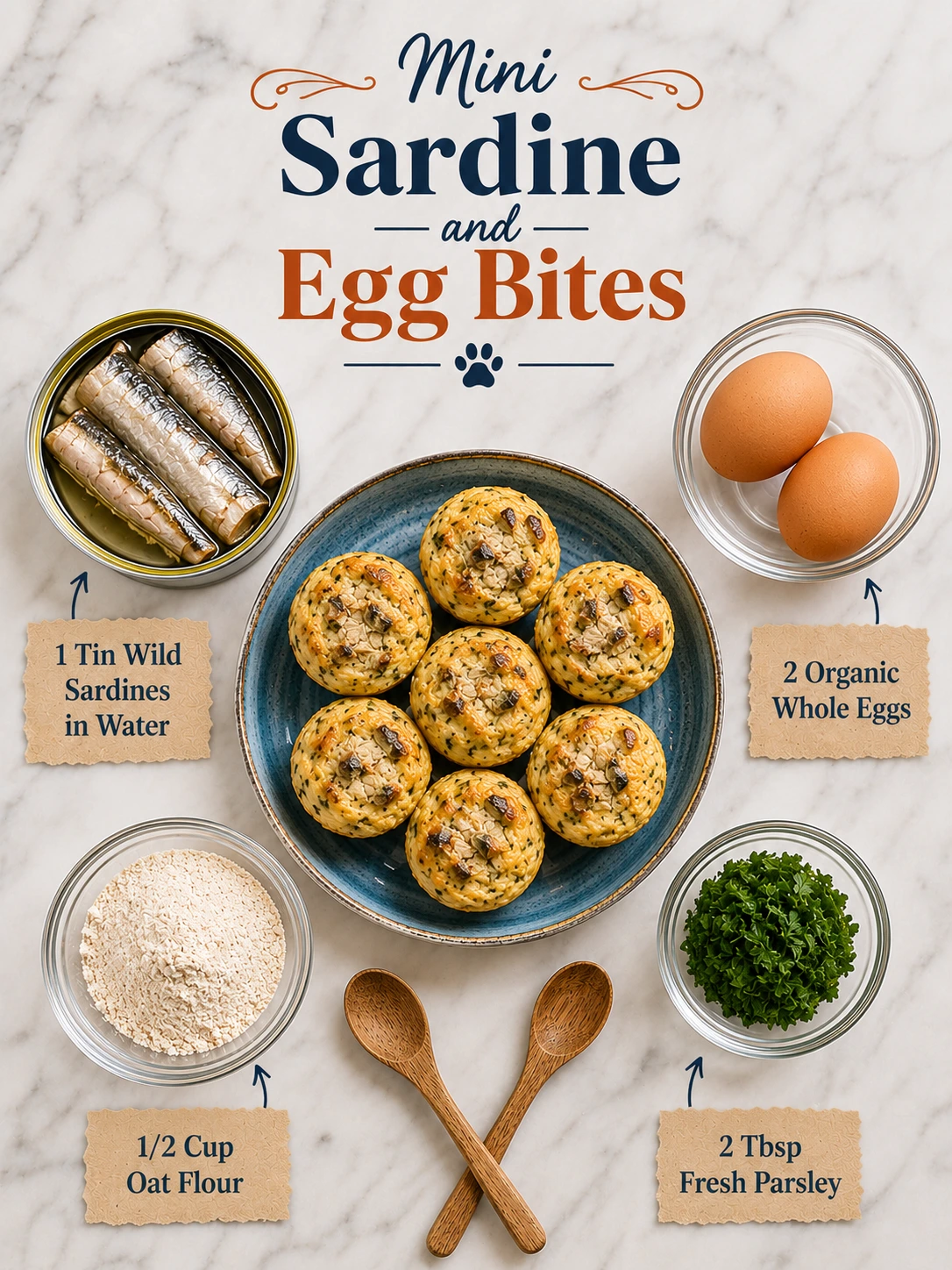
Follow this simple, step-by-step master recipe to produce 24 delicious Mini Sardine and Egg Bites Dog Treats.
Ingredients List:
• 1 tin (4.3 oz / 120g) Wild Sardines in Water (no added salt), drained
• 2 large Organic Whole Eggs
• 1/2 cup (60g) Gluten-Free Oat Flour
• 2 tablespoons Fresh Curly Parsley, finely chopped
• 1 teaspoon Coconut Oil (optional, for lightly brushing silicone molds)
Step-by-Step Directions:
1. Prep Oven and Baking Molds: Preheat your conventional oven to 350°F (175°C). Place a 24-cup mini silicone muffin mold onto a sturdy metal baking sheet. Lightly brush the mold cups with a thin film of coconut oil if desired.
2. Mash the Sardines: Open the tin of wild sardines and thoroughly drain all liquid. Transfer the fish into a medium mixing bowl. Using a heavy fork, crush and mash the sardines into small, soft flakes until no large chunks remain.
3. Whisk Wet and Dry Ingredients: Crack two fresh eggs directly into the bowl with the mashed sardines. Beat vigorously with a whisk for 60 seconds until light and slightly frothy. Add the oat flour and finely chopped curly parsley. Stir thoroughly with a spatula until a thick, smooth, pourable batter forms.
4. Portion into Mini Molds: Scoop approximately one tablespoon of batter into each mini muffin cup, filling each well roughly 3/4 full to allow room for slight egg expansion during baking.
5. Bake to Perfection: Place the baking sheet into the middle rack of your preheated oven. Bake for 16 to 18 minutes. The bites are finished when they are set in the center, firm to the touch, and lightly golden brown along the edges.
6. Cool Completely: Remove the baking tray from the oven. Let the bites cool in the silicone mold for 10 minutes. Pop each bite out of the mold and place them onto a wire cooling rack until completely cooled to room temperature before serving.
6. Dietary Customizations & Allergy Substitutions
Adapt this versatile recipe to meet your dog’s unique nutritional needs:
• Grain-Free Alternative: Replace the 1/2 cup of oat flour with 1/3 cup of coconut flour or green banana flour for dogs requiring strict grain elimination.
• Pancreatitis / Low-Fat Modification: Substitute whole eggs with 4 egg whites and choose water-packed tuna or canned pink salmon drained thoroughly to lower total fat content.
• Hypoallergenic Protein Swap: If your dog reacts to seafood, swap sardines for plain cooked ground turkey or pureed chicken liver while keeping the egg and oat base intact.
7. Dog Weight & Breed-Specific Daily Portion Guide
To maintain optimal body condition and prevent unwanted weight gain, follow these daily feeding recommendations for Mini Sardine and Egg Bites Dog Treats:
• Toy Breeds (Under 10 lbs / e.g., Chihuahua, Yorkie): 1/2 mini bite per day.
• Small Breeds (10 to 25 lbs / e.g., French Bulldog, Beagle): 1 mini bite per day.
• Medium Breeds (25 to 55 lbs / e.g., Border Collie, Australian Shepherd): 1 to 2 mini bites per day.
• Large Breeds (55 to 85 lbs / e.g., Golden Retriever, Labrador): 2 to 3 mini bites per day.
• Giant Breeds (Over 85 lbs / e.g., Great Dane, Mastiff): 3 to 4 mini bites per day.
8. Optimal Storage, Freezing & Shelf-Life Maximization
Because Mini Sardine and Egg Bites Dog Treats contain high-moisture fresh protein without chemical preservatives, proper storage keeps them fresh and safe:
• Refrigeration Protocol: Store completely cooled bites in an airtight glass container lined with a paper towel to absorb excess moisture. Keep refrigerated at 38°F (3°C) for up to 5 days.
• Freezing Masterclass: Arrange extra bites in a single layer on a parchment-lined baking sheet and freeze for 2 hours until solid. Transfer frozen bites into a vacuum-sealed bag or freezer-safe silicone container. Freeze for up to 90 days. Thaw individual bites in the refrigerator overnight before feeding.
9. Frequently Asked Questions (FAQ)
Q: Can puppies eat Mini Sardine and Egg Bites Dog Treats?
A: Yes! Puppies over 12 weeks of age can enjoy these bites in small portions. The omega-3 DHA supports brain development, while egg protein aids growing muscle tissue.
Q: Are canned sardine bones safe for dogs to consume?
A: Absolutely. Canned sardines are pressure-cooked inside the tin, which softens their tiny bones completely so they crumble effortlessly and provide safe bioavailable calcium.
Q: Can diabetic dogs eat these egg and sardine treats?
A: Yes. These bites are very low in carbohydrates and high in protein and fat, making them a suitable treat option for diabetic dogs under veterinary guidance.
Q: Why does my batch smell so fishy while baking?
A: Sardines contain natural aromatic oils that warm up during baking. The smell is completely normal and drives dogs wild, though keeping a kitchen window open is helpful!
Q: Can I bake these in a regular full-sized muffin pan?
A: Yes, but increase baking time to 22-25 minutes and slice the finished muffins into smaller portions before feeding.
Q: Are wild-caught sardines better than farmed sardines?
A: Wild-caught sardines are preferred as they generally possess higher omega-3 profiles and lower contaminant levels than farmed fish.
Q: Can I feed raw egg to my dog instead of baking?
A: While raw eggs are fed by some pet parents, light baking eliminates potential Salmonella risks and enhances protein digestibility.
Q: What should I do if my dog eats the whole batch accidentally?
A: Because the ingredients are safe, toxicity is not a concern. However, the sudden high fat and protein intake might cause temporary stomach upset or loose stools. Provide plenty of fresh water and monitor closely.
10. Conclusion & Final Pet Parenting Takeaways
Baking Mini Sardine and Egg Bites Dog Treats is a simple, deeply rewarding act of love for your canine companion. By combining wild sardines rich in omega-3 fatty acids with highly digestible egg protein and soothing oat fiber, you create a gourmet, superfood snack that supports shiny coats, supple joints, and robust vitality. Your Golden Retriever will eagerly await every kitchen prep session! Store your baked treats safely, respect daily portion boundaries, and enjoy the happy wags and satisfied lip-licks of a healthy, well-nourished dog.
Print
Mini Sardine and Egg Bites
Ingredients
1. **1 tin (4.3 oz / 120g), drained** Canned Wild Sardines in Water (No Added Salt) — *(Ensure sardines are packed in water only without oil, salt, garlic, or hot sauce.)* — 🐾 *Benefit: Packed with Omega-3 fatty acids (EPA & DHA) to soothe joint inflammation and support coat shine.*
2. **2 large eggs** Organic Whole Eggs — *(Whisk thoroughly to create a light, fluffy mini muffin texture.)* — 🐾 *Benefit: Complete bioavailable protein source rich in essential amino acids, riboflavin, and selenium.*
3. **1/2 cup (60g)** Oat Flour (Gluten-Free certified) — *(Rolled oats ground in a blender work perfectly.)* — 🐾 *Benefit: Gentle, digestible soluble fiber that binds the bites while supporting healthy gut motility.*
4. **2 tablespoons, finely chopped** Fresh Curly Parsley — *(Do not use Spring Parsley (toxic to dogs); standard curly or flat parsley is completely safe.)* — 🐾 *Benefit: Natural breath freshener loaded with vitamins A, C, and K, plus antioxidants.*
Instructions
Step 1: Oven Setup & Mold Preparation
Preheat your oven to 350°F (175°C). Lightly grease a 24-cup mini silicone muffin mold with a tiny drop of coconut oil or place it on a baking sheet for stability.
> 💡 **Pro Tip:** Silicone molds make popping out delicate egg bites effortless without sticking.
Step 2: Sardine Mash
Drain the tin of sardines completely. In a medium mixing bowl, use a fork to mash the wild sardines into small, flakey pieces.
> 💡 **Pro Tip:** Mash well so the sardine flavor is evenly distributed through all 24 mini bites.
Step 3: Whisk Liquid & Dry Ingredients
Crack the two eggs into the bowl with the sardines. Beat vigorously with a whisk until frothy. Gently stir in the oat flour and finely chopped parsley until a pourable batter forms.
> 💡 **Pro Tip:** If the batter feels too thick, add one tablespoon of water to loosen the consistency.
Step 4: Portion & Bake
Spoon the batter into the mini muffin cups, filling each about 3/4 full. Bake in the preheated oven for 16 to 18 minutes, or until the egg bites are set and lightly golden around the edges.
> 💡 **Pro Tip:** A toothpick inserted into the center should come out clean when fully cooked.
Step 5: Cool Thoroughly & Serve
Remove the baking tray from the oven and allow the bites to cool completely in the mold for 10 minutes. Transfer to a wire cooling rack before offering one to your eager Golden Retriever.
> 💡 **Pro Tip:** Never serve warm egg treats to dogs; hot centers can burn their sensitive mouths.
Daily Weight & Breed Portion Guidelines
– **Toy & Small Dogs (< 20 lbs):** 1/2 to 1 mini bite per day
– **Medium Dogs (20 – 50 lbs):** 1 to 2 mini bites per day
– **Large & Giant Dogs (50+ lbs):** 2 to 3 mini bites per day (ideal for Golden Retrievers)
– 🩺 *Veterinary Note: Treats should never exceed 10% of your dog’s daily caloric intake. Consult your veterinarian before introducing new seafood protein sources if your dog has food sensitivities.*
Storage & Shelf-Life
– **Refrigerator:** Store baked bites in an airtight glass container in the fridge for up to 5 days.
– **Freezer:** Freeze in a single layer on a parchment-lined tray, then transfer to a freezer bag for up to 3 months.
– **Shelf-Life:** Best consumed fresh within 5 days refrigerated or 90 days frozen.