Crunchy Chicken Tender Pup Bites: The Ultimate Homemade Dog Treat Masterclass
1. Introduction: The Homemade Dog Treat Revolution
Crunchy Chicken Tender Pup Bites provide the gold standard in clean, biologically appropriate, and mouthwatering canine snacking for dogs of every breed and life stage. When you look closely at commercial store-bought pet treats, the ingredient labels are frequently laden with unpronounceable chemical preservatives, synthetic color dyes, artificial humectants, and generic rendered animal by-products that offer minimal bioavailable nutrition to our canine companions. As modern pet parents become increasingly conscious of veterinary preventive health, crafting homemade delicacies has transformed from an occasional weekend novelty into an essential component of whole-body canine wellness.
Dogs are natural carnivores with a strong physiological drive for real, savory poultry protein. These oven-baked chicken treats deliver an unmistakable roasted aroma that instantly commands your dog’s attention, paired with a distinctively satisfying crunch that provides light mechanical dental stimulation. By uniting tender, lean chicken breast with low-glycemic rolled oat flour, crisp sweet carrots, and breath-cleansing parsley, this recipe balances macronutrient excellence with unbeatable canine palatability. Whether you are rewarding high-drive agility training, reinforcing positive leash manners, or celebrating a quiet evening bond with your furry best friend, baking these homemade biscuits empowers you to take absolute control over your pet’s nutritional destiny.
2. In-Depth Canine Nutritional Science Breakdown
To understand why Crunchy Chicken Tender Pup Bites deliver such remarkable vitality to dogs, we must examine the specific biochemical and physiological benefits of each whole-food ingredient.
Lean Boneless Chicken Breast: The Muscle-Building Protein Foundation
Chicken breast stands as one of the most digestible and bioavailable animal protein sources available in canine nutrition. Containing an exceptional concentration of essential amino acids including leucine, lysine, and arginine, chicken breast supplies the vital structural components required for cellular tissue synthesis, lean muscle preservation, enzyme production, and immune antibody formation. Because chicken breast is naturally low in saturated fats, it delivers concentrated protein density without placing undue enzymatic strain on the pancreas or contributing to unwanted adipose tissue accumulation.
Whole Grain Rolled Oat Flour: Gentle Soluble Fiber and Sustained Energy
Unlike conventional wheat or corn flours which can frequently trigger food sensitivities or sudden blood glucose spikes, oat flour is a soothing, nutrient-dense complex carbohydrate. Oats are packed with beta-glucan, a powerhouse soluble dietary fiber that absorbs moisture in the digestive tract, bulks the stool, and supports regular peristalsis. Furthermore, oat flour possesses a gentle glycemic index, slowly liberating glucose into the bloodstream to prevent hyperactivity spikes and maintain steady metabolic energy throughout the day.
Fresh Grated Carrots: Ocular Health and Cellular Protection
Carrots are an exceptional source of beta-carotene, a provitamin carotenoid that is metabolized by the canine liver into active Vitamin A. Vitamin A plays an indispensable role in maintaining clear vision, corneal integrity, skin epithelial health, and immune system response. The natural soluble and insoluble fibers found in fresh carrots also serve as natural prebiotics, nourishing beneficial colon microflora and enhancing the synthesis of health-promoting short-chain fatty acids.
Pasture-Raised Whole Eggs: The Complete Biological Standard
Eggs represent the biological benchmark for protein quality, scoring a perfect 100 on the biological value index. The egg provides all ten essential amino acids required by canines, alongside healthy polyunsaturated fatty acids, choline for neurological transmission, lutein for retinal support, and biotin to promote rich fur luster and strong nail beds.
Fresh Curly Parsley: Phytonutrient Defense and Natural Breath Freshening
Fresh curly parsley contains abundant concentrations of chlorophyll, Vitamin C, Vitamin K, and volatile essential oils that naturally neutralize oral sulfur compounds, effectively combating foul breath at the microbial level. Its potent flavonoid antioxidants assist in scavenging systemic free radicals, bolstering cellular longevity.
3. Veterinarian Safety Standards and Critical Ingredient Checklist
While baking homemade treats is an immensely rewarding culinary endeavor, canine metabolic safety demands uncompromising vigilance. Dogs metabolize foods and botanical compounds through distinct hepatic enzymatic pathways that differ significantly from human biology.
Critical Toxic Inclusions to Avoid at All Costs:
• Xylitol and Birch Sugar: This artificial sweetener causes rapid, life-threatening insulin surges in dogs, precipitating severe hypoglycemia and acute hepatic necrosis within thirty minutes. Always verify that all pantry broths and additives are completely xylitol-free.
• Allium Species (Onions, Garlic, Chives, Leeks): Alliums contain organosulfur compounds that induce oxidative damage to canine erythrocytes, causing Heinz body hemolytic anemia. Never use seasoned chicken or commercial broths prepared with onion or garlic powder.
• Excessive Sodium: High dietary sodium puts strain on canine renal filtration and can cause electrolyte imbalances. Always select unseasoned poultry and low-sodium or homemade stocks.
• Spring Parsley Warning: Only utilize standard curly parsley (Petroselinum crispum). Avoid wild or spring parsley (Cymopterus watsonii), which contains high levels of furanocoumarins that can induce severe photosensitivity and ocular toxicity in pets.
The Ten Percent Caloric Treat Rule:
Veterinary nutritionists establish that supplemental snacks, no matter how clean and wholesome, must never constitute more than ten percent of your dog’s total daily caloric expenditure. The remaining ninety percent must derive from a complete and balanced life-stage diet formulated to meet AAFCO or FEDIAF canine nutritional profiles. Over-treating can inadvertently dilute essential micronutrient intake and lead to progressive weight gain.
4. Kitchen Equipment and Meal Prep Essentials
Preparing Crunchy Chicken Tender Pup Bites requires standard kitchen tools that make batch baking straightforward, hygienic, and highly efficient.
Recommended Kitchen Gear:
• Heavy-Duty Rimmed Baking Sheet: Provides even thermal conductivity across the base of the treats.
• Unbleached Parchment Paper or Food-Grade Silicone Mat: Prevents sticking without the need for supplementary greasing oils or butter.
• High-Speed Blender or Food Processor: Ideal for grinding whole rolled oats into fine flour and finely shredding cooked chicken breast.
• Fine Box Grater: Ensures raw carrots are grated into tiny, delicate shreds that blend smoothly into dough.
• Rolling Pin and Stainless Steel Cookie Cutters: A classic small 1-inch or 1.5-inch dog bone cutter delivers uniform shape, but a clean pizza cutting wheel works wonderfully for slicing fast, uniform training cubes.
• Stainless Steel Wire Cooling Rack: Critical for allowing airflow beneath the warm treats, preventing condensation and preserving optimal crunchiness.
5. Complete Master Recipe: Ingredients and Step-by-Step Directions
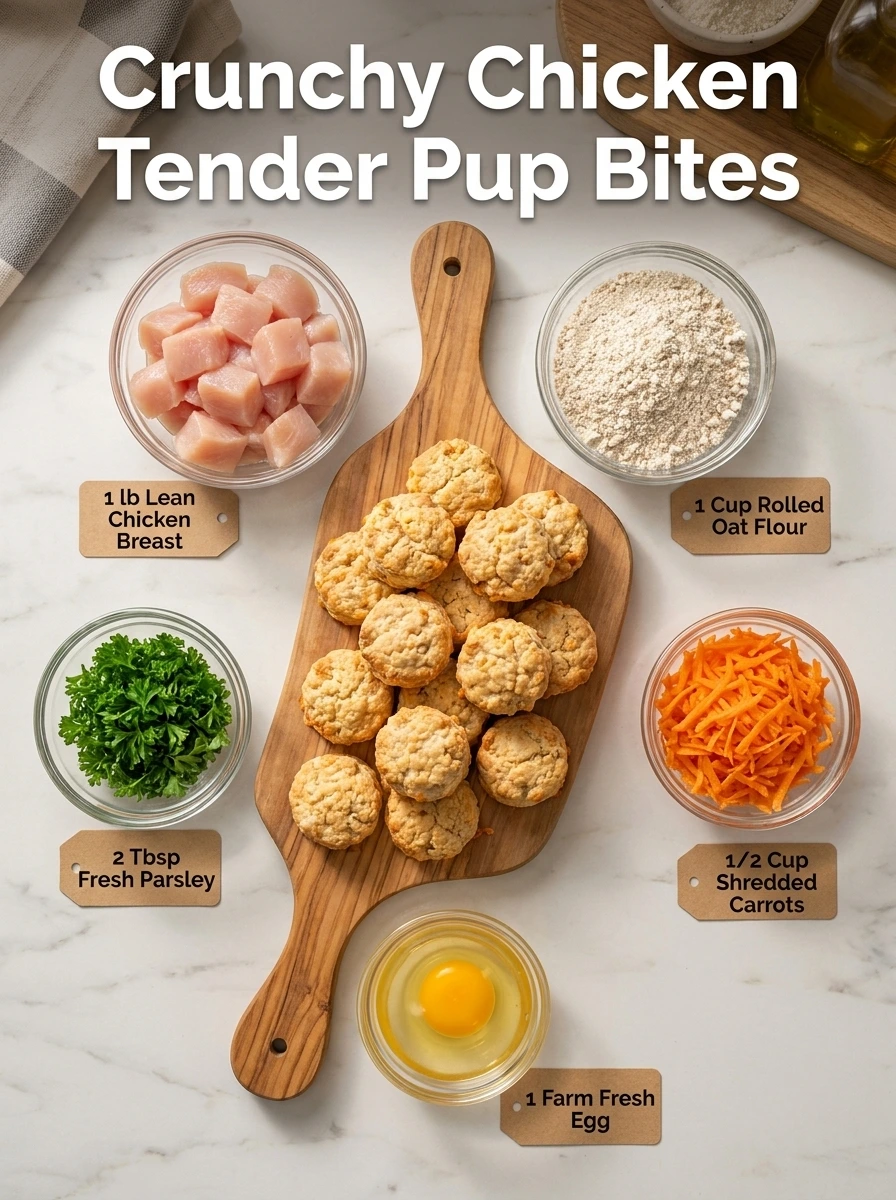
Follow this meticulous master formulation to prepare your fresh batch of Crunchy Chicken Tender Pup Bites.
Ingredients List:
• 1 cup (approx. 150 grams) cooked boneless, skinless chicken breast, finely shredded
• 1.5 cups (approx. 180 grams) whole grain oat flour
• 1/2 cup (approx. 50 grams) fresh raw carrots, finely grated
• 1 large farm-fresh egg, lightly whisked
• 2 tablespoons fresh curly parsley, finely minced
• 2 to 3 tablespoons low-sodium canine-safe chicken bone broth or filtered water
Step-by-Step Directions:
1. Oven and Bakeware Setup
Preheat your conventional oven to 350 degrees Fahrenheit (175 degrees Celsius). Line a heavy-duty baking sheet with unbleached parchment paper or a reusable silicone baking liner.
2. Blend the Core Ingredients
In a large ceramic or stainless steel mixing bowl, combine the finely shredded cooked chicken breast, grated carrots, and minced curly parsley. Use a fork or clean hands to thoroughly distribute the chicken and vegetables evenly throughout the bowl.
3. Create the Treat Dough
Pour the whisked egg into the chicken mixture, followed by the rolled oat flour. Stir vigorously with a sturdy silicone spatula. Slowly add two tablespoons of dog-safe bone broth or water, mixing continuously until the flour absorbs the moisture and a firm, workable dough ball comes together. If the dough feels overly crumbly, fold in the remaining tablespoon of broth.
4. Roll and Cut
Dust a clean wooden cutting board with a pinch of oat flour. Turn out the dough and roll it out with a rolling pin until it reaches a uniform thickness of roughly one-quarter inch. Use your preferred small cookie cutter to stamp out biscuits, or use a pizza cutter to divide the dough into neat bite-sized squares.
5. Bake to Golden Crispness
Transfer the cut dough pieces onto the lined baking sheet, leaving approximately half an inch between each piece. Place in the center rack of your preheated oven and bake at 350 degrees Fahrenheit for 22 to 25 minutes. The biscuits should emerge firm to the touch with light golden-brown highlights along the edges.
6. Dehydrate for Maximum Crunch (Pro Technique)
If your dog prefers an extra-crunchy biscuit that aids in mechanical plaque reduction, turn off the oven at the end of the baking cycle, prop the oven door open slightly with a wooden spoon, and allow the treats to rest inside the cooling oven for an additional twenty minutes. This gently evaporates lingering internal moisture without burning the protein.
7. Complete Cooling and Storage
Transfer the finished chicken bites to a stainless steel wire cooling rack. Allow them to cool entirely to room temperature for at least thirty minutes prior to serving or packaging.
6. Dietary Customizations and Allergy Substitutions
Every canine individual possesses unique digestive tolerances and metabolic profiles. You can easily adapt the Crunchy Chicken Tender Pup Bites recipe to accommodate specific dietary requirements:
• Poultry Allergy Swaps: If your dog experiences food sensitivities to chicken, swap the cooked chicken breast with equal quantities of cooked lean turkey breast, lean ground venison, or wild-caught canned pink salmon (packed in water with zero salt).
• Grain-Free Alterations: For dogs requiring strict grain-free regimens, replace the oat flour with a blend of one cup garbanzo bean (chickpea) flour and one-half cup coconut flour. Adjust the liquid slightly, as coconut flour absorbs substantial moisture.
• Low-Fat Pancreatitis Protocol: For dogs requiring ultra-low dietary fat, ensure the chicken breast is skinless and thoroughly boiled with all surface fat skimmed away. Replace the whole egg with two egg whites, which eliminates yolk fats while retaining complete binding capacity.
• Senior Dog Softer Texture Option: If baking for a senior dog with missing teeth or sensitive gums, reduce the baking duration to 15 to 18 minutes. Remove the treats while they remain tender and springy rather than fully dehydrated.
7. Dog Weight and Breed-Specific Daily Portion Guide
Accurate portion control preserves ideal body condition score and prevents inadvertent weight gain. Use this canine weight-based daily feeding chart as a standard guideline:
• Toy Breeds (Up to 10 pounds / 4.5 kg): Examples include Chihuahua, Yorkshire Terrier, and Pomeranian. Recommended daily allowance: 1 small bite per day, broken into tiny training crumbs.
• Small Breeds (11 to 25 pounds / 5 to 11 kg): Examples include French Bulldog, Cavalier King Charles Spaniel, and Boston Terrier. Recommended daily allowance: 2 small bites per day.
• Medium Breeds (26 to 50 pounds / 12 to 23 kg): Examples include Australian Shepherd, Border Collie, and Beagle. Recommended daily allowance: 3 to 4 bites per day.
• Large Breeds (51 to 80 pounds / 24 to 36 kg): Examples include Golden Retriever, Labrador Retriever, and Boxer. Recommended daily allowance: 4 to 5 bites per day.
• Giant Breeds (81+ pounds / 37+ kg): Examples include Great Dane, Mastiff, and Newfoundland. Recommended daily allowance: 6 to 7 bites per day.
8. Optimal Storage, Freezing, and Shelf-Life Maximization
Because this recipe contains real whole food ingredients without synthetic chemical mold inhibitors like potassium sorbate or calcium propionate, proper preservation technique is vital to guarantee freshness.
• Refrigerator Storage: Place fully cooled chicken bites in a clean, airtight glass Mason jar or snap-lock glass container. Line the base of the container with a clean, dry paper towel to capture any residual moisture. Store in the main body of the refrigerator (not the door) for up to 7 to 10 days.
• Freezer Preservation: For extended longevity, arrange cooled treats in a single layer on a baking sheet and freeze for one hour until solid. Transfer frozen biscuits into a heavy-duty silicone freezer bag, label with the preparation date, and store for up to 3 months. Thaw individual treats at room temperature for ten minutes before treating.
• Room Temperature Countertop Storage: If the treats have undergone the extended oven-dehydration step and contain zero moisture, they may be stored in a breathable ceramic treat crock in a cool, dark pantry for up to 4 days.
9. Frequently Asked Questions (FAQ)
Can I feed Crunchy Chicken Tender Pup Bites to young puppies?
Yes, puppies over eight weeks old who are fully transitioned onto solid kibble can safely enjoy these treats. For young puppies, consider breaking the bite-sized biscuits into smaller training morsels to prevent gulping or choking hazards.
Is raw chicken acceptable for this recipe, or must it be cooked first?
Always use thoroughly cooked, unseasoned chicken breast. Pre-cooking the poultry eliminates pathogenic bacteria such as Salmonella and Campylobacter, while ensuring the dough develops the correct structural texture during the baking process.
Can dogs with diabetes safely consume these chicken treats?
Yes. These treats are high in lean protein and utilize oat flour, which releases carbohydrates steadily into the system without triggering sharp glycemic spikes. However, always consult your treating veterinarian before introducing new foods to a diabetic dog’s strict dietary schedule.
What if my dog doesn’t tolerate eggs?
If your dog has an egg sensitivity, you can replace the one egg with one-quarter cup of pure unsweetened canned pumpkin puree or three tablespoons of unsweetened applesauce as a hypoallergenic binding agent.
Why did my baked treats turn soft after a few days?
Homemade baked goods naturally absorb ambient humidity from the atmosphere. To restore crispness, simply pop the treats back into a 300-degree Fahrenheit oven for 5 to 8 minutes, then allow them to cool completely on a wire rack.
Can I use all-purpose wheat flour instead of oat flour?
While standard whole wheat or all-purpose flour can technically form dough, oat flour is significantly gentler on the canine gastrointestinal tract and less likely to provoke allergic dermatological flare-ups.
How many calories are in each chicken bite?
When divided into 36 equal portions, each crunchy chicken bite contains approximately 25 to 28 kilocalories, making them an exceptionally lean reward for positive reinforcement training.
Can I add herbs like rosemary or oregano to this recipe?
Finely minced fresh rosemary can be added in very small pinches (one-half teaspoon) for aromatic flavor and antioxidant value. However, avoid strong concentrated herbs, essential oils, or commercial dried spice blends containing salt and garlic.
10. Conclusion and Final Pet Parenting Takeaways
Nourishing your beloved canine companion with homemade treats like Crunchy Chicken Tender Pup Bites represents an act of pure devotion and proactive health stewardship. By investing just forty minutes of your time, you eliminate mystery fillers, artificial additives, and excessive sodium from your dog’s daily routine, replacing them with wholesome lean chicken, nutrient-dense oat flour, beta-carotene-rich carrots, and fresh parsley.
Always remember to tailor portion sizes to your individual dog’s weight, metabolic activity, and veterinary health profile. Keep safety at the forefront of your kitchen practices, store your baked rewards properly to ensure optimal crispness, and revel in the pure, tail-wagging joy that only a delicious homemade chicken biscuit can bring to your furry family member.
Print
Crunchy Chicken Tender Pup Bites
Ingredients
1. **1 cup (approx. 150g)** Boneless, skinless chicken breast (cooked and finely shredded or ground) — *(Ensure chicken is cooked without salt, butter, garlic, or onion seasonings.)* — 🐾 *Benefit: Lean, high-quality animal protein essential for muscle maintenance, tissue repair, and cellular energy.*
2. **1.5 cups (approx. 180g)** Whole grain oat flour — *(Can make fresh by blending rolled old-fashioned oats in a high-speed blender.)* — 🐾 *Benefit: Easily digestible complex carbohydrates providing sustained energy and dietary fiber for gastrointestinal balance.*
3. **1/2 cup (approx. 50g)** Finely grated fresh carrots — *(Grate finely so the dough binds seamlessly.)* — 🐾 *Benefit: Rich in beta-carotene, vitamin A, and fiber for ocular health and smooth digestive transit.*
4. **1 whole egg (lightly beaten)** Large egg — *(Acts as the natural binder for the dough.)* — 🐾 *Benefit: Complete amino acid profile, lutein, and healthy fatty acids for skin elasticity and coat radiance.*
5. **2 tablespoons** Fresh curly parsley (finely minced) — *(Use curly parsley only; do not use spring parsley (which can be toxic in high doses).)* — 🐾 *Benefit: Natural breath freshener loaded with antioxidants, vitamin C, and chlorophyll.*
6. **2 to 3 tablespoons** Low-sodium bone broth or water — *(Ensure broth is 100% onion- and garlic-free.)* — 🐾 *Benefit: Adds gentle moisture and trace minerals to achieve optimal dough consistency.*
Instructions
Step 1: Oven and Bakeware Preparation
Preheat your conventional oven to 350°F (175°C). Line a large rimmed baking sheet with non-stick unbleached parchment paper or a food-grade silicone baking mat.
> 💡 **Pro Tip:** Using parchment paper ensures the bottoms of the chicken bites crisp evenly without sticking or requiring added cooking oils.
Step 2: Poultry & Veggie Incorporation
In a large mixing bowl, combine the finely shredded cooked chicken breast, grated carrots, and minced curly parsley. Toss with a fork to evenly distribute the ingredients.
> 💡 **Pro Tip:** Shredding the chicken very finely or pulsing it briefly in a food processor helps create a uniform dough that cuts smoothly.
Step 3: Dough Formation
Add the lightly beaten egg and rolled oat flour into the chicken mixture. Stir thoroughly with a sturdy wooden spoon or silicone spatula. Gradually incorporate 2 to 3 tablespoons of dog-safe bone broth or water until a cohesive, non-sticky dough forms.
> 💡 **Pro Tip:** If the dough feels too dry or crumbly, add an extra teaspoon of water; if too wet, dust with an extra tablespoon of oat flour.
Step 4: Rolling & Shaping
Turn the dough out onto a lightly floured surface. Roll the dough evenly to a thickness of approximately 1/4-inch (6 mm). Use a small bone-shaped cookie cutter (1 to 1.5 inches) or slice into bite-sized squares using a pizza cutter.
> 💡 **Pro Tip:** Uniform thickness ensures all treats dehydrate and bake to the exact same crunchy consistency simultaneously.
Step 5: Baking to Golden Perfection
Arrange the cut dough pieces onto the prepared baking sheet, leaving about 1/2-inch of space between each treat. Bake at 350°F (175°C) for 22 to 25 minutes until the edges are golden brown and firm to the touch.
> 💡 **Pro Tip:** For an extra crunchy texture that helps scrub plaque from teeth, turn the oven off after baking and leave the treats inside with the oven door cracked for 20 minutes to dehydrate.
Step 6: Cooling & Quality Check
Remove the baking sheet from the oven and transfer the chicken bites onto a wire cooling rack. Allow them to cool completely to room temperature before serving to your dog.
> 💡 **Pro Tip:** Never feed freshly baked hot treats to dogs, as trapped steam can burn delicate oral tissues.