
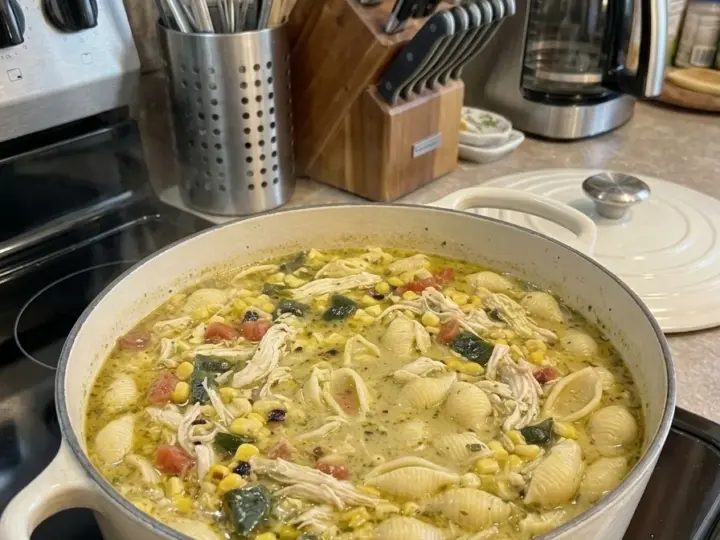
Chile Relleno Chicken & Roasted Corn Cheesy Shell Stew combines shredded chicken, roasted poblano peppers, sweet corn, and medium pasta shells in a creamy cheese broth. The shells hold little pockets of sauce, while diced tomatoes and warm spices give the rich base a savory balance.
The roasted peppers appear in two forms: three are diced into the stew and one is blended with cream and cream cheese. That gives the broth a gentle poblano flavor while leaving tender pieces of pepper throughout the bowl. Monterey Jack supplies a mild melted-cheese finish, with a small amount of cheddar adding another savory note.
This is a chile relleno-inspired stew rather than a traditional stuffed and battered pepper dish. It borrows the roasted poblano-and-cheese combination and builds it into a substantial chicken-and-pasta dinner. The result is intended to be thick and spoonable, with enough liquid to move around the shells rather than resemble a baked pasta casserole.
This article expands the supplied recipe with ingredient, timing, and storage guidance. It has not been independently kitchen-tested. Chicken thickness, pasta size, pepper yield, and cheese formulation can all affect the finished consistency.
What to Expect
The stew should have tender chicken, cooked pasta, sweet corn, soft poblano pieces, and a creamy coating of cheese broth. It will thicken as it stands because the shells continue absorbing liquid.
The dairy and cheese make this a rich dish. It does not need a flour roux, and no starch slurry is included in the base formula. Pasta starch contributes body when the shells cook directly in the pot.
Ordinary melting cheese can create a little stretch or slight separation, especially if overheated. Gentle heat and gradual additions help, but this formula does not guarantee the texture of a processed queso sauce.
Poblanos vary in heat. Roasting develops their flavor but does not reliably make a hot pepper mild. Choose and taste the prepared peppers before offering extra jalapeño as a garnish.
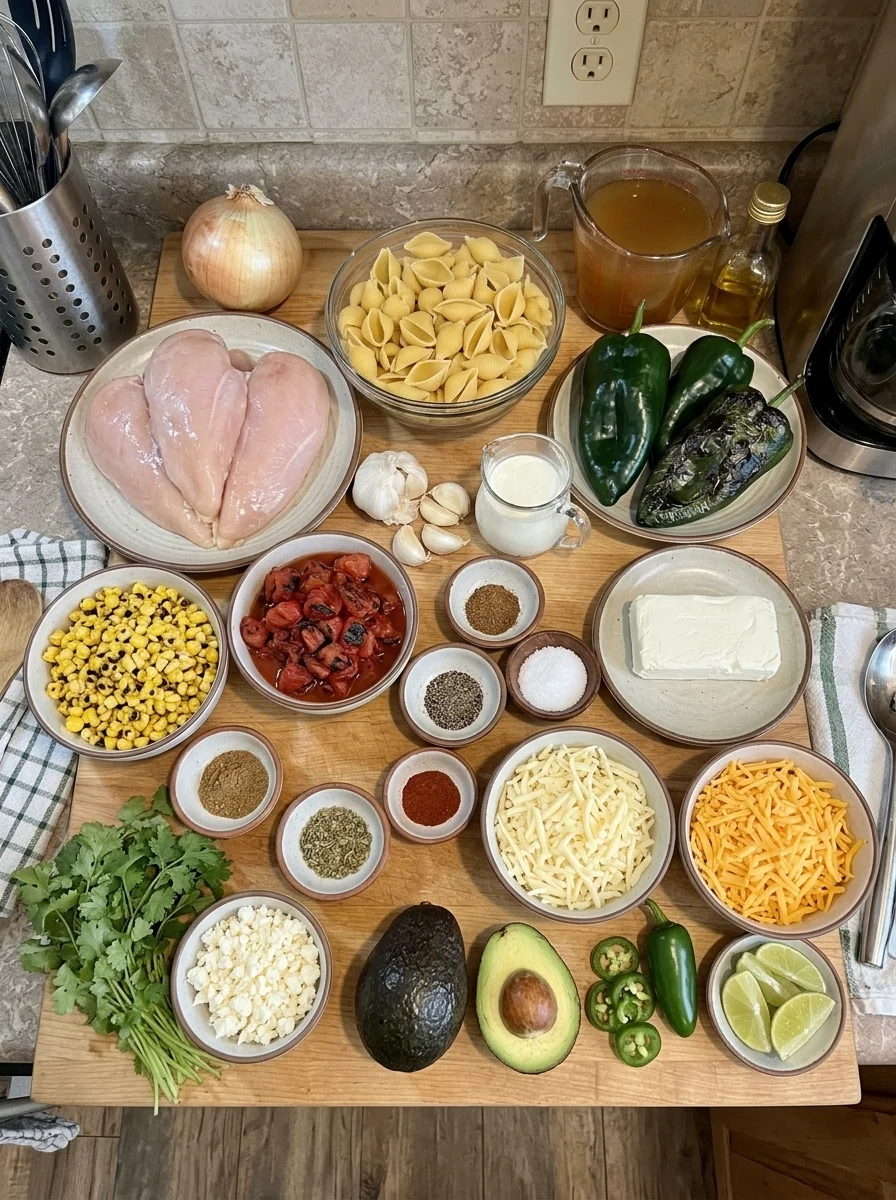
Ingredients
Chicken, Shells, and Vegetables
- 1 1/2 pounds boneless, skinless chicken breasts or thighs
- 2 cups uncooked medium pasta shells, approximately 7–8 ounces depending on the brand
- 4 large poblano peppers, roasted, peeled, and seeded; three diced and one reserved for blending
- 2 cups fire-roasted corn kernels, thawed if necessary and drained if canned
- 1 cup fire-roasted diced tomatoes, drained
- 1 medium yellow onion, finely diced
- 4 garlic cloves, minced
- 5 cups chicken broth total, divided
- 1 tablespoon olive oil
- 1 1/2 teaspoons ground cumin
- 1 teaspoon dried Mexican oregano
- 1/2 teaspoon smoked paprika
- 1/2 teaspoon black pepper
- Up to 3/4 teaspoon salt, adjusted to taste
Creamy Poblano Cheese Base
- 1 of the four prepared poblanos listed above
- 4 ounces cream cheese, softened and cubed
- 1 cup heavy cream, or half-and-half for a less rich variation
- 1/2 cup chicken broth taken from the five-cup total
- 2 cups shredded Monterey Jack cheese
- 1/2 cup shredded mild cheddar cheese, or Oaxaca cheese as an alternative
Optional Toppings
- Crumbled queso fresco made with pasteurized milk
- Extra shredded Monterey Jack
- Chopped fresh cilantro
- Diced avocado
- Sliced jalapeños
- Lime wedges
Pepper total: Four, not five. The pepper in the creamy base is reserved from the original four.
Broth total: Five cups. Set aside half a cup for blending and use the remaining 4 1/2 cups in the soup pot. Keep extra broth available as an optional consistency adjustment.
Suggested servings: Six substantial bowls or eight smaller servings, depending on added broth and toppings.
Ingredient Notes
Chicken thickness determines timing
Breasts and thighs both work, but they do not always finish at the same time. A thick breast can take longer than a thin thigh, so the supplied 18–22 minutes is a starting point.
Use a thermometer to check the thickest portion for 165°F. Remove pieces as they finish if their sizes vary. Avoid continuing to simmer cooked breasts unnecessarily while waiting for another piece.
Shred into short, bite-sized strands. Very long pieces can tangle around the shells and make the stew harder to portion.
Measure pasta consistently
Two cups of medium shells may weigh differently depending on the shape and brand. For a repeatable batch, note the package weight associated with the amount you use.
The shells are measured dry. Two cups cooked pasta would supply much less pasta than the stated formula.
Read the package directions before starting. A nine-to-eleven-minute window fits some products, but pasta thickness and simmering conditions can change the actual time.
Use prepared roasted poblanos
Remove the loose charred skins, stems, and seed clusters after roasting. A few flecks of char are fine; large burnt skin pieces can introduce bitterness.
The peppers should be tender enough to dice and blend. If roasting ahead, refrigerate in a covered container and use clean utensils when handling.
The reserved blending pepper should be cool or lukewarm, not steaming hot, before placing it in a countertop blender with dairy.
Corn and tomatoes add different textures
Use fully thawed or ready-to-cook corn as appropriate for the product. Drain canned corn so the recipe does not receive an unmeasured amount of packing liquid.
The tomatoes are drained for this stew. Their pieces add acidity and color without turning the base into a heavily tomato-based soup.
If your corn is not already roasted, you can brown it lightly in a skillet before adding it, but that is an optional preparation stage with additional time and cookware.
Cheese choice affects the finish
Freshly shredded Monterey Jack is a useful starting point because it can be added in small handfuls and melts readily. Packaged shredded cheese may produce a slightly different texture because of its formulation.
Mild cheddar adds a more pronounced flavor and color. Oaxaca cheese is an alternative, but it can produce a stringier result. It should not be assumed to create exactly the same finish as cheddar.
Keep any extra garnish cheese separate. The measured 2 1/2 cups already make a rich base.
Heavy cream and half-and-half differ
Heavy cream gives the fullest texture and is generally more forgiving than a lower-fat dairy mixture. Half-and-half produces a lighter, thinner stew and needs particular care around high heat.
Block cream cheese should be softened and cubed so it blends smoothly. Spreadable tub products can contain more moisture and behave differently.
Do not add large amounts of milk to the blender automatically. The reserved half cup broth is intended to help the base become smooth.
Equipment
Use a large Dutch oven or soup pot with room for stirring after the shells are added, a blender, a broiler-safe tray and tongs if roasting peppers, a food thermometer, and two forks for shredding.
A flexible spatula helps scrape the creamy base out of the blender. A wooden spoon or silicone spoon helps stir the pasta along the bottom without damaging the pot.
Keep a small pitcher of extra broth available if needed. Adding small amounts is easier to control than trying to judge a large pour from a carton.
How to Make the Stew
1. Roast the peppers
Broil or flame-roast the poblanos, turning until their skins are blistered and charred. Watch closely and use tongs appropriate for the heat source.
Transfer to a bowl and cover for about ten minutes. Once cool enough to handle, peel away loose skins and remove stems and seeds.
Dice three peppers into bite-sized pieces. Reserve the fourth for the blender. Wash hands after handling peppers and avoid touching your eyes.
2. Set aside the blending broth
Measure five cups chicken broth in total. Reserve half a cup for the creamy base and keep 4 1/2 cups for the pot.
This small organizing step avoids accidentally using five cups in the pot and adding another half cup without recognizing the change. Extra broth can still be added later if the stew needs it.
3. Blend the creamy base
Blend the reserved pepper with heavy cream, softened cream cheese, and the half cup broth until smooth. Use cool or lukewarm pepper and broth and follow the blender’s instructions.
Scrape down the sides if needed. There should not be large cream cheese lumps or whole pieces of pepper left in the mixture.
Keep the base refrigerated if preparation will be delayed. If you are proceeding directly, set it aside briefly while the chicken cooks, within ordinary safe handling limits.
4. Sauté the aromatics
Heat olive oil in the pot over medium heat. Add the onion and cook about four to five minutes until softened.
Stir in garlic, cumin, Mexican oregano, and smoked paprika. Cook about 30 seconds until fragrant, lowering the heat if the garlic begins to darken quickly.
The spices need a brief warm-up, not a prolonged dry fry that risks scorching them.
5. Simmer the chicken
Add the remaining 4 1/2 cups broth, chicken, black pepper, and part of the salt if needed. Bring to a gentle simmer, reduce the heat, and cover partially.
Begin checking after about 18 minutes and continue until the thickest part of the chicken reaches 165°F. The exact time depends on the pieces.
A gentle simmer is enough. A rolling boil can reduce the broth unnecessarily and make chicken breasts less tender.
6. Shred and return
Transfer the chicken to a clean plate or cutting board and shred with two forks. Return it to the pot.
If you prefer to keep cooked breast meat out while the shells cook, hold it briefly and return it before the dairy so it warms through without extra simmering. Keep handling time short and safe.
7. Add shells and vegetables
Stir in the dry pasta shells, diced roasted poblanos, corn, and drained tomatoes. Maintain a steady gentle simmer, uncovered.
Stir occasionally, reaching the bottom of the pot so pasta does not settle and stick. Avoid vigorous stirring that breaks tender shells.
Cook according to the pasta package, checking early. Stop when the shells are just tender, since they continue softening in the hot stew.
8. Check the liquid before adding dairy
The pasta may absorb more liquid than expected. If the mixture looks too dry to stir comfortably, add a little warm broth.
The stew should remain loose enough for the creamy base to blend through. Do not let pasta sit against a nearly dry hot bottom while you prepare the next step.
Adding broth gradually preserves the rich flavor better than diluting the pot heavily at the end.
9. Warm the creamy base gently
Reduce the heat to low and stir in the blended poblano mixture. Warm gently, scraping the bottom as you stir.
Avoid bringing the dairy mixture to a hard boil. If it was refrigerated, allow enough gentle heating time rather than turning the burner high to rush it.
The broth should become creamy and lightly green, with visible vegetables and shells throughout.
10. Melt in the cheeses
Remove the pot from the heat or keep it on the lowest setting. Add Monterey Jack in small handfuls, stirring until each melts before adding more. Follow with the cheddar or Oaxaca.
Do not add all the cheese at once to rapidly boiling liquid. Excess heat and large clumps make it harder to obtain an even texture.
If the stew becomes too thick, add a little warm broth. Stop heating once the cheese is melted and the stew is ready to serve.
11. Taste and serve
Taste the finished broth before adding the rest of the salt. The cheeses and broth may already supply enough.
Ladle promptly into bowls. Offer cilantro, avocado, queso fresco, jalapeños, and lime separately so each person can adjust the finish.
A little lime in an individual bowl can brighten the rich sauce. Avoid pouring a large amount of acidic juice into the hot dairy pot, where it can affect texture.
Tips for a Smooth Cheese Broth
Blend the cream cheese thoroughly before it enters the stew. Small soft cubes are easier to incorporate than a cold block.
Use gentle heat after the dairy is added. Cheese does not need vigorous boiling to melt, and overheating can cause oil separation or graininess.
Add shredded cheese gradually. Smaller additions disperse more readily than one large mound.
Choose a consistent cheese brand while learning the recipe. Different products have different moisture and melting behavior.
Serve soon after finishing. Long hot holding encourages pasta to absorb more liquid and exposes the dairy to more heating than necessary.
Pasta and Leftover Planning
If the entire batch will be served immediately, cooking the shells in the broth is convenient and gives the sauce extra body.
If you expect leftovers, consider preparing pasta separately. Cook the shells according to their package, drain, and divide among bowls before adding the finished chicken-and-cheese base.
The separately cooked version may be thinner because it lacks some pasta starch. Adjust with a modest amount of pasta or serve as a creamier soup rather than forcing an identical texture.
Store pasta separately from the base when possible. Extra broth can loosen stored stew, but it cannot restore over-softened shells to their original texture.
Make-Ahead Options
Roast and prepare the peppers a day ahead. Keep the diced peppers and blending pepper separated if that helps assembly.
Prepare the chicken-and-broth base ahead without pasta, cream, or cheese. Cool promptly in shallow containers and refrigerate.
When serving, reheat the base thoroughly, cook fresh shells, and finish with the creamy mixture and cheeses over low heat. This gives more control than repeatedly reheating a fully assembled pot.
If blending the dairy mixture ahead, keep it covered and cold. Do not leave it at room temperature while working through other dinner preparation.
Serving Ideas
The stew already includes chicken, pasta, corn, and cheese. A crisp green salad or sliced cucumber provides a useful fresh contrast.
Warm tortillas are optional, but the shells already make the dish substantial. Avoid adding every available rich topping to the first bowl before tasting the base.
Cilantro and lime bring brightness, while avocado adds a soft, cool contrast. Queso fresco remains crumbly and should be treated as a garnish rather than another melting cheese.
For a family meal, keep extra heat at the table. A pot made with mild peppers can still be adjusted with jalapeño slices for guests who want them.
Storage, Reheating, and Freezing
Refrigerate leftovers promptly in shallow covered containers at 40°F or below and use within three to four days. Do not leave a large pot on the counter until completely cold.
Keep room-temperature exposure within two hours, or one hour when the surroundings exceed 90°F. Follow USDA leftover handling guidance.
Reheat over low to medium-low heat, stirring frequently, until the stew reaches 165°F throughout, following USDA reheating guidance. Add broth in small amounts to loosen the sauce.
Avoid prolonged boiling once the reheating temperature is reached. Gentle heating protects the cheese texture, though some change after storage is possible.
Freeze the chicken, broth, and vegetable base before adding pasta or dairy for up to two to three months for best quality. Thaw in the refrigerator, reheat thoroughly, and finish with fresh shells and the creamy cheese ingredients. Fully finished stew may separate and the pasta may become very soft after thawing.
Variations
Rotisserie chicken: Use fully cooked shredded chicken as a shortcut, adding it after the broth and vegetables have developed flavor. Heat thoroughly and adjust salt because prepared chicken can be seasoned.
Half-and-half: Use instead of heavy cream for a less rich version. Expect a thinner result and avoid overheating.
Oaxaca finish: Use the stated alternative for a more stringy cheese texture. Do not assume it behaves exactly like cheddar.
Extra roasted pepper: Add a modest amount of additional prepared poblano if desired. Taste its heat before increasing the quantity.
Different pasta: Another small shape can be tried, but its volume, dry weight, and cooking time differ. Follow package guidance and monitor the broth.
Troubleshooting
The stew is too thick
Pasta and cheese both add body. Stir in warm broth gradually until it is comfortably spoonable. Keep noodles separate next time if storage is a priority.
The cheese is grainy or oily
The heat may have been too high or the cheese added too quickly. Remove from heat and stir gently. Adding more heat is unlikely to restore a broken cheese mixture.
The pasta sticks to the bottom
The pot may need more liquid or more frequent gentle stirring. Reach the bottom with the spoon while the shells cook and keep the simmer moderate.
The chicken is dry
Breasts can overcook during the combined chicken and pasta stages. Remove them as soon as they reach temperature and consider returning the shredded meat after the pasta is nearly ready.
The pepper flavor is bitter
Loose burnt skins or scorched garlic can contribute bitterness. Peel away heavily charred skin and keep the aromatic sauté brief.
Frequently Asked Questions
Are there four poblanos or five?
Four total. Three are diced for the stew and one is blended into the dairy base.
Is the half cup broth additional?
No. It comes from the stated five-cup total. Extra broth for thinning is optional and separate.
Can I use raw corn?
Use kernels appropriate for cooking and allow them to become tender during the pasta stage. The recipe’s fire-roasted description assumes a roasted product or a separate charring step.
Is the stew gluten-free?
Standard pasta shells contain wheat. A gluten-free version requires suitable pasta and verification of broth and other ingredients; it may also thicken differently.
What is the estimated nutrition?
This is a rich stew containing cream, cream cheese, and 2 1/2 cups shredded cheese. A rough one-sixth portion may fall around 600–750 calories and 35–45 grams protein before generous garnishes, depending on chicken cut, pasta weight, and cheese. Eight portions are smaller. Calculate using package labels and actual serving count for precision.
Print
Chile Relleno Chicken & Roasted Corn Cheesy Shell Stew
Description
- Prep: About 25–30 minutes, including pepper handling
- Cooking: Approximately 35–45 minutes, with some roasting preparation overlapping
- Total: Approximately 1 hour to 1 hour 15 minutes
- Servings: 6 substantial bowls or 8 smaller servings
- Method: Stovetop stew with roasted peppers
Ingredients
Chicken, Shells, and Vegetables
- 1 1/2 pounds boneless, skinless chicken breasts or thighs
- 2 cups uncooked medium pasta shells, approximately 7–8 ounces depending on the brand
- 4 large poblano peppers, roasted, peeled, and seeded; three diced and one reserved for blending
- 2 cups fire-roasted corn kernels, thawed if necessary and drained if canned
- 1 cup fire-roasted diced tomatoes, drained
- 1 medium yellow onion, finely diced
- 4 garlic cloves, minced
- 5 cups chicken broth total, divided
- 1 tablespoon olive oil
- 1 1/2 teaspoons ground cumin
- 1 teaspoon dried Mexican oregano
- 1/2 teaspoon smoked paprika
- 1/2 teaspoon black pepper
- Up to 3/4 teaspoon salt, adjusted to taste
Creamy Poblano Cheese Base
- 1 of the four prepared poblanos listed above
- 4 ounces cream cheese, softened and cubed
- 1 cup heavy cream, or half-and-half for a less rich variation
- 1/2 cup chicken broth taken from the five-cup total
- 2 cups shredded Monterey Jack cheese
- 1/2 cup shredded mild cheddar cheese, or Oaxaca cheese as an alternative
Optional Toppings
- Crumbled queso fresco made with pasteurized milk
- Extra shredded Monterey Jack
- Chopped fresh cilantro
- Diced avocado
- Sliced jalapeños
- Lime wedges
Pepper total: Four, not five. The pepper in the creamy base is reserved from the original four.
Broth total: Five cups. Set aside half a cup for blending and use the remaining 4 1/2 cups in the soup pot. Keep extra broth available as an optional consistency adjustment.
Suggested servings: Six substantial bowls or eight smaller servings, depending on added broth and toppings.
Instructions
1. Roast the peppers
Broil or flame-roast the poblanos, turning until their skins are blistered and charred. Watch closely and use tongs appropriate for the heat source.
Transfer to a bowl and cover for about ten minutes. Once cool enough to handle, peel away loose skins and remove stems and seeds.
Dice three peppers into bite-sized pieces. Reserve the fourth for the blender. Wash hands after handling peppers and avoid touching your eyes.
2. Set aside the blending broth
Measure five cups chicken broth in total. Reserve half a cup for the creamy base and keep 4 1/2 cups for the pot.
This small organizing step avoids accidentally using five cups in the pot and adding another half cup without recognizing the change. Extra broth can still be added later if the stew needs it.
3. Blend the creamy base
Blend the reserved pepper with heavy cream, softened cream cheese, and the half cup broth until smooth. Use cool or lukewarm pepper and broth and follow the blender’s instructions.
Scrape down the sides if needed. There should not be large cream cheese lumps or whole pieces of pepper left in the mixture.
Keep the base refrigerated if preparation will be delayed. If you are proceeding directly, set it aside briefly while the chicken cooks, within ordinary safe handling limits.
4. Sauté the aromatics
Heat olive oil in the pot over medium heat. Add the onion and cook about four to five minutes until softened.
Stir in garlic, cumin, Mexican oregano, and smoked paprika. Cook about 30 seconds until fragrant, lowering the heat if the garlic begins to darken quickly.
The spices need a brief warm-up, not a prolonged dry fry that risks scorching them.
5. Simmer the chicken
Add the remaining 4 1/2 cups broth, chicken, black pepper, and part of the salt if needed. Bring to a gentle simmer, reduce the heat, and cover partially.
Begin checking after about 18 minutes and continue until the thickest part of the chicken reaches 165°F. The exact time depends on the pieces.
A gentle simmer is enough. A rolling boil can reduce the broth unnecessarily and make chicken breasts less tender.
6. Shred and return
Transfer the chicken to a clean plate or cutting board and shred with two forks. Return it to the pot.
If you prefer to keep cooked breast meat out while the shells cook, hold it briefly and return it before the dairy so it warms through without extra simmering. Keep handling time short and safe.
7. Add shells and vegetables
Stir in the dry pasta shells, diced roasted poblanos, corn, and drained tomatoes. Maintain a steady gentle simmer, uncovered.
Stir occasionally, reaching the bottom of the pot so pasta does not settle and stick. Avoid vigorous stirring that breaks tender shells.
Cook according to the pasta package, checking early. Stop when the shells are just tender, since they continue softening in the hot stew.
8. Check the liquid before adding dairy
The pasta may absorb more liquid than expected. If the mixture looks too dry to stir comfortably, add a little warm broth.
The stew should remain loose enough for the creamy base to blend through. Do not let pasta sit against a nearly dry hot bottom while you prepare the next step.
Adding broth gradually preserves the rich flavor better than diluting the pot heavily at the end.
9. Warm the creamy base gently
Reduce the heat to low and stir in the blended poblano mixture. Warm gently, scraping the bottom as you stir.
Avoid bringing the dairy mixture to a hard boil. If it was refrigerated, allow enough gentle heating time rather than turning the burner high to rush it.
The broth should become creamy and lightly green, with visible vegetables and shells throughout.
10. Melt in the cheeses
Remove the pot from the heat or keep it on the lowest setting. Add Monterey Jack in small handfuls, stirring until each melts before adding more. Follow with the cheddar or Oaxaca.
Do not add all the cheese at once to rapidly boiling liquid. Excess heat and large clumps make it harder to obtain an even texture.
If the stew becomes too thick, add a little warm broth. Stop heating once the cheese is melted and the stew is ready to serve.
11. Taste and serve
Taste the finished broth before adding the rest of the salt. The cheeses and broth may already supply enough.
Ladle promptly into bowls. Offer cilantro, avocado, queso fresco, jalapeños, and lime separately so each person can adjust the finish.
A little lime in an individual bowl can brighten the rich sauce. Avoid pouring a large amount of acidic juice into the hot dairy pot, where it can affect texture.