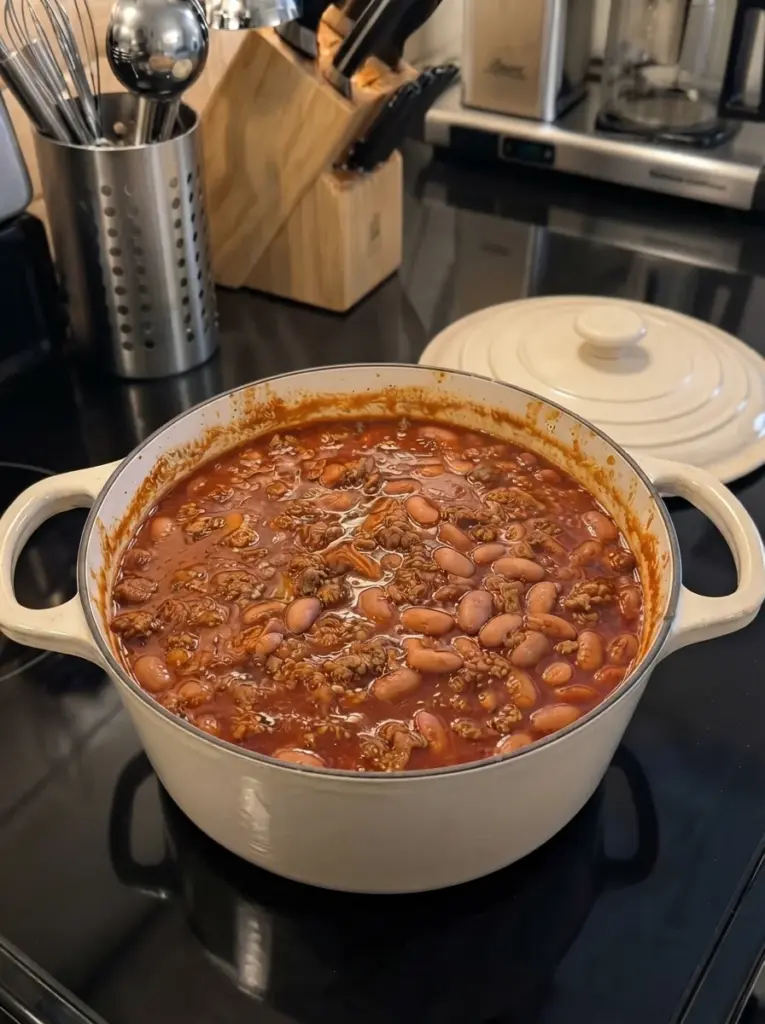
Ground beef and pinto beans simmer in a red sauce made with guajillo and ancho chiles, tomatoes, garlic, and warm spices. The result is hearty and savory, with earthy chile flavor and enough sauce to spoon over rice or scoop up with warm tortillas.
Guajillos provide a bright dried-chile character, while ancho adds a deeper, slightly fruity flavor. Tomatoes give the sauce body, and a little vinegar and lime brighten the finished dish. The heat varies with the peppers, but this combination generally emphasizes flavor rather than extreme spiciness.
This ground-beef version comes together more quickly than a stew made with large pieces of beef. Canned pinto beans keep preparation manageable, and a short uncovered simmer lets the sauce reduce around the meat and beans.
Recipe at a Glance
- Prep and chile soaking: About 20–25 minutes
- Stovetop cooking: About 35–45 minutes
- Total time: About 55–70 minutes, depending on overlap and reduction
- Servings: 6
- Equipment: Heatproof bowl, blender, optional fine-mesh sieve, and large Dutch oven or heavy pot
Why You’ll Love This Recipe
- Whole dried chiles: Guajillo and ancho give the sauce more character than a generic seasoning blend.
- Convenient ground beef: No long braise is needed to soften large meat pieces.
- Hearty pinto beans: They add substance and absorb some of the sauce’s flavor.
- Adjustable consistency: Reduce for a thick bowl or add broth for a looser stew.
- Useful leftovers: Portion for another lunch or freeze for a later dinner.
- Flexible serving: Pair with tortillas, rice, slaw, or fresh toppings.
What Does the Name Mean?
Carne molida con frijoles y chile colorado describes ground meat with beans and red chile. Chile colorado refers to a red chile preparation; it does not mean the dish must contain a pepper variety named Colorado.
Recipes vary between regions and households. This version combines dried chiles with tomatoes, canned pinto beans, and ground beef, with smoked paprika and coriander as supporting seasonings. It is a home-style, Mexican-inspired preparation rather than a claim to one definitive traditional formula.
Expect a spoonable beef-and-bean dish with a substantial red sauce. It is not a clear-broth soup, and it does not need to become dry like a taco filling.
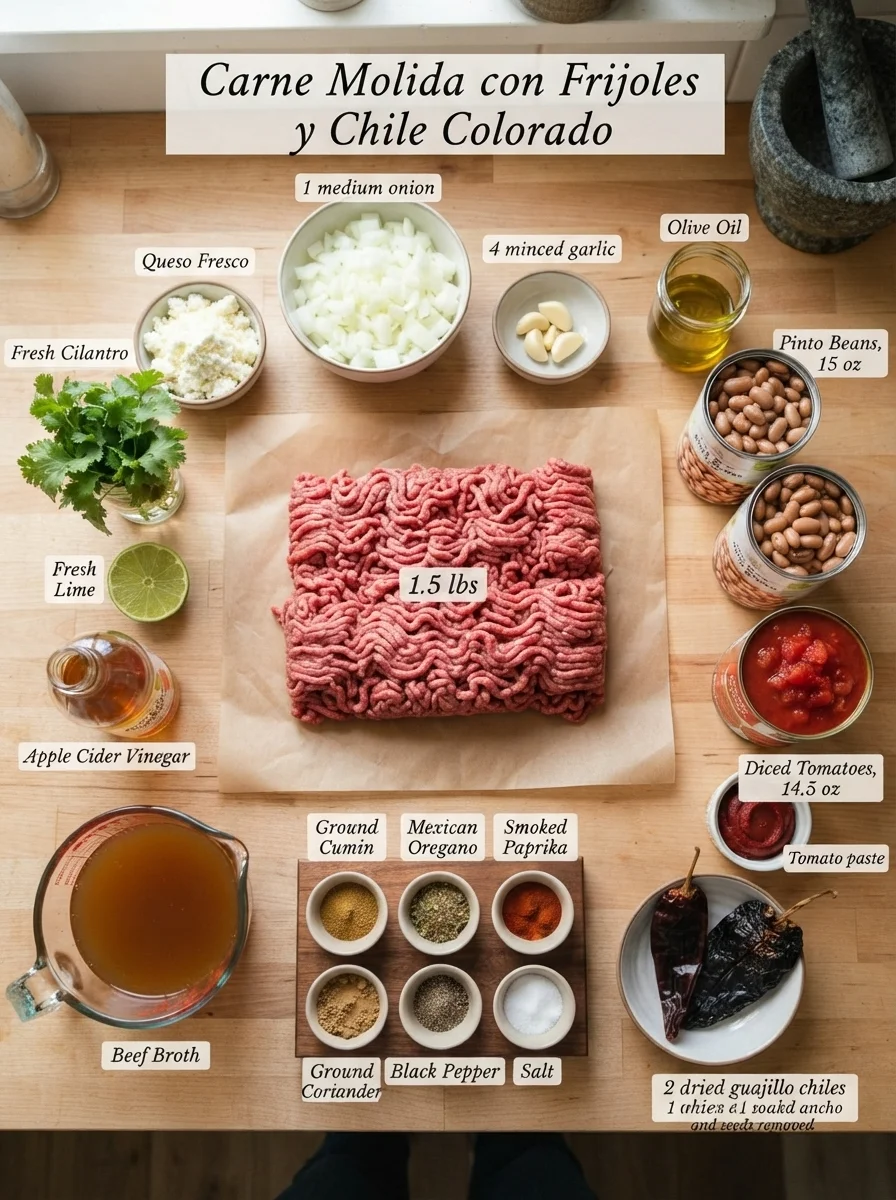
Ingredients
For the Red Chile Sauce
- 2 dried guajillo chiles, stems and seeds removed
- 1 dried ancho chile, stem and seeds removed
- 1 can diced tomatoes, 14.5 oz, with juices
- 2 tablespoons tomato paste
- 1 cup low-sodium beef broth
- 2 garlic cloves
For the Beef and Beans
- 1½ pounds ground beef
- 1 medium yellow onion, finely diced
- 2 garlic cloves, minced
- 2 cans pinto beans, 15 oz each, drained and rinsed
- 1 cup low-sodium beef broth, plus a little more only if needed
- 1 tablespoon olive oil, only if needed
- 1 teaspoon ground cumin
- 1 teaspoon dried Mexican oregano
- ½ teaspoon smoked paprika
- ½ teaspoon ground coriander
- ½ teaspoon black pepper
- Up to ¾ teaspoon salt, to taste
- 1 tablespoon apple cider vinegar
- 1 tablespoon fresh lime juice, or less to taste
For Serving
- ¼ cup chopped fresh cilantro
- Crumbled queso fresco, optional
- Warm tortillas, rice, or cabbage slaw, optional
The recipe uses four garlic cloves and two cups of broth overall, divided between the sauce and the pot.
Ingredient Notes
Dried guajillos: Choose peppers that are clean, aromatic, and reasonably flexible rather than extremely brittle or dusty. Remove stems and loose seeds. Their skins can remain noticeable after blending, so straining is useful if your blender leaves flecks.
Dried ancho: Ancho is a dried poblano with a deeper, fruity character. It adds flavor and body without guaranteeing a particular heat level.
Ground beef: An 85/15 or 90/10 blend is a practical choice. Fattier beef works, but draining excess grease helps keep the sauce from becoming oily. Very lean beef may need the optional oil for cooking the onion.
Pinto beans: Use fully cooked canned beans. Drain and rinse before adding. Dry beans are not a direct substitute and will not cook through during the short simmer.
Tomatoes: Include the can’s juice in the sauce. Different products vary in acidity and salt, which is why the final seasoning and acid additions should be tasted gradually.
Broth: Low-sodium broth gives more room for adjustment. Keep the measured cups separate while preparing so the sauce does not accidentally receive all the liquid.
Mexican oregano: Rub lightly between your fingers as you add it. Mediterranean oregano can be used if necessary, but it provides a different flavor.
Smoked paprika: A small amount adds smoke. Dried guajillo and ancho do not automatically taste smoky, so avoid attributing all the smoky flavor to the peppers themselves.
Vinegar and lime: Both brighten the dish. Add vinegar first, then lime gradually after tasting so the final sauce does not become unnecessarily sharp.
How to Make It
1. Prepare and Optionally Toast the Chiles
Wipe the dried chiles clean, then remove stems and seeds. Tear them into pieces large enough to handle easily.
For an optional toasted flavor, warm a dry skillet over medium heat. Press the chiles briefly against the surface, about 10–15 seconds per side, just until fragrant and slightly more pliable. Keep watching: thin dried peppers can scorch quickly.
They should not turn black or smell acrid. If a piece burns badly, discard it rather than blending the bitterness into the sauce.
2. Soften the Chiles
Place in a heatproof bowl and cover with very hot water. Use a small heatproof plate to keep them beneath the surface if needed.
Soak for about 15–20 minutes, until flexible and softened, then drain. Discard the soaking water for this version; its flavor can be bitter, and the measured broth provides the blending liquid.
3. Blend the Sauce
Add the softened chiles, tomatoes with juices, tomato paste, one cup broth, and two garlic cloves to the blender.
If the chiles are still hot, let them cool to a temperature your blender can safely handle. Follow the manufacturer’s hot-liquid instructions and do not seal hot ingredients in a blender designed only for cold blending.
Blend until smooth, scraping safely as needed. If coarse skin flecks remain, press through a fine-mesh sieve and discard the tough solids.
4. Brown the Beef
Heat the heavy pot over medium-high heat. Add the ground beef and cook for about 7–9 minutes, breaking into small crumbles. Continue until cooked through; ground beef should reach 160°F.
Drain excess grease, leaving only a light coating in the pot. The optional olive oil is needed only if there is insufficient fat to cook the onion.
5. Cook the Onion and Garlic
Add the onion to the beef and cook for about 4–5 minutes, stirring, until softened. Add the remaining two minced garlic cloves and stir for 30 seconds.
For more room to soften the onion, you can briefly move the browned beef to a bowl, cook the onion in the pot, then return the beef. Keep the preparation continuous rather than holding partially cooked meat for later.
6. Add the Spices and Sauce
Stir in cumin, oregano, paprika, coriander, black pepper, and part of the salt. Cook for about 30 seconds.
Carefully pour in the blended sauce. Stir from the bottom to loosen browned bits and simmer gently for about 5 minutes. The sauce can splatter, so keep the heat moderate and use a splatter screen if needed.
7. Add Beans and Remaining Broth
Fold in the drained beans and remaining cup of broth. Bring to a gentle simmer, then reduce the heat and cook uncovered for 15–20 minutes, stirring occasionally.
Stop when the sauce has the consistency you enjoy. A wider pot reduces faster than a narrow one. Add a small splash of broth if the mixture becomes too thick, or simmer a little longer if it remains loose.
8. Balance and Serve
Stir in the vinegar, then taste. Add lime juice gradually, using up to the listed tablespoon according to the sauce’s acidity and your preference.
Adjust salt and pepper after reduction. Spoon into bowls and finish with cilantro and optional queso fresco. Serve with warm tortillas, rice, or a crisp vegetable side.
Tips for a Flavorful Red Chile Sauce
Toast lightly or skip toasting. Untoasted chiles are preferable to burnt ones. Toasting is an optional flavor step, not a reason to risk scorching the peppers.
Soften fully. Flexible chiles blend more smoothly than stiff pieces.
Strain according to your equipment. A powerful blender may make straining unnecessary, while another may leave tough skin fragments.
Drain the beef before adding sauce. Removing grease later is harder once it is dispersed through the red chile mixture.
Keep the beans intact. Fold gently rather than stirring vigorously throughout the simmer.
Taste acid additions in stages. Tomatoes and chile sauce vary. Vinegar and lime should brighten the dish, not overpower it.
Troubleshooting
| Problem | Likely cause | Helpful adjustment |
|---|---|---|
| Sauce tastes bitter | Scorched or poor-quality dried chiles | Avoid burned peppers; severe bitterness is difficult to correct. |
| Sauce has tough flecks | Chile skins were not fully blended | Strain through a fine-mesh sieve. |
| Mixture is greasy | Excess beef fat | Drain before adding sauce or skim visible fat afterward. |
| Dish is too thin | Insufficient reduction or narrow pot | Simmer uncovered a little longer, stirring to prevent sticking. |
| Sauce is too thick | Excess reduction | Add warm broth in small amounts. |
| Flavor is too sharp | Too much vinegar or lime | Add more unseasoned beef or beans if available; add acids gradually next time. |
| Beans break down | Rough stirring or prolonged simmering | Fold gently and stop when the sauce is ready. |
| Heat is stronger than expected | Individual chile variation | Serve with mild sides and omit additional hot toppings. |
Variations
Black Bean Version
Replace pinto beans with drained, rinsed canned black beans. The flavor and texture differ, but the basic cooking method remains similar.
Ground Turkey
Use ground turkey and cook it to 165°F. Lean turkey may need the optional oil, and the broth and seasoning balance may need adjustment.
More Vegetable Texture
Cook a small amount of diced bell pepper with the onion. Keep additions modest so the beef, beans, and red chile sauce remain the focus.
Spicier Serving
Offer sliced jalapeños, hot sauce, or a little crushed chile at the table. This keeps the base more adaptable for different heat preferences.
Thicker Bowl
Mash a small spoonful of beans against the pot and stir back in, then simmer briefly. This thickens without adding a separate starch, though the sauce becomes less smooth.
Serving Suggestions
Warm corn tortillas are useful for scooping up the beef and beans. Rice absorbs the sauce and makes the dish go further, while a lime-dressed cabbage slaw gives fresh contrast.
Cilantro and queso fresco add an easy finishing touch. If using salty cheese, keep final salt seasoning restrained.
Leftovers can become a burrito filling after reheating and reducing any excess liquid. Keep the filling moist but not soupy so it does not soak through the tortilla.
Make-Ahead and Storage
The dish can be cooked a day ahead. Divide into shallow containers and refrigerate within 2 hours rather than waiting for a full pot to cool on the counter.
Keep refrigerated for 3–4 days. Store cilantro, cheese, tortillas, and other toppings separately.
Freeze in meal-sized freezer-safe containers for up to 3 months for best quality. Leave expansion room and thaw overnight in the refrigerator.
Reheat on the stovetop, stirring occasionally, until the center reaches 165°F. Add broth or water in small amounts if the beans have absorbed liquid. Microwave individual portions in short intervals, stirring for even heating.
Heat only the portion you plan to eat rather than repeatedly warming the entire batch.
Frequently Asked Questions
Is this the same as chili con carne?
It shares beef-and-chile elements, but the name and preparation here emphasize ground beef, pinto beans, and a blended guajillo-ancho sauce. There are many regional and household variations rather than one interchangeable recipe.
Can I substitute chili powder for the dried peppers?
Not as an identical replacement. Seasoning blends contain different chiles and may include salt and other spices. The whole dried peppers are central to this sauce’s flavor and body.
Is it very spicy?
Guajillo and ancho often provide moderate or mild heat, but individual peppers vary. Removing loose seeds does not remove all heat. Taste the sauce and offer extra chile separately.
Can I use dried pinto beans?
Cook them fully in a separate preparation first. Raw dried beans will not soften during the short finishing simmer used here.
Can I skip the vinegar or lime?
You can adjust either to taste. They are finishing ingredients for balance, not a preservation step. Start with vinegar, taste, then decide how much lime is useful.
Can I make the chile sauce ahead?
Yes. Prepare and refrigerate it promptly in a covered container, then use within a few days. Making it the day before is convenient. Reheat as part of the cooking process rather than treating it as a shelf-stable sauce.
Is this gluten-free?
Check broth, seasonings, and all other packaged ingredients. The basic ingredients can suit a gluten-free preparation, but toppings and tortillas must also be appropriate.
Are the calories 400–480 per serving?
That range may fit some versions, but ground beef fat content, drained grease, bean brands, and toppings change the total. Calculate from the ingredients actually used and divide by six. Rice, tortillas, and cheese should be counted separately.
Recipe Card
Carne Molida con Frijoles y Chile Colorado
Ground beef and pinto beans in a blended guajillo-ancho sauce with tomatoes, garlic, cumin, and oregano.
Prep and soaking: 20–25 minutes | Cooking: 35–45 minutes
Total: About 55–70 minutes | Servings: 6
Ingredients
- 1½ pounds ground beef
- 1 medium yellow onion, finely diced
- 4 garlic cloves, divided
- 2 cans pinto beans, 15 oz each, drained and rinsed
- 1 can diced tomatoes, 14.5 oz, with juices
- 2 tablespoons tomato paste
- 2 dried guajillo chiles, stemmed and seeded
- 1 dried ancho chile, stemmed and seeded
- 2 cups low-sodium beef broth, divided
- 1 tablespoon olive oil, only if needed
- 1 teaspoon ground cumin
- 1 teaspoon dried Mexican oregano
- ½ teaspoon smoked paprika
- ½ teaspoon ground coriander
- ½ teaspoon black pepper
- Up to ¾ teaspoon salt, to taste
- 1 tablespoon apple cider vinegar
- Up to 1 tablespoon lime juice, to taste
- ¼ cup chopped cilantro
- Optional queso fresco, for serving
Instructions
- Optionally toast cleaned chiles briefly in a dry skillet without scorching. Cover with very hot water and soak for 15–20 minutes. Drain.
- Blend chiles with tomatoes, tomato paste, one cup broth, and two garlic cloves until smooth, observing blender temperature guidance. Strain if needed.
- Brown beef in a heavy pot until cooked through and reaching 160°F. Drain excess grease.
- Add onion and cook until softened, about 4–5 minutes. Add the remaining minced garlic for 30 seconds.
- Stir in spices and part of the salt, then add chile sauce. Simmer gently for 5 minutes.
- Fold in beans and remaining broth. Simmer uncovered for 15–20 minutes, until the sauce reaches the desired consistency.
- Add vinegar, then lime gradually to taste. Adjust seasoning and serve with cilantro and optional cheese.
Notes
- Toasting is optional; burnt chiles can make the sauce bitter.
- Use fully cooked beans, not raw dried beans.
- Add salt and acid gradually after reduction.
- Refrigerate promptly for 3–4 days or freeze for up to 3 months for best quality.
- Reheat leftovers to 165°F.
- Nutrition depends on beef, beans, drained fat, toppings, and portion size. Calculate from your ingredients before publishing precise values.
Final Thoughts
Gently softened chiles, well-browned beef, and a short simmer give this dish its depth. Keep the sauce smooth, fold the beans carefully, and finish with just enough acidity to brighten the red chile flavor. Serve with tortillas or rice for a hearty meal that reheats well.
Carne Molida con Frijoles y Chile Colorado
- Total Time: About 55–70 minutes
Ingredients
- 1½ pounds ground beef
- 1 medium yellow onion, finely diced
- 4 garlic cloves, divided
- 2 cans pinto beans, 15 oz each, drained and rinsed
- 1 can diced tomatoes, 14.5 oz, with juices
- 2 tablespoons tomato paste
- 2 dried guajillo chiles, stemmed and seeded
- 1 dried ancho chile, stemmed and seeded
- 2 cups low-sodium beef broth, divided
- 1 tablespoon olive oil, only if needed
- 1 teaspoon ground cumin
- 1 teaspoon dried Mexican oregano
- ½ teaspoon smoked paprika
- ½ teaspoon ground coriander
- ½ teaspoon black pepper
- Up to ¾ teaspoon salt, to taste
- 1 tablespoon apple cider vinegar
- Up to 1 tablespoon lime juice, to taste
- ¼ cup chopped cilantro
- Optional queso fresco, for serving
Instructions
- Optionally toast cleaned chiles briefly in a dry skillet without scorching. Cover with very hot water and soak for 15–20 minutes. Drain.
- Blend chiles with tomatoes, tomato paste, one cup broth, and two garlic cloves until smooth, observing blender temperature guidance. Strain if needed.
- Brown beef in a heavy pot until cooked through and reaching 160°F. Drain excess grease.
- Add onion and cook until softened, about 4–5 minutes. Add the remaining minced garlic for 30 seconds.
- Stir in spices and part of the salt, then add chile sauce. Simmer gently for 5 minutes.
- Fold in beans and remaining broth. Simmer uncovered for 15–20 minutes, until the sauce reaches the desired consistency.
- Add vinegar, then lime gradually to taste. Adjust seasoning and serve with cilantro and optional cheese.
- Prep Time: 20-25 minutes
- Cook Time: 35–45 minutes
Nutrition
- Serving Size: 6