
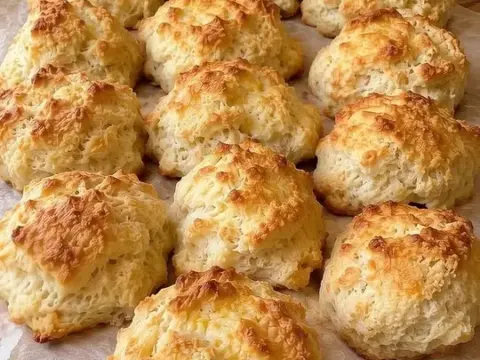
These 3-Ingredient Buttermilk Drop Biscuits have golden, craggy tops, crisp edges, and soft centers with a little buttermilk tang. Cold butter creates tender pockets in the dough, and self-rising flour gives the biscuits lift. Scoop the dough straight onto a baking sheet so the tops bake up with plenty of golden peaks.
A batch makes about 12 biscuits in around 30 minutes. Serve them warm with honey and jam for breakfast, split them for sausage gravy, or bake a batch while a pot of soup finishes simmering.
Why You’ll Love These Buttermilk Drop Biscuits
- Only three ingredients. Self-rising flour, cold butter, and cultured buttermilk are all you need.
- No rolling or cutting. Use a large scoop or two spoons to drop the dough onto the baking sheet.
- Golden tops and tender centers. The rough peaks brown in the oven while the inside stays soft.
- Easy to serve with almost anything. Try them with scrambled eggs, roast chicken, or a bowl of chili.
Ingredients
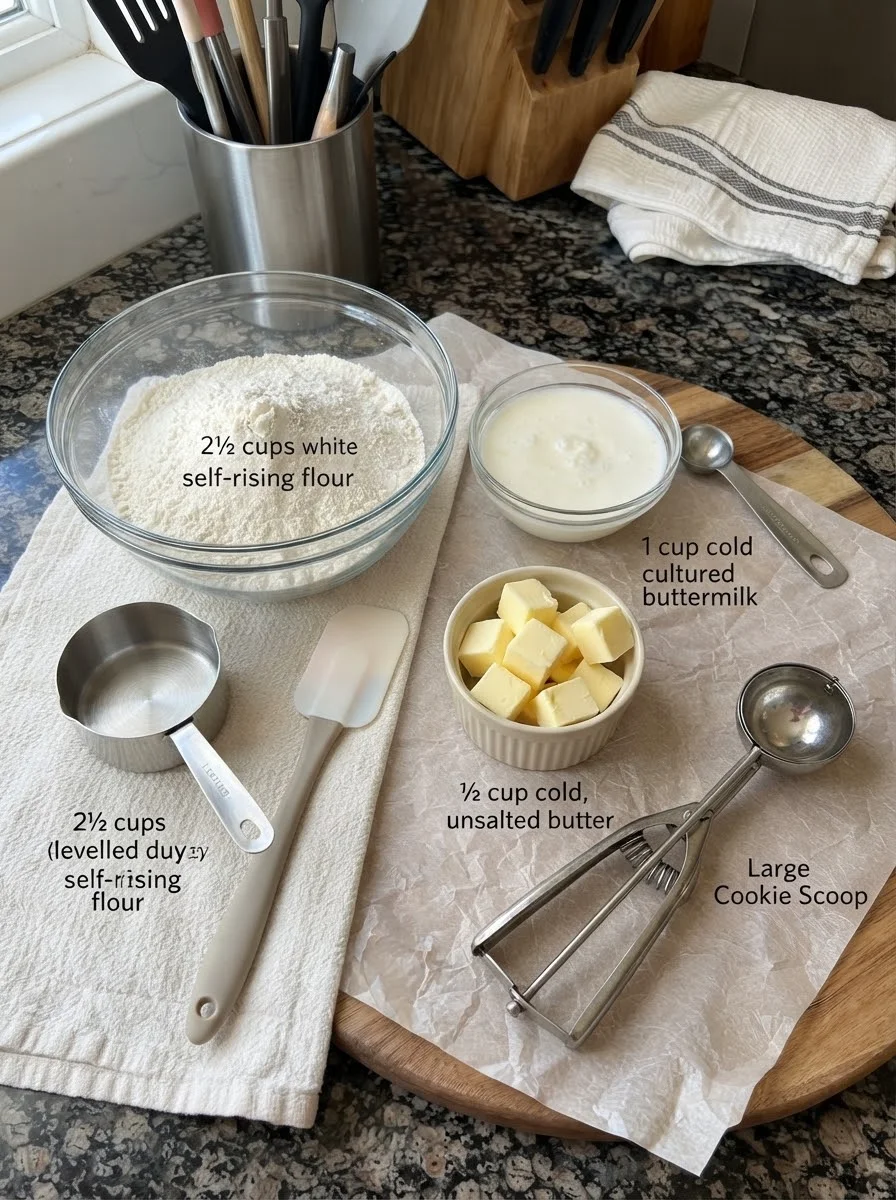
- 2½ cups self-rising flour (about 300 g)
- ½ cup cold unsalted butter (113 g), cut into small cubes
- 1 cup cold cultured buttermilk (240 mL), plus 1 to 2 tablespoons if needed
Ingredient Notes
Self-rising flour. It already contains baking powder and salt. Weigh the flour if you have a scale, or spoon it into the measuring cup and level it off. Packed flour can make the biscuits dry.
Cold unsalted butter. Cut it into small cubes and keep it chilled until you’re ready to mix. Work it into the flour until most pieces are about pea-size. Those little pieces melt as the biscuits bake, giving the crumb its tender texture.
Cultured buttermilk. Shake the carton before measuring and use it cold. Start with 1 cup, then add more only if dry flour remains at the bottom of the bowl. The dough should hold a rough mound on a spoon.
Substitutions & Variations
- Homemade self-rising flour. Whisk 2½ cups all-purpose flour, 3¾ teaspoons baking powder, and ⅝ teaspoon fine salt. Use the whole mixture in place of the self-rising flour.
- Cheddar drop biscuits. Toss ½ cup shredded sharp cheddar with the flour and butter before adding the buttermilk.
- Chive biscuits. Stir 2 tablespoons finely sliced fresh chives into the flour mixture.
- Extra-buttery tops. Brush the hot biscuits with a little extra melted butter as soon as they come out of the oven.
- Smaller biscuits. Make 16 smaller mounds and start checking them a few minutes early.
Kitchen Equipment
- Rimmed baking sheet
- Parchment paper
- Large mixing bowl
- Pastry blender or two forks
- Flexible spatula
- Large cookie scoop or two spoons
- Wire cooling rack
How to Make 3-Ingredient Buttermilk Drop Biscuits
Get the oven and baking sheet ready before you mix the dough. Once the buttermilk goes in, fold just until the flour is moistened, then scoop the dough while the butter is still cold.
Step-by-Step Instructions
1. Prepare the baking sheet. Preheat the oven to 425°F. Line a rimmed baking sheet with parchment paper.
2. Cut the butter into the flour. Place the self-rising flour in a large bowl and add the cold butter cubes. Use a pastry blender, two forks, or your fingertips to work the butter into the flour until most pieces are about pea-size. The mixture should look uneven, with a few larger flakes of butter still visible.
3. Add the buttermilk. Pour in 1 cup of cold buttermilk. Fold gently with a spatula until the dough starts to clump and no large pockets of dry flour remain. If you still see loose flour after scraping the bottom of the bowl, add more buttermilk 1 tablespoon at a time. The dough should be thick, shaggy, and scoopable.
4. Drop the biscuits. Divide the dough into 12 rough mounds, about ¼ cup each, on the prepared sheet. Leave about 2 inches between them. Keep the tops uneven so the little ridges can turn golden.
5. Bake until golden. Bake for 14 to 18 minutes, until the tops are golden and the bottoms are lightly browned. Check a biscuit near the center of the pan. It should feel set when lightly pressed, and the middle should look fluffy when split open.
6. Cool briefly and serve. Let the biscuits rest on the pan for 3 minutes, then move them to a rack or serve warm.
Expert Tips for the Best Results
- Chill soft butter before mixing. The cubes should feel firm when you press them. If they’ve softened while you measure the flour, put them back in the refrigerator for a few minutes.
- Fold from the bottom of the bowl. This catches dry flour without stirring the dough more than necessary.
- Scoop evenly. Similar-sized biscuits bake at about the same rate. Use the first mound as a guide for the rest.
- Leave the tops rough. The ridges brown faster than a smooth surface and give the biscuits their crisp, craggy finish.
Common Mistakes to Avoid
Using plain all-purpose flour on its own. Add baking powder and salt using the substitution above if you’re out of self-rising flour.
Pouring in the extra buttermilk right away. Fold in the first cup before adding more. A loose batter spreads and gives you flatter biscuits.
Mixing until the dough looks smooth. A shaggy dough is exactly what you want. Stop once there are no large patches of dry flour.
Crowding the baking sheet. Give the biscuits room to spread slightly and brown around the edges.
How to Serve Buttermilk Drop Biscuits
Split the warm biscuits and add salted butter, honey, or strawberry jam. For a hearty breakfast, spoon sausage gravy over the halves or fill them with scrambled eggs and cheddar. Their rough edges are also good for scooping up the last bit of gravy at dinner.
What to Serve With Buttermilk Drop Biscuits
Pair them with roast chicken, beef stew, tomato soup, or chili. For a weekend breakfast, serve them with eggs, fruit, and honey butter. They also make an easy side for a holiday table with mashed potatoes and green beans.
Make-Ahead Instructions
Cut the butter into the flour up to 1 day ahead and keep the mixture covered in the refrigerator. Add the buttermilk, scoop, and bake when you’re ready. You can also bake the biscuits a day ahead and warm them just before serving.
Storage Instructions
Room Temperature
Store fully cooled biscuits in an airtight container for up to 2 days for best texture. Let them cool completely before sealing the container so the tops don’t get damp.
Freezing
Freeze cooled biscuits in a freezer bag for up to 2 months for best quality. Thaw at room temperature while still wrapped.
Reheating
For crisp edges, warm thawed biscuits on a baking sheet in a 350°F oven for 5 to 8 minutes. For softer tops, wrap them loosely in foil before warming.
Frequently Asked Questions
Can I use regular milk instead of buttermilk?
Yes. Start with a little less milk, since it’s thinner, and add more until the dough holds a mound. The biscuits will have a milder flavor.
Can I use salted butter?
Yes. The biscuits will taste a little saltier because self-rising flour already contains salt. Unsalted butter gives you more control over the flavor.
Why did my biscuits spread out?
The butter may have softened, or the dough may have had too much buttermilk. Start with cold ingredients and add extra buttermilk only if the dough needs it.
Can I grate the butter instead of cutting it into cubes?
Yes. Grate the cold butter on the large holes of a box grater, toss it lightly with the flour, and stir in the buttermilk.
Why are my biscuits dry?
Too much flour or a few extra minutes in the oven can dry them out. Weigh the flour when possible and check the first biscuit at 14 minutes.
Final Recipe Summary
Cut cold butter into self-rising flour, fold in cold buttermilk, and scoop the shaggy dough into 12 mounds. Bake at 425°F until the tops are golden and the centers are tender.
Print
3-Ingredient Buttermilk Drop Biscuits
Description
| Recipe details | Time or yield |
|---|---|
| Prep time | 10 minutes |
| Bake time | 14 to 18 minutes |
| Rest time | 3 minutes |
| Total time | About 30 minutes |
| Yield | 12 drop biscuits |
Ingredients
- 2½ cups self-rising flour (about 300 g)
- ½ cup cold unsalted butter (113 g), cut into small cubes
- 1 cup cold cultured buttermilk (240 mL), plus 1 to 2 tablespoons if needed
Instructions
1. Prepare the baking sheet. Preheat the oven to 425°F. Line a rimmed baking sheet with parchment paper.
2. Cut the butter into the flour. Place the self-rising flour in a large bowl and add the cold butter cubes. Use a pastry blender, two forks, or your fingertips to work the butter into the flour until most pieces are about pea-size. The mixture should look uneven, with a few larger flakes of butter still visible.
3. Add the buttermilk. Pour in 1 cup of cold buttermilk. Fold gently with a spatula until the dough starts to clump and no large pockets of dry flour remain. If you still see loose flour after scraping the bottom of the bowl, add more buttermilk 1 tablespoon at a time. The dough should be thick, shaggy, and scoopable.
4. Drop the biscuits. Divide the dough into 12 rough mounds, about ¼ cup each, on the prepared sheet. Leave about 2 inches between them. Keep the tops uneven so the little ridges can turn golden.
5. Bake until golden. Bake for 14 to 18 minutes, until the tops are golden and the bottoms are lightly browned. Check a biscuit near the center of the pan. It should feel set when lightly pressed, and the middle should look fluffy when split open.
6. Cool briefly and serve. Let the biscuits rest on the pan for 3 minutes, then move them to a rack or serve warm.